
A Bengaluru cafe recently made headlines for charging ₹99 per hour to customers using the space as a workplace. The debate around it revealed something founders already know: a cafe can be a great place to start a workday, but it was never designed to carry the daily operating needs of a growing company.
For a solo founder, a laptop, coffee and WiFi can be enough. Add teammates, recurring calls and candidate interviews, and the equation changes. That is why founders begin evaluating coworking spaces for startups in Bangalore when an informal setup stops feeling consistent.
The shift is usually about removing small points of friction that now show up every day.
Cafes Work Well Until the Business Starts Needing More From the Space
A cafe works best when work is individual, temporary and flexible. A coworking space becomes more useful when work turns collaborative, confidential or repeatable. The key difference is simple: a cafe can accommodate work, while a professional workspace is designed around it.
Many teams stay with cafes because the arrangement feels light. There is no setup process or fixed desk. That freedom was valuable in the earliest days.
The problem appears when the company grows but the environment stays the same. A founder catch-up becomes a planning session. A sales call becomes a customer demo. Team members now need to work together for hours, not just meet over coffee.
At that point, workspace cost also includes interruptions, lost meeting time, unreliable seating and the effort of rebuilding the setup every morning.
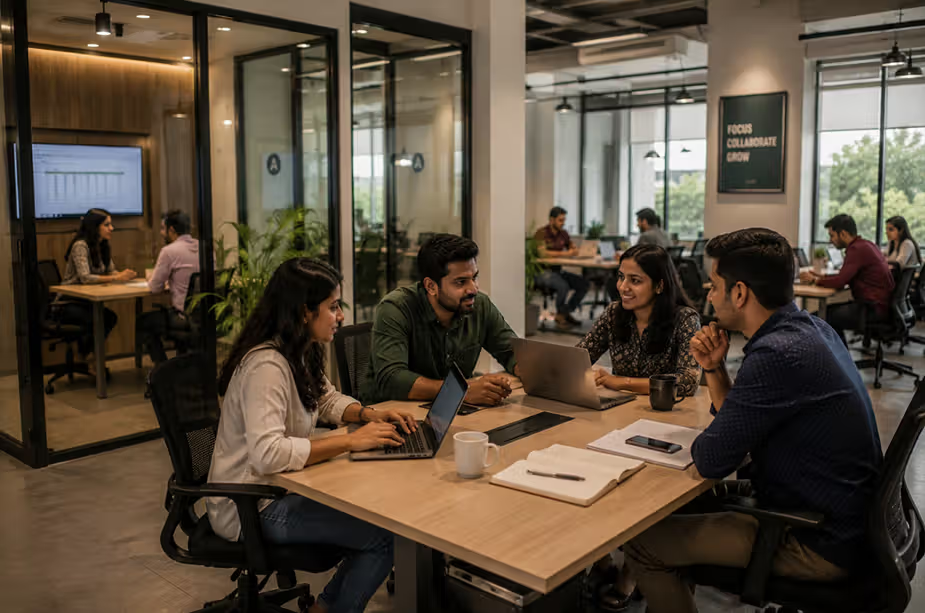
Where Cafe Work Starts Creating Operational Friction
1. Reliable Calls Become Harder Than They Should Be
Customer calls and internal meetings need more than internet access. They need predictable audio, a stable connection and a place where people can speak without competing with music, conversations or a rush-hour crowd.
Headphones can solve an occasional call. For teams doing several calls a day, constantly searching for a quiet corner becomes part of the job.
2. Privacy Becomes a Business Requirement
Startups discuss customer data, salaries, fundraising, product roadmaps and hiring decisions. Those conversations are difficult to manage responsibly at a shared cafe table. Even when nobody is deliberately listening, the environment gives the team little control over who can hear or see what is being discussed.
A professional workspace gives teams the option to move sensitive conversations into meeting rooms, phone booths or private cabins instead of lowering their voices and hoping for the best.
3. Client Meetings Start Carrying More Weight
Coffee meetings are useful for introductions. But a product walkthrough, investor conversation or candidate interview often benefits from a setting where the room, screen, seating and timing are under your control.
Professionalism is less about looking corporate and more about removing distractions from the conversation.
4. The Team Needs a Workday, Not Just a Place to Sit
A growing team needs rhythm. People need to know where they are meeting, whether seats are available and where discussions can happen. If each office day begins with finding tables, sockets and chairs, the startup is spending energy on logistics instead of the business.
Has your team outgrown the coffee-shop table?
If every call needs a quieter corner and every meeting starts with finding seats, the problem may be the setup rather than the team.
Why Coworking Spaces for Startups in Bangalore Are Becoming a Practical Next Step
Flexible workspaces are no longer a niche category in Bangalore.Colliers reported that Bengaluru had more than 22 million sq. ft. of operational Grade A flex space in 2025, giving the city the largest share of India’s flexible workspace stock. That scale reflects how normal flexible offices have become for companies that want workplace infrastructure without immediately taking on a conventional lease.
For founders, the attraction is practical. Coworking gives the team a reliable base without immediately building and operating a traditional office.
At Beginest, the workspace conversation often changes as a company grows. Founders may start by asking about a seat, then move to meeting rooms, privacy, commute and room for the next hires. That is when workspace becomes an operating decision.
Beginest’s coworking spaces in MG Road, coworking spaces in Indiranagar and coworking spaces in JP nagar include options such as flexible desks, dedicated workstations, private cabins and meeting spaces. Their real value is the predictability they bring to an ordinary workday.
Employee Experience Starts Earlier Than Most Startups Expect
Founders notice workspace problems through productivity. Employees often notice comfort first. A chair that works for one hour may feel very different after six, and a lively cafe can become tiring during a deadline-heavy day.
This matters because the physical workplace is part of how people experience the company. In CBRE’s 2025 India Office Occupier Survey, 73% of surveyed companies said physical workplace design was a key focus for improving office experience. Startups do not need enterprise-scale interiors. They need a workspace that supports how the team spends its day.
That means good lighting, suitable workstations, private-call space and a location employees can reasonably reach. It needs to make coming together worth the commute.
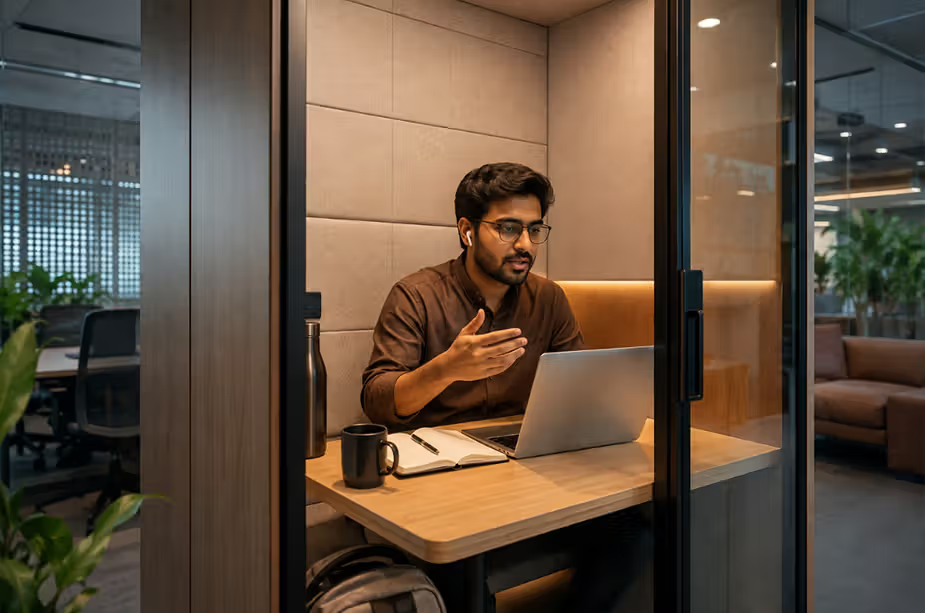
Bangalore Makes Workspace Convenience a Business Issue
In Bangalore, a workspace can still fail the team if getting there is difficult. Founders should ask where employees live, which routes help most of them, how often people will come in and where customers are likely to meet the team.
This is why connected coworking markets remain relevant in hybrid work. The office may be used fewer days, but those days have to work harder. People should arrive, collaborate and focus without rebuilding the environment first.
If you are thinking about the first step beyond cafe work, Beginest’s guide on choosing a startup’s first office carefully is useful because it looks at commute, team habits and growth before the workspace format itself.
The Cafe-to-Coworking Threshold: A Founder Checklist
Do not move just because the startup hired another person. Use the work itself as the signal. If several points below happen every week, it may be time to test coworking.
- Three or more team members regularly need to work together in person.
- Customer or investor calls require a quiet space several times each week.
- The team discusses confidential HR, financial, customer or product information in public places.
- Important meetings depend on finding an available cafe table.
- Unreliable internet, power access or background noise is affecting work quality.
- Hiring or onboarding is making the team’s in-person days more frequent.
- Employees are asking for a more consistent place to work together.
If only one item applies occasionally, the cafe may still be doing its job. If three or four are becoming routine, test a professional workspace before the friction becomes normal.
What would one predictable workday change for your team?
Try a workspace built for calls, collaboration and focused work before making a bigger office decision.
You Do Not Have to Choose Between Cafe Freedom and Office Rigidity
Founders sometimes stay with cafes because they assume the next step is a traditional lease. Flexible workspaces allow structure to be added gradually.
A founder working alone may only need a coworking day pass in Bangalore. A small team may prefer flexible or dedicated desks. A company that needs more privacy can move into a private cabin while still sharing meeting rooms and common infrastructure.
That progression matters because startup headcount changes with funding, hiring and strategy. A workspace must be able to provide the company with room to learn as a big part of its experience. Unlike traditional office set-ups, It does not need a hefty capital or attention.
Ask a better question than, “Are we ready for an office?” Ask which parts of the workday should stop being improvised. If the answer includes meetings, privacy, infrastructure and coordination, coworking starts to make practical sense.
Frequently Asked Questions About Coworking Spaces for Startups in Bangalore
1. Are coworking spaces worth it for an early-stage startup in Bangalore?
Yes, when the startup needs a dependable team base but is not ready to operate a traditional office. Coworking can provide desks, meeting areas, internet and a professional setting through a flexible model. Teams that meet rarely may still be comfortable at home or in cafes.
2. What is the main difference between working from a cafe and a coworking space?
A cafe is a hospitality space that can accommodate work. A coworking space is designed around work. That affects privacy, meetings, seating, internet and team coordination. Cafes suit informal meetings or occasional solo work, while coworking better supports repeatable business routines.
3. How do I know when my startup has outgrown working from cafes?
Look for recurring friction rather than a specific headcount. If calls, confidential discussions, seating or client meetings regularly become difficult, the setup is costing time. Another signal is employees wanting to meet in person but avoiding it because the environment is unpredictable.
4. Can a startup use a coworking space only a few days a week?
Yes. Flexible access can suit startups that do not need a permanent office every day. Beginest provides day-pass access at selected Harbors, which can help a team test a professional setting before choosing a longer-term arrangement. Check availability and access for the specific location.
5. Which Bangalore location should a startup choose for coworking?
Choose based on the people who will use the office most. Compare commute patterns, transit access and customer proximity. Beginest currently lists coworking options across MG Road, Indiranagar and JP Nagar. The best location is one the team can use consistently.
A Startup Workspace Should Remove Friction, Not Add Ceremony
Cafes will always have a place in startup culture. They work for catch-ups, informal meetings and a change of scenery. Problems start when a temporary setup becomes responsible for daily operations.
Moving into coworking does not mean becoming more corporate. It can simply give the team reliable internet, predictable seating, privacy when needed and more focus on work than logistics.
If your startup is reaching that point, base the next workspace decision on how the team works now and what is likely to change next. Do not wait until cafe work becomes impossible.