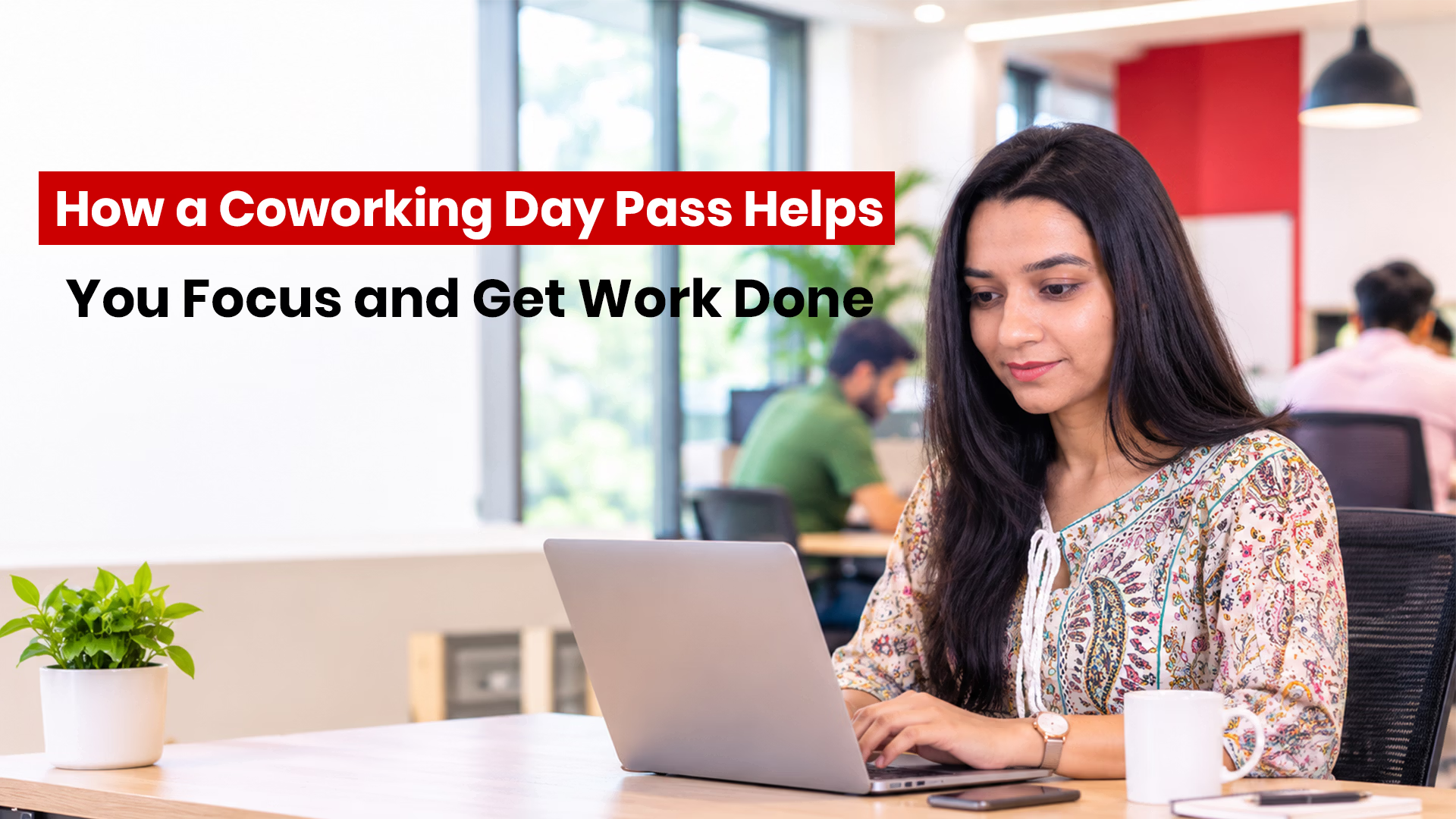
You have a proposal almost ready, but home keeps asking for your attention. A delivery arrives. Someone needs a quick answer. You check one message and suddenly it is lunchtime. The work is manageable. Finding a clear stretch of time is harder.
A coworking day pass gives you access to a shared professional workspace for one day without a monthly desk commitment. It can be useful when a proposal, report, or project needs your full attention. The desk removes some distractions. A simple plan helps you use the hours well.
When does a coworking day pass make sense?
A one-day desk is worth considering when you can name the work you want to finish. Perhaps a consultant needs to complete a client report before Friday. A founder has to revise a pitch deck. A remote employee wants a quiet place between two important deadlines.
It also works for days between client appointments, when travelling back home would waste time. In Bangalore, choose a location that fits your route rather than one that looks convenient on a map. A long commute can consume the focus time you hoped to gain.
If you need confidential conversations all day or a private room for several people, a shared desk may not be enough. Check those requirements before you book.
Why a different place can help you protect focused work
An unfinished task often suffers from a series of small interruptions, not one big problem. Working from home can add household demands to the usual calls and messages. A professional desk creates a useful boundary: you have travelled there for a particular piece of work.
The scale of digital interruption is easy to underestimate. Microsoft's 2025 Work Trend Index analysis found that users in the highest group for incoming pings received a meeting, email, or chat notification roughly every two minutes during core working hours. That finding is not a measure of every freelancer's day, but it shows why protecting attention takes effort.
A new setting cannot silence your phone. Turn off nonessential alerts, tell collaborators when you will reply, and reserve your most alert hours for work that needs concentration.
Decide what finished looks like before you leave home
Do not take an entire to-do list to your day pass. Choose one priority with a visible result: a proposal sent, a report ready for review, or a presentation with its story settled. “Work on the project” is too broad to guide a day.
Then break the priority into three stages: collect what you need, produce the main work, and review the output. Download files, arrange permissions, and clarify open questions before travelling. If something requires another person's approval, request it early so your desk time is not spent waiting.
Try the one-priority, two-block day pass plan

You do not need an elaborate productivity system. Give the day a simple shape, with room for the work to take longer than expected. The following framework is a starting point, not a fixed timetable.
- Before arriving: Write the one outcome you will complete. Keep the documents and links you need in one folder.
- First focus block: Spend 75 to 90 minutes drafting, analysing, or building. Avoid inbox checks unless the task depends on a reply.
- Call and break window: Return urgent calls, take a short walk, and reset. Put conversations together rather than scattering them through the day.
- Second focus block: Use another 75 to 90 minutes to complete the difficult section. If you get stuck, switch to a smaller part of the same priority.
- Final review: Check accuracy, format, attachments, and next steps. Send the finished work or write down exactly what remains.
A sample outcome might be a first proposal draft by lunch and a client-ready version before leaving. If your work needs more time, aim for a meaningful checkpoint instead of rushing out something incomplete.
Could one focused day get that proposal over the line?
Choose your one priority, then give it a proper place in the calendar.
Keep calls and breaks from taking over the day
A day pass is a shared workspace, so assume other people may be working nearby. Schedule routine calls between focus blocks. For a sensitive discussion or a meeting with several participants, check whether a phone booth or a separately booked room is suitable.
Beginest lists phone booths among its day-pass amenities, while meeting rooms in Bangalore are a separate option subject to availability. Confirm the arrangements for your chosen location before relying on them. Also plan a proper lunch break. Skipping every pause rarely makes a demanding writing day easier.
What should you check before booking a workspace for a day?
Start with the journey, then the desk. Confirm the exact location, day-pass access hours, seating availability, internet, charging points, and what happens if you need to take a call. Ask whether meeting spaces require advance booking or extra payment. Never assume every advertised facility is included with every pass.
Work outside a regular home or office is not unusual. In Gensler's Global Workplace Survey 2026, workers at larger organisations reported spending 26% of their workweek in locations that were neither home nor their usual office, including coworking spaces and client sites. This is not a measure of day-pass use, but it illustrates why occasional work locations deserve thoughtful planning.
For Bangalore professionals, travel time matters as much as the furniture. A nearby workspace may be a better choice than a distant one with impressive photos. Beginest's day-pass page lists workstations, internet, pantry areas, phone booths, and power backup. Check your preferred Harbor's availability and terms before making plans.
Check whether the change of setting actually worked
Before leaving, look at the deliverable, not the number of hours spent at the desk. Did you complete the hardest section? Was the internet dependable for your task? Did calls break your concentration, or did the planned window help? This quick review tells you whether the location suited the work.
If the day went well, save the same plan for your next deadline. If it did not, change the weak point. That might mean picking a closer Harbor, booking a meeting room, or leaving more time for review.
When a day pass is not the right workspace choice

A day pass is useful for occasional focused days, but it is not the answer to every routine. If you need a desk most weekdays, compare your expected number of visits with a flexi desk arrangement in Bangalore. Ask for current terms rather than judging only by a daily rate.
If the work needs a door that closes, discuss private-room options. If it is a team workshop, book an appropriate meeting space. And if the day will be spent mostly in transit, working closer to home might be more productive. The right choice follows the task, not the label on the plan.
Know What Your Workday Needs Before You Book
Check the journey, call privacy, access window, and desk setup first.
Frequently Asked Questions About Coworking Day Passes
How does a coworking day pass work in Bangalore?
A coworking day pass generally lets one person use a shared professional workspace for a single day, without taking a monthly desk plan. Choose a location, confirm the date and access hours, and ask about available seating. In Bangalore, commute time should influence the choice as much as the facilities.
Can I take video calls while using a day pass?
Usually, yes, but call rules and private spaces vary by provider and location. A shared desk may be fine for a quick conversation but unsuitable for confidential information. Ask about phone booths, background noise, and room reservations in advance. Bring headphones so nearby users are not part of your call.
Is a day pass worth it if I only need a few hours?
It can be, especially if those hours are enough to finish a valuable task or bridge a gap between appointments. Compare the full day-pass cost with the travel time and any hourly workspace alternative. If you only need a private client conversation, a meeting room may be a better match.
What should I carry for a focused coworking day?
Bring your laptop, charger, headphones, any required identification, and the files you need offline. Make sure you can access work accounts and authentication codes. A short list of the day's deliverables is more valuable than carrying every possible task. Confirm any additional check-in requirements with the provider.
How often should I use a day pass instead of a monthly desk?
Use a day pass when your need is occasional or unpredictable. If you work outside home regularly, estimate how many days you would book each month and compare total charges with available desk plans. Also consider access hours, seat consistency, and call requirements. The best value depends on your actual routine. A productive day is not measured by how many hours you spend at a desk. It is measured by what moves forward. Choose a priority, protect two blocks of attention, and leave time to finish properly. If a change of setting would help you do that, Beginest gives you a way to try a professional workspace for the day without committing to a permanent desk.
Make the next workday count, not just look busy
A productive day is not measured by how many hours you spend at a desk. It is measured by what moves forward. Choose a priority, protect two blocks of attention, and leave time to finish properly.
If a change of setting would help you do that, Beginest gives you a way to try a professional workspace for the day without committing to a permanent desk.