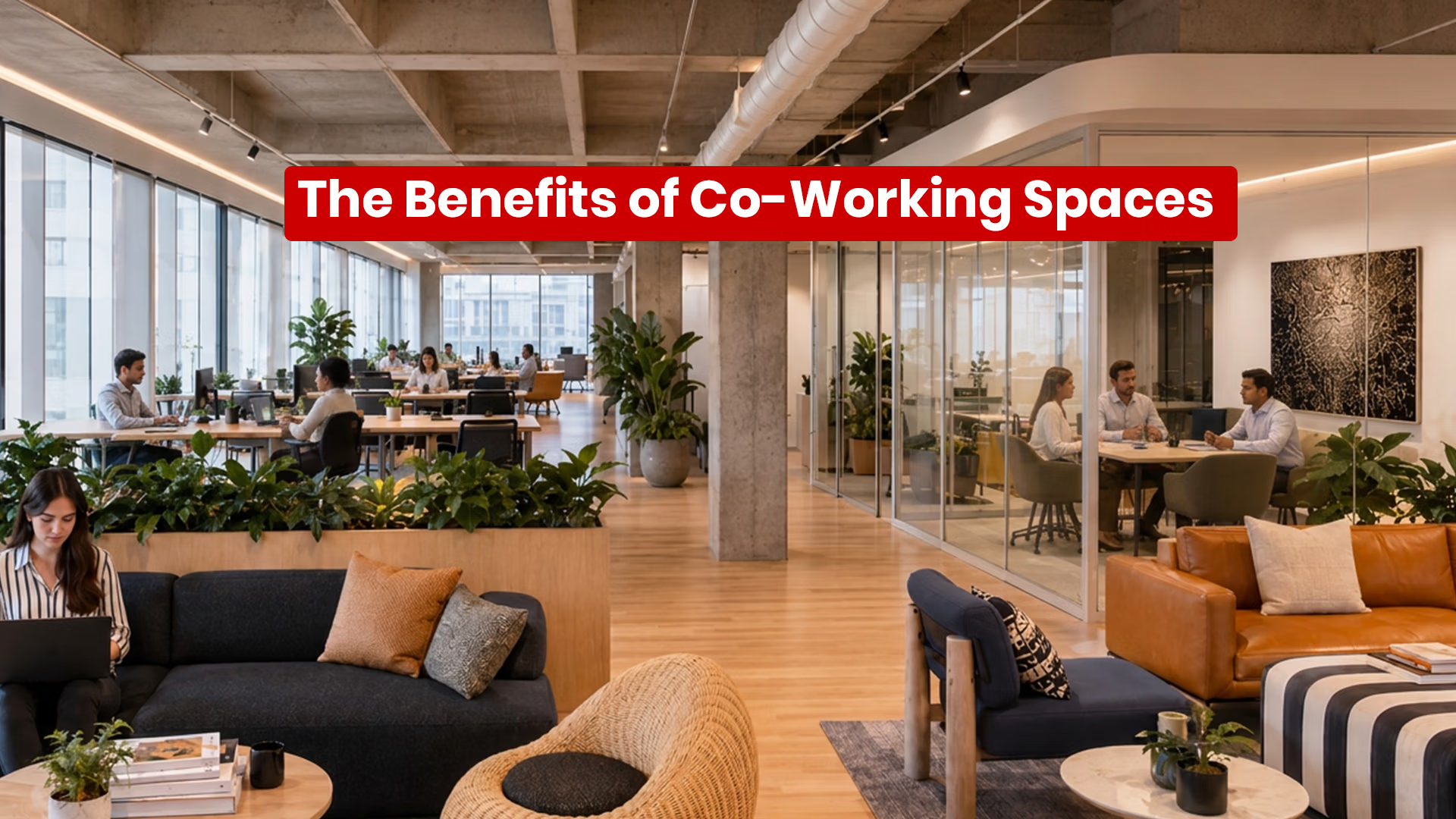
For an entrepreneur, a laptop and internet connection may be enough to start. As the business grows, client calls, hiring conversations, meetings and focused work can make the working environment more important.
The benefits of coworking spaces for entrepreneurs include flexibility, professional infrastructure, less office-management effort and useful business connections. The value is strongest when the space removes friction from the founder's day.
Coworking does not make a business grow by itself. It can, however, give founders a practical operating base while the business is still changing quickly.
Why coworking can be more useful than simply renting a desk
For founders, the useful question is what a coworking space removes from their workload. A 2022 Research Policy study on coworking and entrepreneurship identified efficiency, flexibility, professional legitimacy, connections, problem solving, motivation and social support among the benefits reported by entrepreneurs.
Coworking becomes useful when it provides the basics without requiring the founder to separately set up internet, workstations, meeting areas and day-to-day office operations.
1. Protect founder time from office operations
Early-stage founders already move between sales, hiring, product decisions and customer conversations. Adding repairs, housekeeping, furniture, access control and utility coordination can consume time without moving the business forward.
A professionally managed coworking environment can reduce that operational load. Once the basics function reliably, fewer founder hours disappear into facilities management.
For a startup, the office then becomes infrastructure rather than another project to manage.
2. Stay flexible while the business is still changing

A founder may need one desk today, a small team area next quarter and more privacy later. Taking a conventional office too early can create a commitment before headcount or attendance patterns are predictable.
Coworking can make that transition easier. A founder can begin with a flexible desk, use meeting rooms when required and move toward a private cabin or managed office as the team develops.
Founders who only need an office on selected days can use a coworking day pass in Bangalore or flexi desk in Bangalore to test the routine before making a larger commitment.
Give your business room to change.
Choose a workspace format that gives you room to work now without forcing you to predict every stage of growth.
3. Meet clients, candidates and partners in a professional setting
A cafe can work for an informal catch-up. It is less suitable for proposals, interviews, investor discussions or other conversations where privacy and a controlled setting matter.
A bookable room and stable internet give entrepreneurs more control over important conversations without maintaining a dedicated conference room every day.
Founders who meet clients occasionally can use meeting rooms in Bangalore when needed rather than maintaining meeting infrastructure all week.
4. Build useful connections without treating networking as the product
Networking is often presented as the biggest coworking benefit, but simply sharing an address with other businesses does not guarantee customers, investors or partnerships.
The more realistic benefit is proximity to useful business connections. Founders can encounter professionals from different functions and industries, making it easier to exchange recommendations, ask practical questions or discover potential collaborators. Research on coworking communities has also linked these environments with connections, knowledge and peer support.
Treat community as an added advantage. A useful coworking space should still work for you on a day when you speak to nobody.
5. Create more structure than home or cafe-based work allows
Working from home can be efficient. The difficulty appears when home and work compete for the same space, or every call, meeting and deep-work session happens from the same setup.
Coworking creates a physical boundary around the workday and gives entrepreneurs different settings for focused work, calls, discussions and breaks. That structure can be useful even if the workspace is not used every day.
6. Pay attention to the facilities your business actually uses

A solo founder may need a desk several days a month and a meeting room occasionally. A small team may need daily access, storage and a private area. Comparing those requirements helps you judge whether a membership offers value.
Ask for a complete quote covering desk access, meeting rooms, deposits, taxes and additional services. Compare the total with the cost of arranging a separate office, including setup and maintenance. Coworking is not always the cheapest option; its value depends on what is included and how often you use it.
What should an entrepreneur check before choosing a coworking space?
Before joining, compare the space against your real workweek rather than a generic amenities list.
| Benefit to evaluate | Most useful when | What to verify before joining |
|---|---|---|
| Flexible access | Your schedule or attendance changes week to week | Access terms, plan structure and available workspace formats |
| Professional meetings | You regularly meet clients, candidates or partners | Meeting room availability, privacy and booking process |
| Focus and structure | Home or cafes create interruptions | Noise levels, phone booths, seating comfort and quiet areas |
| Operational support | You do not want to manage an office yourself | Internet, power backup, maintenance, security and reception support |
| Room to grow | Your team size may change | Private cabins, dedicated desks and larger workspace options |
| Community | Peer interaction is genuinely useful to you | Member mix, events and whether networking feels relevant rather than forced |
A tour shows how the space works on an ordinary day. Check noise levels, mobile connectivity, meeting-room demand and how easily clients or team members can reach the location.
A long amenities list does not tell you how the space will feel on a real workday.
Visit the workspace, test the routine and choose based on the way you actually run your business.
When coworking may not be the right choice
Coworking is not automatically right for every entrepreneur. A dedicated setup may suit businesses that handle highly sensitive work, require specialised infrastructure or need extensive control over the office environment.
In those cases, a private or managed office may offer a better balance. The useful question is which workspace format creates the least friction for the current stage of the business.
Frequently Asked Questions
Is coworking worth it for a solo entrepreneur?
Yes, it can be worth it if the entrepreneur needs a reliable professional setting, occasional meeting space or clearer separation between home and work. A solo founder who works effectively from home every day may not need a full-time membership, so a flexi desk or day pass can be a lower-commitment way to test the value.
Is coworking better than working from home for founders?
Neither option is always better. Home can be efficient for quiet individual work, while coworking can help when the founder needs professional meetings, reliable infrastructure, fewer household distractions or more separation between work and personal time. Many entrepreneurs use both depending on the type of work planned for that day.
Can coworking spaces actually help with networking?
They can create more opportunities for useful professional interactions, but networking is not guaranteed. The value depends on the member mix, community activity and whether the founder participates. Choose the space first for its practical fit, then treat introductions, peer learning and potential collaborations as additional benefits.
Should a startup choose coworking or a private office?
Coworking is often suitable for very small teams that value flexibility and shared infrastructure. A private office becomes more useful when the team needs greater privacy, frequent internal meetings or a dedicated area. Growing startups can also consider managed offices when they need a private setup without taking on the full burden of office operations.
What should I check before choosing a coworking space in Bangalore?
Check commute convenience, internet reliability, power backup, security, access hours, meeting rooms, phone booths, seating options and the terms of the plan. Visit during a normal working period rather than judging only from photographs. The right location should also be practical for the clients, candidates or team members who will use it regularly.
Choose a workspace that removes friction from building the business
The strongest coworking benefit is getting workspace support without making office management a major part of the founder's job.
For some entrepreneurs, that means a few workspace days a month. For others, coworking becomes the bridge between working alone and operating from a dedicated office.
Beginest Workspaces offers flexible workspace options across Bangalore for founders and growing teams. Compare the format and location against your actual workweek, then choose the space that makes running the business simpler.