
A very close friend of mine started a business a few years ago. He was doing pretty well after renting his own office space until he called me one day at 7 in the morning.
His voice sounded really stressful, so much that the first thing I assumed was that he lost a big client. But, that wasn’t the case. Instead, he said, “There’s no power in half of my office. My team has been waiting outside with coffee cups.”
He continued on to explain that by 9:15 AM, an electrician was asked to check it out and by 10:30 AM, the internet stopped working because the router had tripped during the outage. He had canceled two investor calls that day.
When we spoke later over lunch, he said something I have never forgotten - “I thought I was paying for an office. I did not realize I was signing up to run one.”
Most businesses only consider the office rent as the primary expense, but very few prepare for the hidden costs of managing an office. From the outside, leasing a workspace looks simple. Sign the agreement, design the layout, bring your team in, and begin work. Once operations start, a different reality comes into view. Offices demand constant care, attention, and spending.
After years in this industry, I can tell you with certainty that rent is only the beginning.
Why Your Office Costs More Than You Think
I once sat with the finance head of a fast growing company that had recently expanded into a larger space. Six months in, he showed me their numbers. Rent made up less than half of their total workspace spending.
The rest was spread across electricity, facility upkeep, internet, repairs, support staff, compliance, and shared building expenses. It made me realise that an office behaves quietly but consumes a steady amount of your resources. Lights run all day. Cooling systems rarely rest. Connectivity must remain strong. Cleaning has to begin before the first employee walks in.
None of these feel like that much of a responsibility on their own, but together, they define the true cost of running a traditional office space.
Many leaders see this only after they are fully committed with a wall behind their back.
The Real Cost Breakdown of Running Your Own Office

Maintenance Rarely Waits for a Convenient Day
I remember visiting a client one afternoon when their cooling system stopped working during peak summer. People reached out to shake my hand with sweat on their face and palms. Eventually, I could slowly sense the frustration levels peaking and productivity was almost non-existent.
Emergency repairs cost a ton especially when time is limited. Ever noticed how the most annoying distractions like electrical shortages, plumbing issues, out of order lifts, all appear without a single notice. Even the best administrative team can only do so much. Regular cleaning, pest control, and upkeep quietly become permanent line items in your budget listings.
These are classic office operational costs that businesses tend to underestimate.
Utilities Grow Faster Than Expected
A founder once told me his electricity bill had doubled in under a year. The only real change was his team size.
Power, water, high speed internet, and backup systems scale as you grow. These services are essential, and when was the last time you saw their prices go downward? Businesses expect utility expenses. What surprises them is the pace at which they expand.
Shared Building Expenses Add Up
Leased offices often include contributions toward the care of common spaces such as lobbies, corridors, parking areas, and security systems. These charges may look modest at first, but over time, they become a botherable part of the cost of traditional office space.
I have seen companies spend a considerable amount of time rethinking their financial plans simply because these numbers were not anticipated at all.
Technology Is a Continuing Commitment
Reliable connectivity is no longer optional. Meeting rooms need strong video capability. Networks require monitoring. Hardware wears out and demands replacement.
A company I worked with once delayed a network upgrade to control spending. Frequent disruptions followed, affecting client calls and internal collaboration. When they finally upgraded, the urgency increased the cost.
Short term savings can easily lead to larger future expenses if not planned correctly.
Administrative Support Keeps the Workplace Running
Every office needs coordination. Visitors and clients are always expected to walk in. Couriers show up throughout the day. To maintain order, many companies hire reception or facility support as they grow. Salaries, benefits, and training naturally follow.
It is a necessary decision, yet one that often slips through early budgeting conversations.
Insurance and Compliance Protect the Business
Responsible companies secure property insurance and follow local regulations. Permits, safety measures, and compliance requirements support long term stability. These are essential investments, yet they frequently enter the picture later than they should.
Small issues hijacking your office mornings?
What if we told you there is a calmer way?
The Cost That Never Appears on an Invoice
In my experience, the most expensive hidden cost of managing an office is leadership attention.
I once met a founder who spent his entire morning reviewing generator repair quotes. His product launch was weeks away, yet operational issues kept pulling him away from doing any strategic work. When leadership energy shifts toward facility concerns, progress slows.
If I have to name one resource that no business can replenish, it’s time. Once it is spent on operational distractions, it is gone, never to be back again.

How Workspace Challenges Affect Productivity
A dependable environment allows teams to focus deeply. When basic systems fail, concentration fails with it. Slow internet interrupts thought. Poor maintenance creates discomfort. Repeated disruptions chip away at founder morale.
I visited an office where outages had become so common that employees quietly relied on mobile hotspots. The financial cost was visible, but the deeper impact was on employee motivation.
People perform best in spaces where everything functions without demanding attention. A well managed workspace supports that performance every single hour of the day.
Managed Office vs Traditional Office: Which Is More Cost Efficient?
Traditional offices still suit companies that require specialized layouts or complete infrastructure control. There will always be businesses that prefer that pat
Yet expectations have shifted. Growing companies value flexibility, speed, and financial freedom more than ever. Over the past several years, I have watched many organizations move toward managed environments to reduce operational pressure.
When utilities, maintenance, security, and daily facility management are already handled, teams settle in faster and leaders regain the mental space to finally focus their attention on things that directly affect their business growth.
I recall one founder describing the experience perfectly. He said it felt like someone had removed an annoying cricket chirping sound in the background that he had stopped noticing.
Traditional Office vs Managed Workspace
| Expense Category | Traditional Office | Managed Workspace |
|---|---|---|
| Utilities | Separate bills that fluctuate | Commonly included |
| Maintenance | Requires constant coordination | Professionally managed |
| Administrative Support | Internal hiring required | Often available |
| Setup Time | Weeks or months | Ready for immediate use |
| Cost Predictability | Variable monthly spending | Stable and easier to forecast |
Looking beyond rent often changes how leaders evaluate workspace strategy.
Who Benefits Most From Managed Workspaces
Over the years, I have observed something very clearly. Businesses move faster when they are not tied down by everyday operational responsibilities. The ones that choose managed workspaces are usually the ones that want their attention exactly where it should be, on growth.
Startups That Cannot Afford to Slow Down
I still remember a young founder walking into our space with nothing more than laptops and ambition. He told me his biggest fear was losing momentum during the setup phase of a traditional office.
Startups thrive on speed. Every week matters. A ready-to-use workspace helps reduce the time spent on logistics which in turn frees up your schedule to hire, build and meet new prospects for your business.
Small and Mid Sized Businesses That Want Financial Clarity
Growth brings opportunity, but along with it comes great responsibility. Leaders begin to look closely at spending patterns because unpredictability makes planning harder.
When operational costs remain steady, decision making improves. There is comfort in knowing that next month will not arrive with a surprise repair bill or an unexpected facility expense.
I have seen leadership teams become noticeably calmer once their workspace stops demanding constant financial adjustments.
Companies Stepping Into New Cities
A new city can sound like a big challenge when you’re opening a new office. It could take months to set up everything from finding new vendors, setting up the wifi and to prep the space
I once worked with a company that planned a quick expansion but spent nearly an entire quarter preparing their office before their team could move in.
A managed workspace changes that timeline completely. Teams arrive and begin work almost immediately. Their energy goes into building the market rather than building the office.
Businesses Setting Up Satellite Offices and Global Capability Centers
Expansion rarely stops at one location anymore. Many companies are opening satellite offices and Global Capability Centers to access talent and support growth.
What often surprises leaders is how challenging it can be to recreate the same dependable environment across multiple locations. Managing facilities from a distance tests both patience and resources.
I have seen companies worry about whether a new team will walk into a fully functional office on their first day.
Managed workspaces bring a sense of consistency. Whether employees sit at headquarters or in a satellite office, the experience feels familiar and reliable. Leaders gain the confidence to expand without stretching their operational bandwidth.
Established Organizations Ready for Simplicity
Even large organizations are taking a closer look at how much leadership time goes into workplace management. Many are choosing flexible workspaces so their senior teams can return their focus to strategy and long term goals.
Running a business is demanding enough. The workspace should support that effort quietly.
Your office should lighten the load, not add to it.
Find a space that let’s you breathe free.
What Continues to Stand Out to Me
Across all these businesses, one result appears again and again. When operational concerns fade into the background, people think more clearly. Teams collaborate better. Leaders make stronger decisions.
The benefits of a managed office reach far beyond convenience. Even companies need some breathing room to grow.
Practical Ways to Reduce Office Operational Costs
A few thoughtful choices can significantly reduce office operational costs.
- Cloud based tools reduce dependence on physical servers.
- Careful planning avoids leasing more area than necessary.
- External facility support eases administrative pressure.
Each step protects both financial resources and leadership attention.
The Future of Workspaces Is Operational Simplicity
Businesses today are becoming more deliberate about where their energy goes. Efficiency is gaining priority over ownership.
Leaders increasingly ask a simple question. Does this workspace support our growth?
The companies that remove friction early tend to move faster and adapt better.
Your office should carry part of the operational weight so your team can focus on building what truly matters.
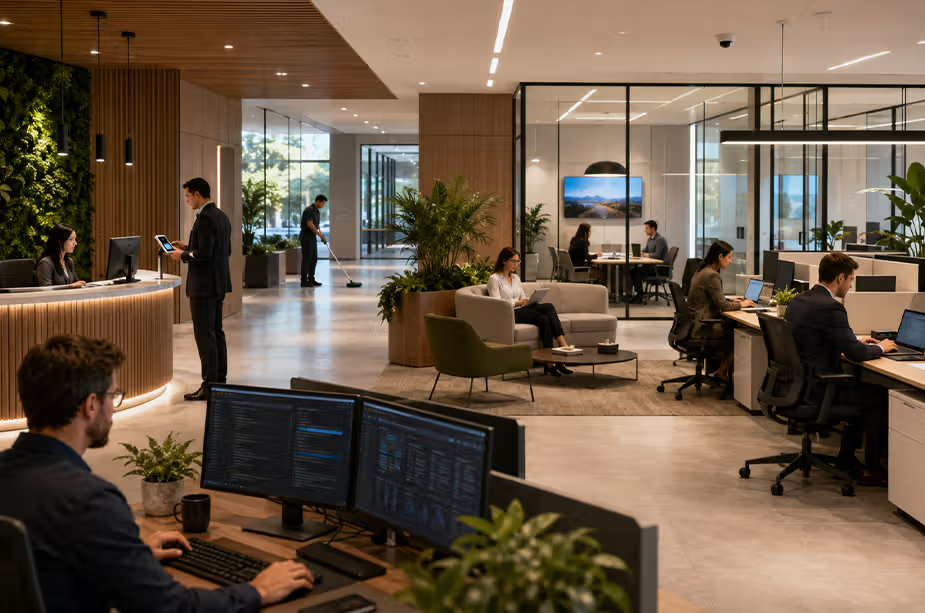
A Closing Reflection
Choosing a reliable managed workspace is often a challenging decision. You’ve got to consider a lot of factors like team performance, time expenditure and how confident you are about your future there.
There is one recurring pattern I’ve noticed throughout the past few years. When there are minimal operational distractions, it creates a mindset of forward-thinking, crucial to a founder.
Frequently Asked Questions
What are the hidden costs of managing an office?
Maintenance, utilities, common building expenses, technical upgrades, staff for administration, insurance and that is just scraping the surface of the hidden costs that a traditional office space will bring upon you. Not only that but you also are spending valuable time overlooking operational disruptions while it can easily be managed by choosing a coworking or managed workspace.
Is a managed office more cost effective than a traditional lease?
For many growing businesses, managed offices provide better cost visibility because essential services are bundled together. This reduces unexpected spending and simplifies financial planning.
Why are traditional office expenses hard to predict?
Repairs, utility fluctuations, infrastructure upgrades, and shared maintenance charges can change over time. These variables make monthly expenses less stable.
When should a business consider switching to a managed workspace?
Companies often explore managed offices when operational tasks begin to distract leadership, expansion requires flexibility, or predictable monthly costs become a priority.