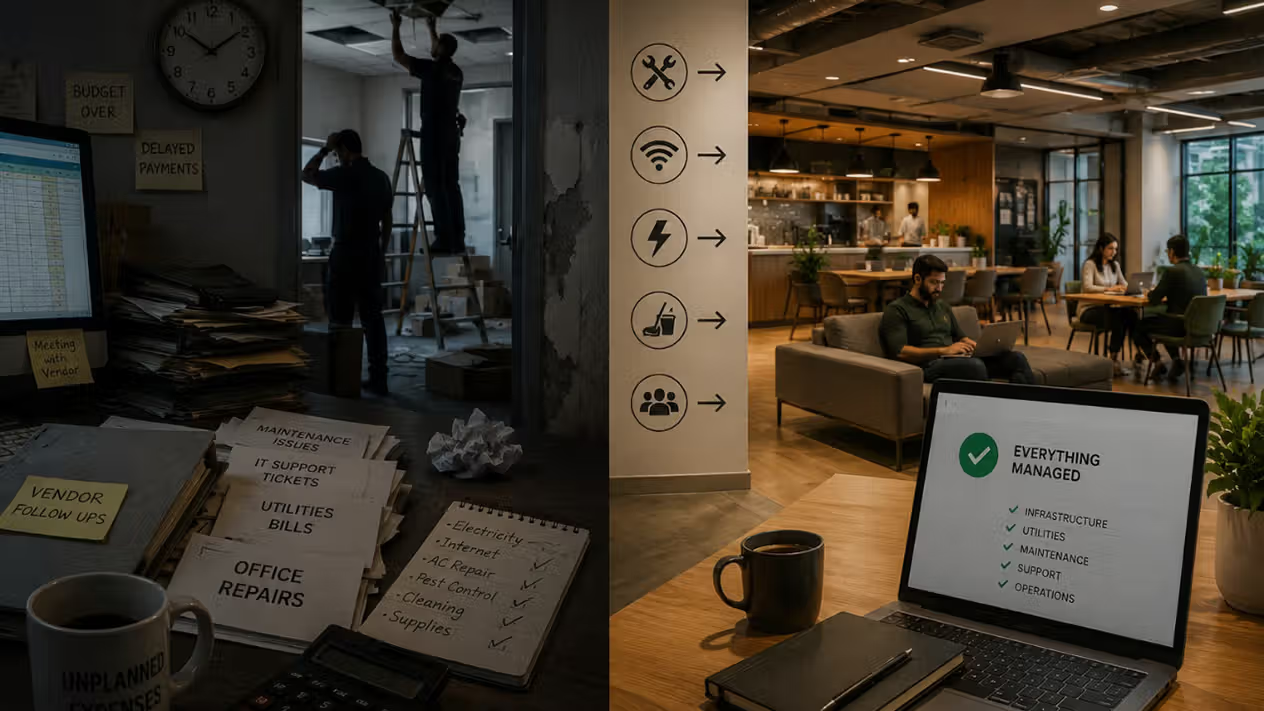
A managed office space in Bangalore is often compared with a private office or coworking space primarily on rent. But the monthly price is only one part of the operational picture.
For an operations team, the real cost of an office can also include time spent resolving internet issues, coordinating vendors, managing housekeeping, responding to facilities problems and preparing for changes in headcount.
A private office can offer greater control, while coworking can provide flexibility and faster setup. A managed office offers another model for companies that need dedicated space while reducing the amount of day-to-day facilities management handled internally.
For growing companies, the useful comparison is therefore not limited to rent. It should also account for setup responsibility, facilities management, flexibility, privacy and the internal time required to keep the workplace running.
Why COOs Should Look Beyond Rent
The monthly rent is easy to identify. The internal effort required to operate the office can be less obvious.
When a company takes a private office, responsibility may extend beyond the lease to interiors, furniture, internet, electricity, cleaning, repairs, pantry supplies, access control, vendors, visitor management and security.
Each task may be manageable individually, but repeated facilities coordination can add to the workload of operations, administration and workplace teams over time.
A broken chair needs a vendor. A slow internet line needs escalation. A meeting room AC failure needs immediate attention. A new team joining next month needs desks, access cards, storage, and maybe a new layout. For a COO, every one of these small tasks creates operational drag.
India’s flexible workspace market is already expanding because companies are looking for this kind of agility. Cushman & Wakefield reported that India’s flexible workspace stock is projected to surpass 100 million sq. ft. by 2026, with India emerging as one of the most mature flexible office markets globally.
That growth is not just about stylish workspaces. It is about companies trying to reduce friction in how offices are chosen, set up, and managed.
Private Offices: More Control, More Hidden Work
A private office feels attractive because it gives the company its own space. You decide the layout. You control access. You build the environment around your team.
That control has value. But it also comes with work that is easy to underestimate.
In a traditional private office, the company usually retains responsibility when something goes wrong. If the internet fails, an internal team may need to coordinate with the service provider. If housekeeping standards drop, the issue needs to be escalated and resolved. If the office becomes too small, the operations team may need to evaluate expansion or relocation options, with leadership involved where strategic approval is required.
For companies with dedicated facilities resources, this may be manageable. For growing businesses, however, recurring workplace issues can add considerable administrative and operational work that would ideally be resolved before requiring leadership attention.
Coworking: Faster to Start, But Not Always Built for Scale
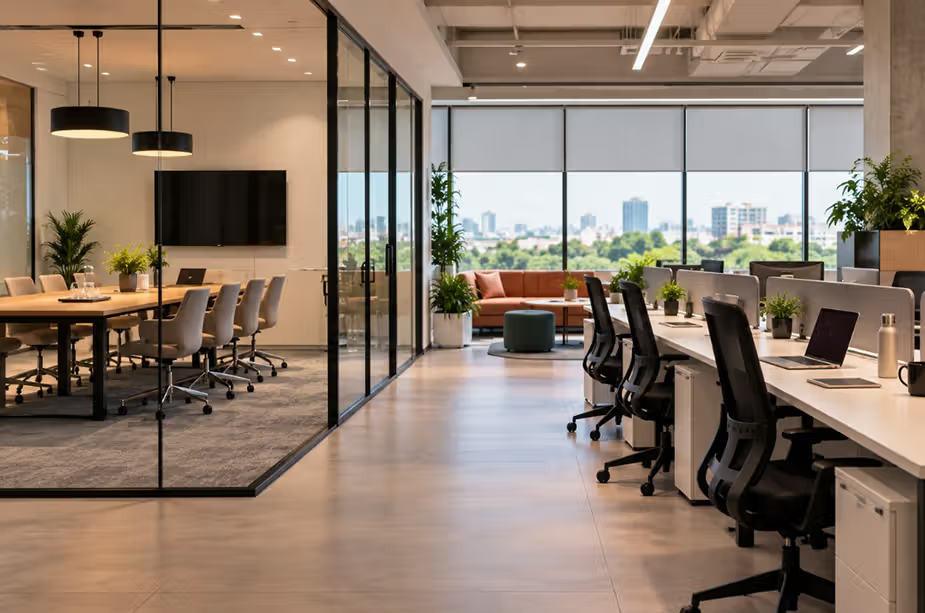
Coworking solves a different problem. It helps teams move quickly. No interiors. No large setup cost. No long wait to become operational.
For small teams, hybrid teams, consultants, project teams, and early-stage businesses, a coworking space in Bangalore can be a smart choice. It gives flexibility without the weight of a private lease. Beginest’s coworking space in MG Road is a relevant option for teams looking for business-ready workspace access in a central location.
But coworking can become difficult when a team grows beyond a certain point. Shared meeting rooms may be full when the sales team needs them. Noise may affect focused work. Sensitive client calls may need more privacy. Seat availability may become uncertain when headcount changes quickly.
The demand is still strong because companies want flexibility. In H1 2026, coworking operators leased a record 8.6 million sq. ft. across India’s seven largest office markets according to Colliers India data reported by The Times of India. The same report noted that coworking accounted for nearly one-fourth of gross office leasing activity.
The takeaway for COOs is simple. Coworking is powerful when flexibility is the priority. But if the business needs privacy, predictability, and stronger control, a managed office may serve the next stage better.
The Operational Cost COOs Often Miss
The most expensive office problems are rarely the loudest ones.
A delayed repair does not look like a major cost. But if it interrupts meetings, distracts employees, and forces admin teams to follow up repeatedly, it starts eating into productivity. The same happens with visitor coordination, room booking confusion, vendor delays, and unclear escalation paths.
COOs should look at office operations like a system. When the system is smooth, nobody talks about it. When it breaks, everyone feels it.
The hidden operational cost usually appears in five places.
- Admin time spent coordinating vendors and maintenance
- Leadership time spent resolving office issues that should be routine
- Employee time lost because of poor infrastructure or room availability
- Finance time spent tracking variable bills and unexpected expenses
- Growth time lost when the office cannot scale with headcount
This is why office decisions should not be owned only by finance or real estate teams. They affect operations, HR, culture, hiring, and employee experience.
Tired of managing the office instead of improving operations?
Beginest offers managed workspaces in Bangalore that reduce daily office friction, support team
growth, and give COOs a more predictable way to run workplace operations.
Managed Office: The Middle Path Between Control and Convenience
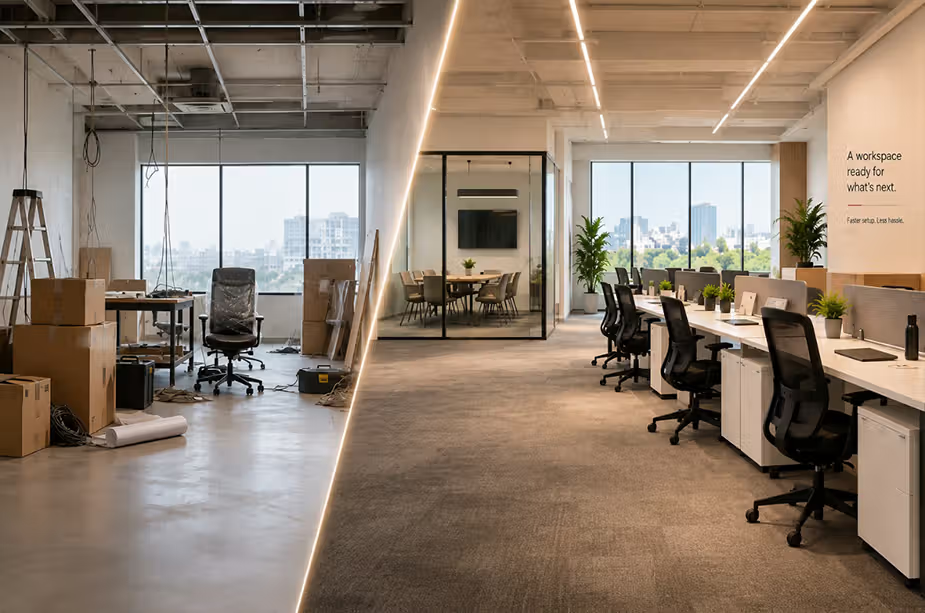
A managed office space in Bangalore gives companies a dedicated workspace without asking them to manage every moving part internally.
It offers privacy, structure, and operational support. Teams get a professional environment. COOs get better predictability. Founders get more time back. HR teams get a workplace that is easier to present to talent.
The model works because it removes a common workplace conflict. Businesses want control, but they do not always want the burden that comes with control.
In a managed office, the workspace partner handles the foundation. Internet, maintenance, housekeeping, security, meeting rooms, reception, support, and workspace readiness are built into the experience. The company can focus on how the team works, rather than how the office survives every day.
Beginest supports this through managed offices, coworking spaces, private offices, and meeting rooms in Bangalore for different team needs. The goal is not only to provide desks. It is to reduce the operational weight of running a workplace.
Why This Matters More in Bangalore
Bangalore adds another layer to the decision.
Commute patterns, talent clusters, client proximity, metro access, parking, and neighbourhood credibility all influence whether an office works in real life. A space that looks good during a site visit may feel very different once the whole team starts travelling there every day.
According to CBRE India Office Figures Q1 2026, office space take-up in India reached about 20.7 million sq. ft. in Q1 2026, with Bengaluru, Delhi NCR, and Mumbai together accounting for 67% of total absorption. This shows how central Bengaluru remains to India’s office demand.
For COOs, this means the best workspace decision is not only about the building. It is about whether the location, model, and operations can support hiring, retention, collaboration, and client-facing work without adding new pressure to the business.
Beginest’s presence across important Bangalore business areas, supported by its Beginest blog resources and workspace pages, helps companies evaluate different workspace needs across coworking, managed offices, and meeting rooms.
Comparison Table: Private Office vs Coworking vs Managed Office
| Factor | Private Office | Coworking Space | Managed Office |
|---|---|---|---|
| Cash flow impact | High. Significant upfront and ongoing costs. | Low. Pay for what you use, often monthly. | Moderate. Predictable monthly costs with fewer surprises. |
| Setup time | High. The company manages most setup work. | Low. The space is ready to use. | Low to moderate. The workspace partner handles readiness. |
| Operational effort | High. Admin and facilities teams carry the load. | Low for small teams, but shared systems may limit control. | Low. Support and maintenance are handled by the provider. |
| Team experience | High. Full control over design and environment. | Varies. Energetic and collaborative, but less privacy. | High, especially for dedicated teams. |
| Flexibility | Low. Long-term leases with fixed terms. | High. Month-to-month or short-term options. | Medium to high. Flexible terms with options to adjust. |
| Scalability | Difficult if the lease is rigid. | Flexible, but subject to seat availability. | Strong for growing teams with planned expansion. |
| Privacy | High. | Limited to medium depending on plan. | High, especially for dedicated teams. |
| Support quality | Self-managed or dependent on vendors. | Varies by provider. | High. Professional support and maintenance. |
| Location practicality | May be limited by budget and long-term commitment. | Wide range of locations in prime areas. | Typically in key business districts with good accessibility. |
| Exit options | Limited. Early termination can be costly. | Easy. Short notice, flexible exit terms. | Moderate. Flexible exit options depending on contract. |
| Best fit | Stable companies with internal facilities teams. | Small, hybrid, or early-stage teams. | Growing teams that need privacy and operational support. |
A COO’s Checklist Before Choosing the Office Model
Before finalising a workspace model, COOs should ask these questions.
- How many internal hours will this office need every month?
- Who handles internet, maintenance, access, housekeeping, and vendor issues?
- What happens if the team grows by 20% in the next quarter?
- Are meeting rooms available when teams actually need them?
- How much privacy does the team need for client calls and leadership discussions?
- Are costs predictable, or will monthly bills change based on usage?
- Does the office support employee experience, commute, and hiring?
- Can the company exit, expand, or adjust without heavy penalties?
If the answers are unclear, the office may be creating future work instead of solving a current problem.
How much of your team’s time is your office actually consuming?
Move routine workspace operations off your internal team and into a managed office built to handle day-to-day operations.
Why Managed Offices Are Becoming a Smarter COO Choice
COOs are expected to keep the business efficient, scalable, and stable. That becomes difficult when the office keeps creating small emergencies.
A managed office gives COOs a better operating base. It reduces the need to coordinate multiple vendors. It gives employees a more predictable environment. It gives leadership better visibility over costs. It gives growing teams the ability to scale without going back to zero every time the headcount changes.
The broader market supports this shift. Mordor Intelligence estimates India’s flexible office space market at USD 6.81 billion in 2026, growing to USD 12.87 billion by 2031. This growth reflects how businesses are choosing flexibility, lower setup pressure, and more adaptable workplace models.
For a COO, that is the real value. A managed office does not just save rent. It saves attention.
The Real Question Is Not Private Office vs Coworking
The more useful question is how much workplace responsibility your company wants to manage internally.
A private office may suit businesses that want greater control and have the resources to manage facilities themselves. Coworking may suit teams prioritising flexibility and shared infrastructure. A managed office may be worth considering when the business wants dedicated space and privacy while reducing internal responsibility for routine workplace operations.
At this stage of the decision, teams can compare Beginest’s managed office solutions in Bangalore, coworking options and meeting rooms based on location, privacy requirements, expected headcount, operational support and commercial terms.
Frequently Asked Questions
1. What is the hidden operational cost of a private office?
The hidden operational cost of a private office includes admin time, vendor coordination, maintenance follow-ups, internet management, security, housekeeping, repairs, and employee complaints. These costs may not appear in rent, but they affect productivity and leadership focus.
2. Is a managed office space in Bangalore better than coworking for COOs?
A managed office space in Bangalore can be better for COOs when the team needs privacy, operational support, predictable costs, and room to scale. Coworking works well for smaller or hybrid teams, but managed offices are often stronger for growing teams that need structure.
3. What is the difference between a managed office and a private office?
A private office is usually leased and managed by the company. A managed office gives the company dedicated space while the workspace provider handles operations such as maintenance, housekeeping, security, internet, and support.
4. How does coworking reduce office setup cost?
Coworking reduces office setup cost by removing the need for interiors, furniture, internet installation, reception setup, utilities, and maintenance planning. Teams can move into a ready workspace and start working faster.
5. When should a company move from coworking to managed office space?
A company should consider moving from coworking to managed office space when the team grows, needs more privacy, requires dedicated meeting rooms, handles sensitive client work, or wants a more predictable office environment without managing a traditional lease.