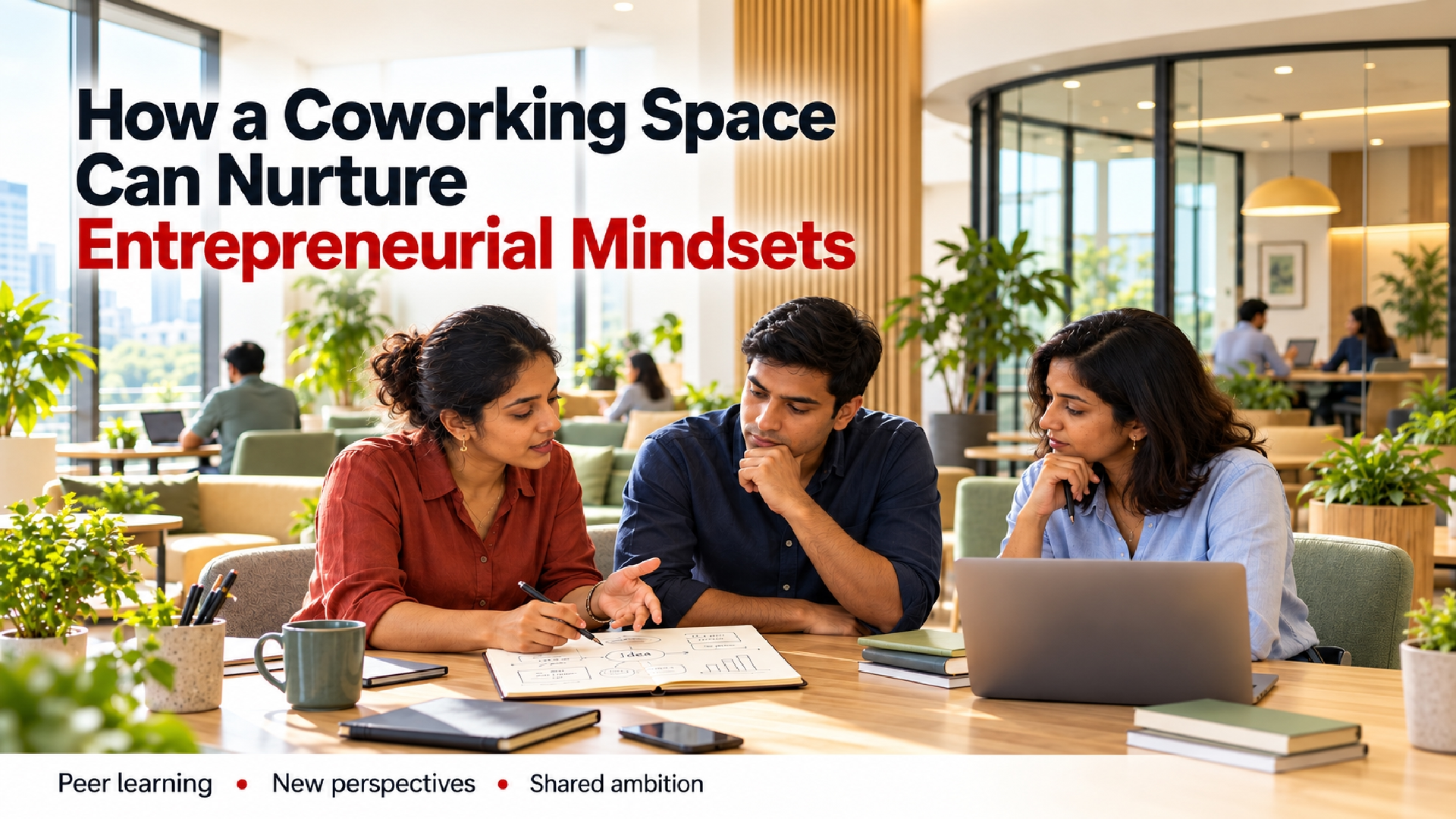
An entrepreneurial mindset shows up in repeatable behaviours: asking better questions, testing assumptions, learning from other people and staying resourceful when plans change.
Coworking spaces for entrepreneurs can support those behaviours by making focused work, useful conversations and peer learning easier to repeat. The space does not create the mindset on its own. Founders still have to use the environment intentionally. That distinction matters when choosing where to work.
What an Entrepreneurial Mindset Looks Like in a Normal Workweek
An entrepreneurial mindset is less about constant hustle and more about responding well to uncertainty. It may mean changing an assumption after customer feedback, asking another founder how they solved a problem, or testing a small idea before spending heavily on it.
An exploratory study published in Research Policy identified connections, solutions, energy and motivation, and social support among the benefits entrepreneurs experienced in coworking environments. These are useful only when founders turn them into better decisions and actions.
Proximity creates opportunity, not guaranteed value. A founder can sit in a busy coworking space and still stay isolated. The benefit appears when interaction is possible and the founder uses it with intention.
Why Coworking Can Reinforce Better Founder Habits
Different Problems Around You Can Challenge Your Assumptions
Working near people from different functions and sectors exposes founders to different ways of framing problems. A product founder may learn from an agency owner, while a services business may borrow an onboarding idea from a software team. The value is perspective, not random networking.
Feedback Can Happen Before a Decision Becomes Expensive
A short conversation can reveal a blind spot before it becomes expensive. Coworking can make low stakes feedback easier because useful people are nearby. It does not replace customer research or validation. It gives founders another place to pressure test an idea early.
Less Workspace Administration Protects Attention
Founders have limited attention. Internet issues, maintenance and meeting logistics can quietly consume it. A professionally run coworking environment can reduce some of that operational load and leave more space for decisions only the founder can make.
What could change if useful feedback was easier to find?
A good work environment should protect focus while making the right conversations easier to have.

Five Ways Founders Can Use a Coworking Community More Intentionally
1. Ask One Useful Question Each Week
Do not try to meet everyone. Pick one current problem and ask someone with relevant experience how they approached it. Specific questions produce better conversations than generic introductions.
2. Test Ideas in Small Conversations
Explain an early idea to someone outside your team and notice where they get confused. This is not market validation, but it can sharpen the question you later take to customers.
3. Build Relationships Before You Need Help
Networking is more useful when it is not transactional. Learn what people around you are building, make relevant introductions and share useful context when you can. Over time, relationships become more valuable than a long contact list.
4. Protect Focus Instead of Networking All Day
Entrepreneurial energy still needs deep work. Use quieter areas for focus, move important conversations into meeting rooms in Bangalore , and decide when you are open to interaction.
5. Treat Events as Learning Opportunities, Not Attendance Goals
Attend a founder session, mixer or workshop because it connects to a question you are already working through. One useful insight is more valuable than attending every event.

A Mindset to Behaviour Map for Founders
A workspace can create conditions for better habits, but the founder still has to turn those conditions into action. This simple map keeps the distinction clear.
| Founder trait | What the environment can provide | What the founder should do |
|---|---|---|
| Curiosity | Exposure to people solving different problems | Ask someone outside your field how they would frame one current challenge. |
| Bias for action | Easy access to workspaces and meeting infrastructure | Turn an idea into a small test, interview or prototype review before making a large commitment. |
| Feedback seeking | Peers and professional conversations nearby | Ask for a specific critique rather than general encouragement. |
| Resourcefulness | A wider network of founders, operators and specialists | Check whether someone in the community has solved the problem before buying a new tool or service. |
| Resilience | Social support and contact with people building through uncertainty | Build relationships during normal weeks so support already exists when work becomes difficult. |
Would your workspace still help you grow after the novelty wears off?
Look beyond the desk. Check how well the space supports focus, useful interaction, private conversations and changing team needs.
How to Judge Whether a Coworking Space Will Actually Help
The best coworking environment is not necessarily the loudest community. Look for a balance between access to people and the ability to work without interruption.
- Check the community, not just the occupancy. Ask what kinds of teams work there and how members actually interact.
- Look for different work modes. Focus areas, phone booths and meeting rooms matter because founders switch between deep work, calls and collaboration throughout the day.
- Ask how community activity is structured. Useful events should make it easier to meet relevant people, not simply fill a calendar.
- Test the space before committing. A coworking day pass in Bangalore can help you observe noise, comfort, internet, commute and how the community feels during a normal workday.
- Choose the location your routine can sustain. If Bangalore is your base, compare practical options such as coworking spaces in MG Road and coworking spaces in Indiranagar against where your team, customers and partners actually travel.
At Beginest, the community is intended to sit alongside the working environment rather than replace it. The current website lists Founder Mixers, Hackathons, funding connections, and Advisory and Mentoring among its offerings. Our guide on why community matters for entrepreneurs and startups goes deeper into that topic.
Frequently Asked Questions About Coworking Spaces for Entrepreneurs
1. Do coworking spaces for entrepreneurs actually help founders grow?
They can help by creating easier access to peers, professional infrastructure and learning opportunities. Research on coworking also points to connections, problem solving support, motivation and social support as possible benefits. Growth still depends on the founder using those resources well. Simply renting a desk does not automatically improve decision making or business performance.
2. Can coworking spaces improve creativity and innovation?
Coworking can create conditions that support creative thinking by increasing exposure to different people, ideas and working styles. A 2025 Geoforum case study found that organisational, social and, to a lesser extent, institutional proximity were positively associated with knowledge sharing in the coworking community studied. It also suggested that physical proximity alone was not enough to explain meaningful knowledge exchange.
3. Is coworking better than working from home for a startup founder?
It depends on what the founder needs. Home can be efficient for quiet individual work and keeping costs low. Coworking becomes more useful when isolation, client meetings, team collaboration, unreliable infrastructure or the need for professional separation starts affecting the work. Many founders use both and choose the setting based on the task.
4. What should founders look for in a coworking community?
Look for relevant people, natural interaction, useful events, privacy when needed and enough variety in the member base to expose you to different perspectives. Ask how the community works on an ordinary week, not only during special events. A strong community should make useful conversations possible without making networking feel mandatory.
5. Are coworking spaces in Bangalore suitable for early stage startups?
Yes, especially when a team wants professional infrastructure without setting up and operating a full office immediately. The right option depends on headcount, privacy, commute, meeting needs and budget. Early teams should compare flexible desks, dedicated seating and private cabins, then test the location during a normal working day before deciding.
Choose an Environment That Makes Better Founder Habits Easier
A coworking space cannot manufacture curiosity, resilience or good judgment. What it can do is reduce friction around focused work, honest feedback, useful relationships and faster learning.
That is a better standard for choosing a workspace. Ask whether the environment makes it easier to work well, learn faster and stay connected to people who can expand how you think. Then compare Beginest locations against the way you and your team actually work.