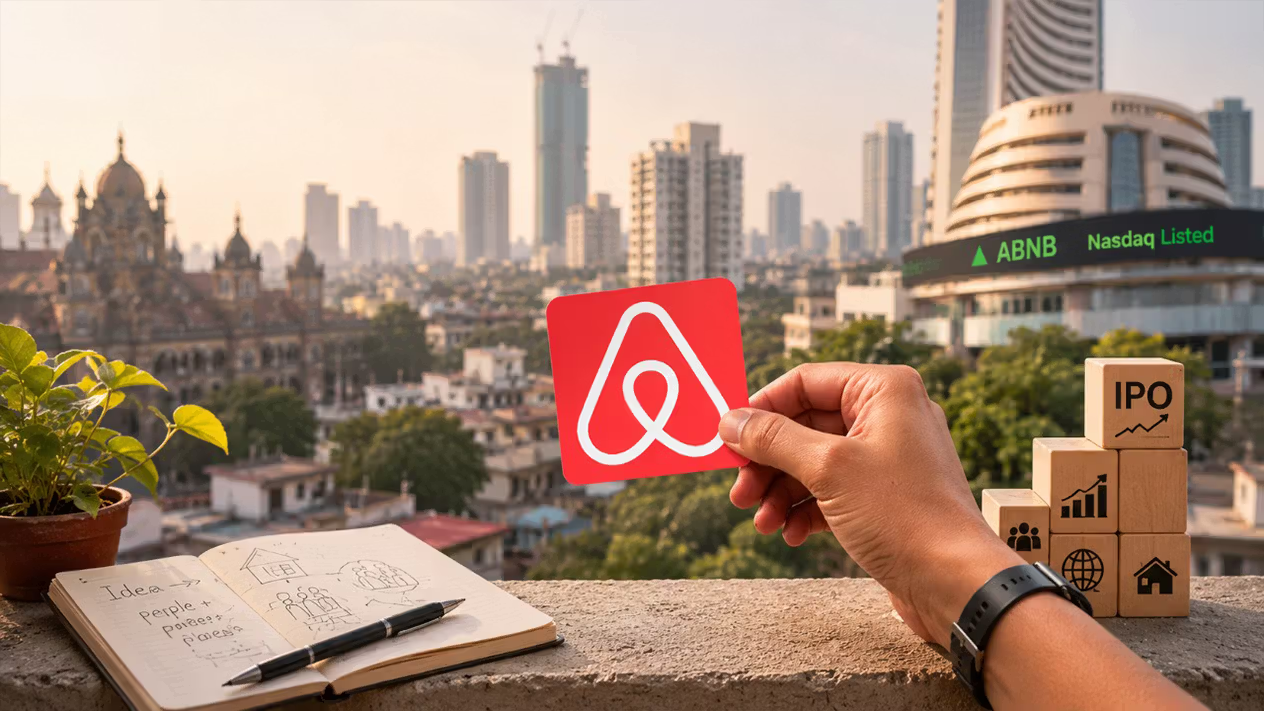
An apartment in San Francisco is where Airbnb began in 2007. It was just two hosts and three guests who checked in. By May 2026, they have more than 5.5 million hosts and have seen over 2.5 billion guests!
That contrast is what makes the Airbnb startup story worth studying. It began with a rent problem and a simple test of whether strangers would pay to stay in someone else’s home. Airbnb’s official company timeline traces how that experiment developed.
Airbnb started as AirBed & Breakfast when Brian Chesky and Joe Gebbia hosted their first guests in October 2007. Nathan Blecharczyk later joined as co-founder. After weak early launches, the team joined Y Combinator, expanded beyond rooms in 2009 and built a marketplace connecting hosts with guests. Airbnb became public on Nasdaq in December 2020.
How Airbnb Started: A Rent Problem Became a Product Test
Chesky and Gebbia were struggling with the cost of their San Francisco apartment. With a design conference filling local hotels, they put air mattresses in their home and hosted three guests.
The first version was basic, but real customers paid. For founders, that is the useful point: early validation can come from a small group using an imperfect product.
AirBed & Breakfast launched at SXSW in March 2008 with just two bookings. In August, it received 80 bookings around the Democratic National Convention, according to Airbnb’s company history. Demand existed, but it was still inconsistent.

Why Airbnb Nearly Stalled and What the Founders Changed
Airbnb had little early momentum. Investors were unconvinced, growth was weak and the founders were using credit cards to keep going.
The Obama O’s and Cap’n McCain’s cereal boxes helped the founders raise cash and later signalled their resourcefulness to Y Combinator. Y Combinator’s account of Airbnb’s early period explains the more important move that followed: focusing on New York, meeting hosts and improving listings in person.
Persistence worked because the founders kept learning. They got closer to users and concentrated on a market where demand was visible. The same principle applies to building a useful startup network: proximity to customers and experienced peers can challenge assumptions faster.
Are you close enough to the problem you are solving?
Airbnb Business Model Explained: A Marketplace Instead of a Hotel Chain
Airbnb’s business model is a two sided marketplace. Hosts list stays, guests search and book, and Airbnb provides discovery, payments, support and trust infrastructure.
Compared with a hotel chain, the model is relatively asset light because Airbnb does not need to build the accommodation inventory. Hosts expand supply while Airbnb operates the platform connecting both sides.
How Does Airbnb Make Money?
Airbnb makes money primarily through service fees tied to bookings. Fee structures vary by host type, country and setup, and Airbnb also charges fees for Experiences and Services. Airbnb’s service fee guidance is the best place to check current rules.
Why the Marketplace Model Could Scale
More hosts create more choice for guests, while more guest demand attracts hosts. That network effect only works if people trust the platform enough to transact.
Payments, reviews, protections and support therefore became central to the product. For marketplace founders, trust is part of the product, not a campaign added later.
Airbnb Growth Timeline: From Airbeds to a Public Company
| Year | Milestone |
|---|---|
| 2007 | Brian Chesky and Joe Gebbia host AirBed & Breakfast’s first guests in San Francisco. |
| 2008 | The startup launches at SXSW with two bookings, then receives 80 bookings around the Democratic National Convention. |
| 2009 | Airbed & Breakfast becomes Airbnb and expands beyond rooms to apartments, whole homes and holiday rentals. |
| 2011 | Airbnb begins international expansion by opening a German office. |
| 2016 | Airbnb launches Experiences, extending the marketplace beyond accommodation. |
| 2020 | Airbnb becomes publicly traded on Nasdaq under the ticker ABNB. |
Airbnb’s Journey to IPO Was Tested by the 2020 Travel Shock
In 2020, global travel collapsed. Airbnb said its business declined by nearly 80% when borders closed and travel stopped. The company cut costs and refocused on its core hosting business. Airbnb’s IPO letter called the crisis one of its most defining periods.
Airbnb still reached the public markets that December. Its IPO was priced at $68 per share, with 51,323,531 Class A shares in the offering. Airbnb expected about $3.4 billion in gross proceeds before expenses. Airbnb’s investor relations announcement confirms those details.
The IPO closed a chapter that began with three guests and showed how much a company can change while keeping its core marketplace logic intact.
Five Airbnb Startup Lessons Founders Can Actually Use
1. Start with a problem you understand closely.
Airbnb’s founders were users of the problem they were solving, which gave them direct insight into host and guest needs.
2. Do manual work when it accelerates learning.
Meeting hosts and improving listings would not scale forever, but it taught the founders what better supply looked like.
3. Treat trust as part of the product.
Marketplaces between strangers need reviews, payments, support and protections that reduce uncertainty.
4. Build a model where growth strengthens the network.
More useful supply attracts demand, and more demand can attract supply. That relationship helped Airbnb scale.
5. Resourcefulness matters, but focus matters more.
The cereal story shows persistence, but the stronger lesson came afterward: focus on the strongest market, talk to users and improve the product. Founders can also study how to attract investors for a startup without mistaking fundraising for product progress
Does your startup have room to change direction quickly?
Frequently Asked Questions About the Airbnb Startup Story
1. How did Airbnb start?
Airbnb started in 2007 when Brian Chesky and Joe Gebbia hosted three guests on air mattresses in their San Francisco apartment. The idea became AirBed & Breakfast, and Nathan Blecharczyk later joined as co-founder.
2. Who founded Airbnb?
Airbnb was founded by Brian Chesky, Joe Gebbia and Nathan Blecharczyk. Chesky and Gebbia hosted the first guests, while Blecharczyk joined as technical co-founder.
3. What is Airbnb’s business model?
Airbnb operates a two sided marketplace connecting hosts with guests. Hosts provide accommodation, guests book through the platform, and Airbnb supports discovery, payments, trust and customer service. Revenue comes mainly from service fees.
4. How does Airbnb make money?
Airbnb mainly earns service fees from confirmed bookings. Fee structures vary, and the company also charges fees for Experiences and Services. Current percentages should be checked on Airbnb’s official fee pages because the structure can change.
5. When did Airbnb go public?
Airbnb became publicly traded on December 10, 2020, on Nasdaq under the ticker ABNB. Its IPO was priced at $68 per share, and Airbnb expected about $3.4 billion in gross proceeds before expenses.
What Founders Should Take From Airbnb’s Journey
The useful part of Airbnb’s story sits between the airbeds and the IPO. The founders tested a small idea, struggled to create demand, got close to users, built trust and kept refining the model.
Founders do not need to copy Airbnb’s tactics. Observe real behaviour, solve the next constraint and keep learning.
For Bangalore founders who have outgrown home or café setups, Beginest coworking spaces in Indiranagar and the managed office spaces in MG Road can remove workspace friction while the company keeps learning.