
When teams discuss hybrid work, one question almost always comes up: “How many days a week should people come into the office?”
Before answering that, it helps to understand how hybrid work culture is evolving in India and how different work patterns can fit different teams and roles. The question changes from “how” to “when”.
Remote days can give employees more control over focused work, while office days can be useful for collaboration, onboarding and conversations that benefit from being in the same room. A well-designed hybrid model gives each setting a purpose instead of treating home and office days as interchangeable.
Hybrid Work Has Moved From a Perk to an Operating Decision
The experiment phase is largely over. Companies are still adjusting policies, but hybrid work is now part of normal workforce planning rather than a temporary exception. Gallup's 2026 hybrid work analysis found that hybrid remains the most common arrangement among remote capable U.S. employees, with workers spending about 2.3 days a week on site.
India has its own rhythm. JLL's 2024 India Future of Work survey found that 90% of surveyed Indian organisations required at least three office days a week. Three days is not automatically right for every company, but the office clearly still matters.
The Best Hybrid Teams Stop Treating Every Day the Same
A hybrid model gets frustrating when the calendar changes but the work does not. People come in because policy says so, then spend the day doing work they could have done anywhere. Remote days fill with calls because nobody is sure when the team will overlap again.
Decide what actually deserves physical presence. Kickoffs, onboarding, workshops, client meetings and difficult discussions often benefit from being together. Writing, analysis, coding and planning often benefit from uninterrupted time.
That distinction changes the conversation. Instead of asking, 'Which three days are mandatory?', ask, 'Which work becomes noticeably better when we are in the same room?'
What Work Belongs Where in a Hybrid Model?
| Type of work | Usually works best | Why |
|---|---|---|
| Deep individual work | Remote or quiet desk | Fewer interruptions and more control over focus time. |
| Project kickoffs and workshops | Office | Faster discussion, visible context and easier problem solving. |
| Client or partner meetings | Office or meeting room | Privacy and a more professional setting. |
| Routine status updates | Async first | Avoids filling office and remote days with meetings. |
| Onboarding new hires | Hybrid mix | In-person time builds context; remote practice builds independence. |
| Sensitive one-to-ones | Private room or secure video | The right choice depends on privacy, trust and context. |
Do your office days earn the commute?
If people are coming in, give them a setting that makes collaboration, meetings and focused work easier rather than harder.
Hybrid Culture Changes Management More Than Geography
Hybrid teams expose weak management quickly. If priorities are unclear, decisions live in private chats and people are judged by visibility, moving work between home and office will only make those gaps more obvious.
The practical work is simple: define ownership, write decisions down, agree on response times and make recurring meetings earn their place. Gallup's current research also points to team coordination as a major factor in whether hybrid arrangements feel sustainable. Teams with a clear hybrid collaboration plan report stronger engagement and lower burnout than teams without one.
Managers also have to stop using visibility as a shortcut for performance. Someone working from home should not need to stay permanently green on chat. Goals, quality and follow through are better signals.
The Office Now Has to Earn the Commute
Hybrid work raises expectations of the office. After a long commute, people notice when the space is noisy, meeting rooms are unavailable or calls have nowhere private to go.
JLL's 2025 Workforce Preference Barometer found that employees are broadly more accepting of office attendance, while expecting a better workplace experience and more control over how work fits into life. Attendance rules alone do not create a useful office day.
A hybrid office needs more than rows of desks. It needs places for focused work, private calls, collaboration and meetings with remote colleagues.
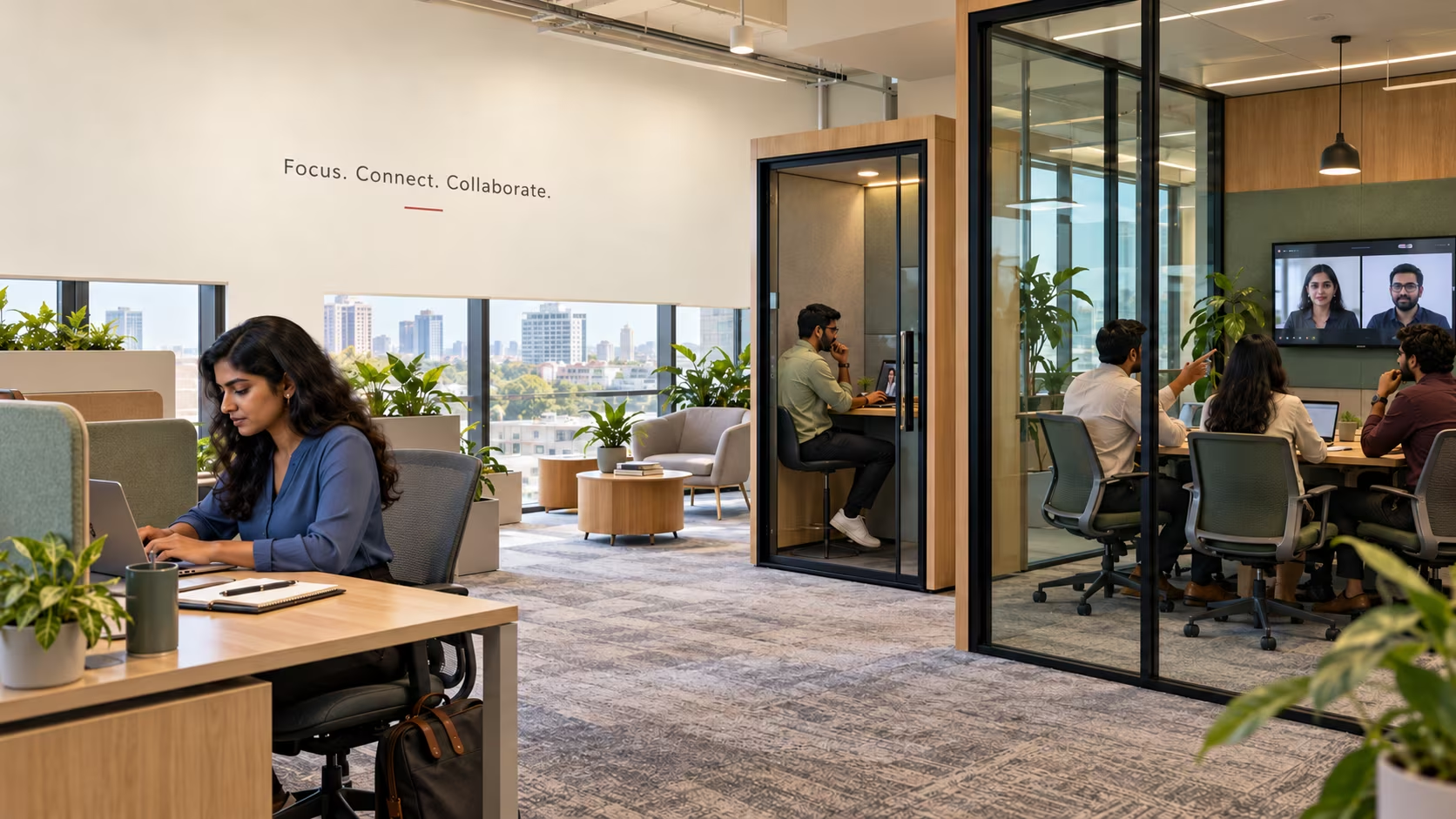
Hybrid Work Changes the Office Capacity Question
A 60 person company does not automatically need 60 fixed desks if attendance is staggered. But cutting to 30 seats can fail quickly when everyone chooses the same Tuesday.
Plan around peak attendance, not the weekly average. On busy days, a hybrid team may need fewer dedicated desks but more meeting rooms, phone booths and places where new joiners can sit beside the people they are learning from.
Before signing or resizing an office, ask:
- How many days is each team expected to be on site?
- Will different teams choose the same office days or stagger them?
- What is the realistic peak headcount on the busiest day?
- How much of the office day is focused work versus collaboration?
- How often do clients, candidates or partners visit?
- Could hiring change the attendance pattern within the next 6 to 12 months?
Does your office still fit the way your team works?
Hybrid teams need the right mix of desks, private areas and meeting space. Compare the setup against your busiest real workday, not an average week.
Where Flexible Workspaces Fit Into a Hybrid Strategy
Flexible workspaces can be useful because office commitments can follow how the company actually uses space. It is not automatically right for every hybrid team.
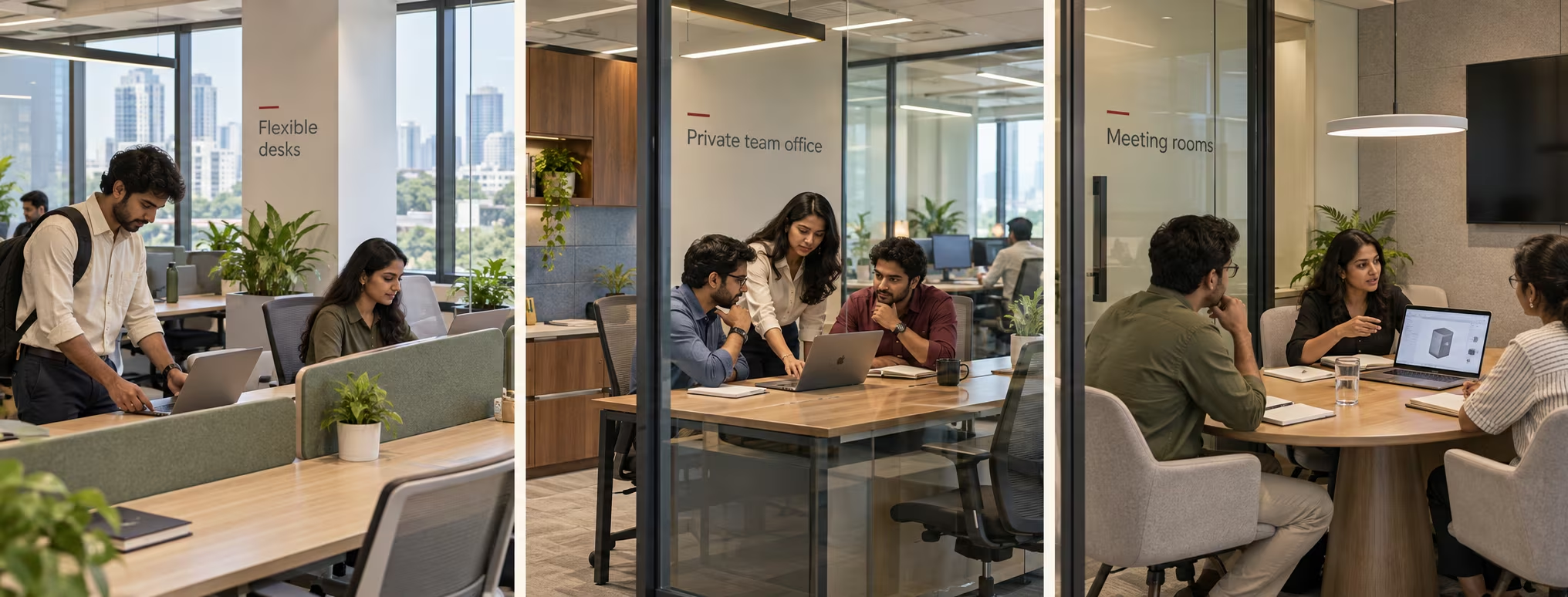
A small distributed team might use flexi desks in Bangalore for planned office days. A growing team that wants a private base may be better suited to managed office spaces in Indiranagar Teams that mostly work remotely but meet customers or run workshops can use meeting rooms in Bangalore when a professional setting is needed.
Beginest also offers coworking spaces in Indiranagar and coworking spaces in MG Road for teams that want accessible work locations without running every workplace operation themselves. The space should support the hybrid pattern, not force the team to redesign its week around the office.
Frequently Asked Questions About Hybrid Work Culture
1. Is hybrid work the same as remote work?
No. Hybrid work combines remote and on site work, while fully remote roles are carried out away from a regular office. A hybrid model usually creates specific reasons or days for people to meet in person while preserving remote time for flexibility or focused work.
2. How many days should a hybrid team work from the office?
There is no universal number. Two or three office days are common in many hybrid models, but the right pattern depends on the work, team size, commute and need for collaboration. Decide what needs physical presence first, then build the schedule around that work.
3. How do you maintain company culture in a hybrid team?
Culture needs repeated shared experiences, not constant physical presence. Strong hybrid teams use clear rituals, reliable manager check ins, thoughtful onboarding, written decisions and purposeful in person time. The office can support culture when people know why they are gathering and what they should accomplish together.
4. What type of office is best for a hybrid startup?
The best office is one that matches peak attendance and work patterns. Smaller teams may prefer coworking or flexi desks. Growing teams that need privacy, branding or dedicated collaboration areas may prefer a managed office. Avoid paying for permanent capacity that the team rarely uses.
5. How should a hybrid team choose an office location in Bangalore?
Start with employee travel patterns. Map where the people who attend most often live, then compare metro access, peak hour travel, client convenience and the final walk to the building. A central address only helps if the team can reach it without making office days unnecessarily difficult.
Give Every Place a Purpose
The future of hybrid work will not be decided by a perfect attendance number. It will depend on whether both parts of the model are useful. Remote days should protect focus. Office days should create interactions that are harder to reproduce through a screen.
For growing teams, design the operating rhythm before choosing the real estate. Decide how the team needs to work, identify the busiest days and choose a workspace that can support that pattern as the company changes.