
Try this. Name three companies you truly rely on - ones you’d mention to a friend without thinking twice. Then pause. What made them come to mind? That feeling didn’t appear out of nowhere.
Maybe it wasn’t the features at all. Was likely the mood they built instead. A certain rhythm in their words, perhaps. Or the quiet strength of what they believe. Even the steady pattern across each moment you’ve shared with them. That sense didn’t drift into being. Someone shaped it piece by piece on purpose.
Here’s the truth about startup branding. Tools like a logo or a set of colours only support the real work. What sticks is how people feel after they’ve seen, heard, or used something from your company. Left unguided, those moments form opinions without your input. Shape them first - someone else will if you don’t.
Start by mixing slowly. Then wait a beat before adding more. Watch how it changes along the way. Stop when it feels close. Adjust one small thing at a time. Finish only once it looks settled.
1. Know Your "Why" Before You Build Anything Else
There is a reason why Nike has stayed relevant for decades while dozens of sports brands have come and gone. It is not the shoes. Nike has always been selling something bigger, the idea that anyone can push past their limits. "Just Do It" is not a tagline. It is a complete philosophy compressed into three words.
Your brand purpose is the answer to the question your business exists to answer. Not "what do we sell?" but "why does it matter that we exist?" When you can answer that clearly - and mean it - everything else follows. Your messaging gets sharper. Your marketing gets more consistent. And customers who share that belief become loyal in a way that pure product quality rarely generates on its own.
Zomato in India figured this out. They are technically a food delivery platform, but the brand communicates something closer to "we get you" the humour, the relatability, the casual irreverence that mirrors how their audience actually talks and thinks. That alignment between purpose and communication is what makes them memorable in a category that is essentially a commodity.
Spend real time on this before you spend a rupee on design. A logo without a purpose behind it is just decoration.

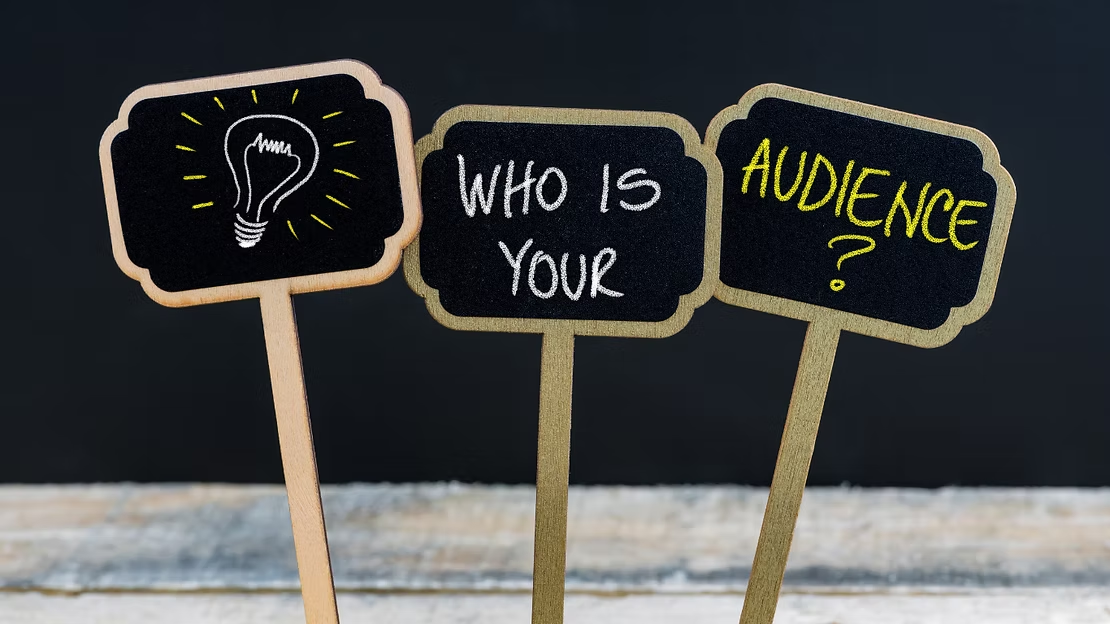
2. Your Target Audience Is Not "Everyone"
Most founders eventually claim their product fits all people. Yet more often than not, that mindset creates a brand unable to resonate with anyone. It spreads too thin, trying to grab every hand instead of holding one tight.
Who really grabs their attention after dark? Picture someone who gets what you need before you say it. Not just age or job title - deeper than that. Dreams they whisper to themselves matter here. Late-night thoughts shape real choices. Listen close when they describe the thing your idea fixes. The words people pick tell truths numbers miss entirely. Online haunts matter. Pinpointing each spot sharpens how clearly your brand mirrors their world.
Parents became the heart of Mamaearth’s story - those who watch every ingredient touching their kids’ skin, searching for safe options that don’t drain the wallet. Because they focused so tightly, the brand shaped words, images, and voice like tools made just for one hand. Not broad appeals. Not vague promises. A clear path opened when they stopped chasing all buyers. Depth won over width, quietly.
Starting out, it makes sense to want attention from everywhere. Money and time do not stretch far, so each person matters. Yet aiming at all people means missing real connection with any. Choose who you mean to reach. Get close to how they think. Build what lands like it was meant only for them.
Build Your Brand in a Room Full of People Doing the Same Thing
3. Consistency Is the Work Nobody Wants to Do But Has to
Picture Coca-Cola. Over 100 years, its mark stays almost untouched. Red hits first, long before letters make sense. Spot it on a poster, a bottle, a movie screen, or someone’s feed - your mind snaps into place without trying. Time after time, the same look hammered that response home.
What seems clear at first gets messy fast when more people join, platforms multiply, new voices arrive, and design updates roll out. Fonts shift without notice. LinkedIn reads stiff next to Instagram's ease. Emails from the latest team member could be from another company entirely. Each piece is tiny on its own. Together they blur the image slowly, making trust harder to hold.
One clear brand guideline document helps more than many confusing ones. When people see how the logo works, they repeat it right. Pages filled only with what matters make choices faster. Colours listed plainly stop guesswork every time. Fonts shown simply keep text looking like itself everywhere. How words sound when written down shapes how folks feel. No one needs ten rules - just the ones that stick. Found tucked away, it gets ignored like old notes. Used often, it becomes part of daily work without talk. Clear beats fancy each slow Tuesday morning. What sits open on screens tends to get followed by chance. The shortest path between idea and result wins quiet battles. It lives best where hands reach without thinking twice. Heavy binders gather dust while thin files stay near. Right there, it guides without needing permission first.
Each moment someone sees your brand consistency, it adds weight. When those moments stack up, familiarity grows into something steady. One repeated experience after another turns into reliance. Over time, what once was unknown stands firm as chosen.
4. Your Story Is a Competitive Advantage Nobody Can Copy
One shoe purchase. One given away. That twist set TOMS apart. Success did not come from the transaction alone. Feeling mattered more. Each sale carried a message repeated with care. People saw themselves inside that message. Ownership shifted. Not just footwear bought - belonging followed. A simple act, framed right, turned buyers into believers. The item faded behind what it stood for.
Stories stick. That is how minds work. Facts fade, but tales hold on tight. When everything else blends - same items, same reach, same slogans - one thing stays unique: why it began.
Truth matters more than drama. Here’s why you began - what itch could not wait. Some flaw out there tugged at you until you moved. The rough lessons picked up along the way? They now help others skip the pain. Back when they were struggling, paying rent felt impossible. This moment - where roommates became pioneers by opening their home - gave the sharing trend a face, something warm instead of odd.
Start clear. Stay steady. Place that message on your site, inside presentation files, in every chat your team has about the work. What you say shapes what you build.
5. Authenticity Is an Important Business Requirement
Most people now spot when words don’t match actions. When a business shouts about eco choices but wraps each item in layers of plastic, someone will point it out. Talk big about connection while ignoring those right in front of you? Trust slips away before you even notice it’s gone.
What a brand truly is shows in both its image and actions matching up. Values aren’t just words on display; they shape hiring choices, response to issues, pricing decisions, even the paths left unchosen. Doing nothing speaks as loud as doing something. Behaviour reveals belief far more than slogans ever could.
Starting out in India gives small new businesses a quiet edge. Older companies often drag along routines picked up over time, tough to shake off. From the very first morning, a fresh team gets to choose its own direction, then shape each piece to fit. Beginest coworking spaces and managed office spaces did not stop at desks and chairs; they grew a circle where founders connect. Their core idea - that real worth comes from shared energy - guides who joins, what events happen, even how rooms feel when you walk in. Each choice, big or tiny, carries that same thinking forward.
Over time, being real adds up. Stick around long enough doing what you said you would do - suddenly nobody fits quite right without you.
Build Something Real | From a Workspace That Takes Building Seriously
Frequently Asked Questions
1. Why is branding important for a startup in India?
Because the Indian startup ecosystem has never been more crowded. With over 100,000 registered startups, a great product is a starting point, not a differentiator. Startup branding is what makes a business memorable, trustworthy, and recognisable to the right audience. Investors, customers, and future employees all form impressions of your company before they ever meet you and your brand is doing that work constantly, whether you have shaped it deliberately or not.
2. What is the difference between a logo and a brand identity?
A logo is a single visual element. The Brand identity is the full system. Including the logo, colour palette, typography, tone of voice, messaging, and the overall feeling those elements create together across every touchpoint. Many early-stage founders invest in a logo and call it done. The ones who build memorable companies treat the logo as one small part of a much larger, more deliberate system.
3. How do you build brand consistency across a growing team?
Start with a brand style guide, a simple document that covers how your brand looks and sounds across different channels. It does not need to be a hundred pages. Even a concise one-pager covering your logo usage, colour codes, tone of voice, and language dos and don'ts gives everyone a shared reference point. The earlier you create it, the easier it is to maintain consistency as your team grows.
4. What is brand storytelling and why does it matter for startups?
Brand storytelling is the practice of communicating your brand through narrative rather than just product features. It works because stories create emotional connection in a way that specifications and bullet points never do. For startups, the founding story, the real reason the company exists, told honestly, is often the most powerful brand asset available. It cannot be replicated by a competitor, it travels easily from person to person, and it gives customers a reason to care that goes beyond the transaction.
5. How does a coworking space help a startup with its branding?
More practically than you might expect. Building a brand requires feedback, and feedback requires being around people who will give it to you directly. An active entrepreneurial community like the one at Beginest means you are surrounded by founders at different stages, some who have been through the brand-building process, some who are going through it alongside you, and some who are your potential customers. That access to real, unfiltered perspective is genuinely hard to replicate when you are working in isolation.
A strong business brand is not built in a sprint. It is built through the accumulation of consistent decisions, made over time, that add up to a reputation people trust and remember.
Beginest has coworking spaces in Indiranagar and MG Road, Bangalore built for founders who want to build companies that last surrounded by a community of people doing exactly the same.