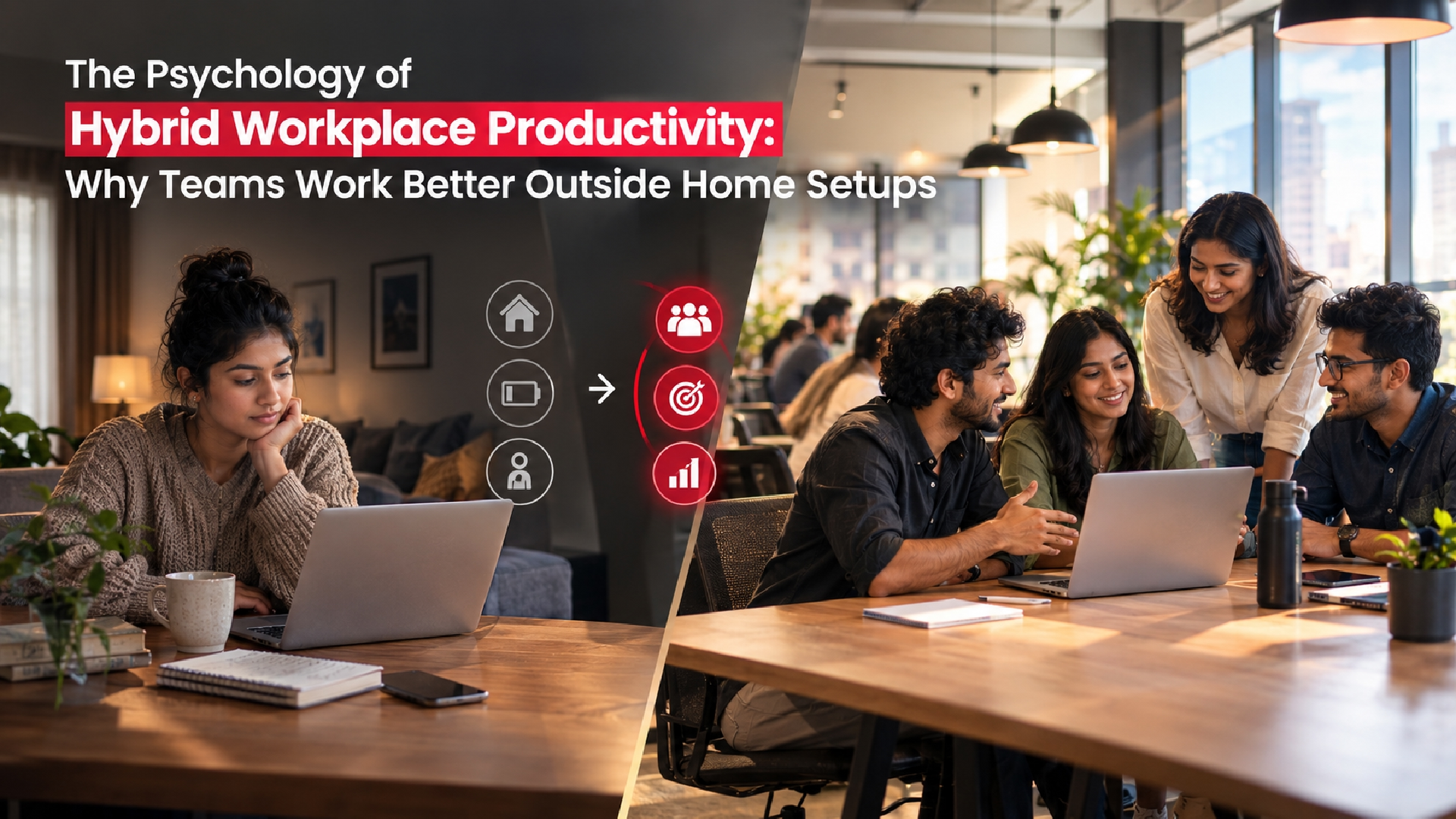
Hybrid workplace productivity is not just about where people sit. It is about how the environment around them shapes focus, energy, behaviour, and collaboration.
Most hybrid teams already know the home setup has benefits. It gives flexibility. It saves commute time. It helps people manage personal routines better. But after a point, HR leaders and managers start seeing a different pattern. Brainstorming feels slower. New employees take longer to blend in. Small questions become scheduled calls. Team energy drops quietly.
That is when the workspace question becomes psychological, not just logistical. People do not work in a vacuum. They respond to cues around them. A dining table, a sofa, a bedroom desk, a busy household, and a professional workspace all send different signals to the brain. For hybrid teams, the right physical environment can make collaboration feel natural again.
Why Home Setups Work Well for Some Tasks, But Not All Tasks
Home can work well for individual tasks such as writing, reviewing documents, coding, or preparing proposals, particularly when the employee has a quiet and reliable setup.
Different conditions may be useful when the work depends on faster discussion, onboarding, brainstorming, confidential conversations, or frequent coordination between team members. In these situations, relying entirely on scheduled calls can add unnecessary friction.
For hybrid teams, the practical question is therefore not home or office? It is which environment suits the work being done that day?
Before choosing a shared workspace, founders and HR teams should ask: Which activities genuinely benefit from people being together? How often does the team need private meeting space? And does the location make those in-person days practical for employees?
Coworking and managed workspaces can provide that shared setting when required without committing every workday to the office. Beginest offers flexible coworking and managed office spaces in Bangalore for teams that want this balance without building a full office from scratch.
The Brain Takes the Room Seriously
A simple truth often gets ignored. People behave differently in different places.
At home, the brain sees mixed signals. The same room may be used for breakfast, rest, family conversations, and late-night work. Over time, these blurred boundaries make it harder to switch fully into team mode. The person may be online, but not always mentally present in the same way.
A professional workspace creates clearer cues. You enter. You see other people working. You sit at a desk designed for work. You walk into a meeting room. The environment tells the brain, this is where focused and collaborative work happens.
That matters for employee productivity outside home. It is not magic. It is context. The right space reduces the mental effort needed to prepare for work. It also makes professional behaviour feel natural.
For hybrid teams in Bangalore, this is especially useful because employees may not need to travel every day. They only need a reliable place for the days when working together will produce better outcomes than working separately.

Collaboration Needs More Than Video Calls
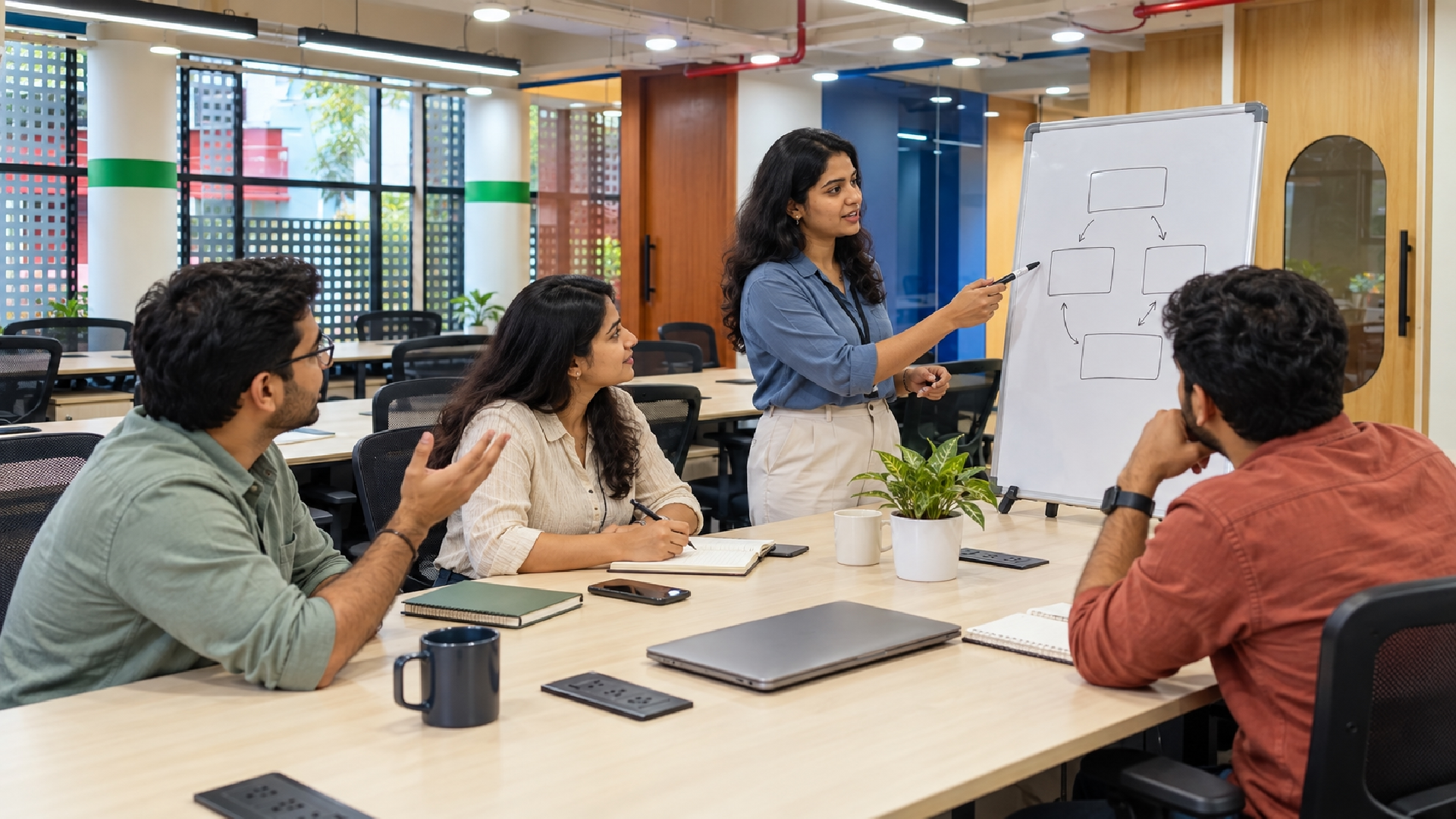
Video calls are useful, but they do not replace every layer of collaboration. A project discussion is not only the words spoken during a meeting. It includes the quick comment before the meeting, the whiteboard sketch, the look of confusion someone notices, and the five-minute conversation that solves what a thirty-minute call could not.
Research on hybrid work has started pointing in the same direction. A 2025 study on sense of belonging in hybrid work settings explained that remote work creates physical asynchrony, where employees are usually alone, while onsite work creates physical synchrony, where people work alongside others and can build stronger connection. ScienceDirect notes that organisations should design hybrid models that support connection, not only flexibility.
This is why team collaboration in coworking spaces can feel easier than collaboration from home. Shared physical presence reduces the distance between thought and action. Someone can ask, clarify, test, revise, and move ahead faster.
Give your hybrid team a workspace that supports real collaboration.
Beginest Workspaces offers coworking spaces, managed offices, and meeting rooms in Bangalore for
teams that need focus, connection, and flexibility.
Why This Matters for HR Leaders
For HR leaders, hybrid work is not only a policy. It is an employee experience system. The question is not whether people should work from home or office. The better question is, what environment helps people do their best work for each type of task?
Gallup’s 2025 workplace research found that fully remote employees were more likely to report anger, sadness, and loneliness than hybrid and onsite workers. It also reported that fully remote workers were more likely to experience a lot of stress the previous day at 45%, compared with 39% for remote-capable onsite workers and 38% for non-remote-capable onsite workers. Gallup described this as a remote work paradox, where engagement can be high while wellbeing is under pressure.
That does not mean remote work is bad. It means HR teams need to design hybrid work with care. Home can support autonomy. A shared workspace can support belonging. When the two are used thoughtfully, employees do not have to choose between flexibility and connection.
This is where a workspace for hybrid teams becomes valuable. It gives HR leaders a practical way to bring people together without forcing every employee into a five-day office routine.
Hybrid Work Performs Best When It Has Structure
Hybrid work often fails when it is treated casually. If everyone chooses random days, collaboration becomes a guessing game. If office days have no purpose, employees see them as commute-heavy calendar days. If teams come together but still spend the day on individual calls, the workspace loses meaning.
The strongest hybrid models give office days a role. They use physical space for onboarding, planning, client meetings, team reviews, training, brainstorming, culture building, and difficult conversations. Home days handle individual execution.
A large randomized study published in Nature found that hybrid work, where employees worked from home two days a week, improved job satisfaction and reduced quit rates by one-third, while having no negative effect on performance grades over the next two years. Nature reported these results from a six-month trial involving 1,612 employees at a technology company.
The lesson is useful for HR leaders. Hybrid work can work very well, but only when the setup supports both flexibility and organised collaboration. A professional space outside home helps give that structure.
Bangalore Teams Need Practical Hybrid Infrastructure
Bangalore has a unique work rhythm. Talent is spread across areas. Commutes can be tiring. Startups want flexibility. Growing companies need reliable infrastructure. HR leaders are expected to support productivity without making employees feel boxed in.
The demand for flexible workspaces reflects this shift. Cushman & Wakefield reported that India’s flexible office stock reached 79.7 million sq. ft. in Q2 2025 and is expected to cross 100 million sq. ft. by 2026. Bengaluru led the country with 21.1 million sq. ft. of flex stock. Hindustan Times covered the report, highlighting Bengaluru’s leadership in this category.
This growth is not only about office real estate. It is about how companies are rethinking work. Teams want spaces they can use when they need them. Businesses want fewer fixed costs. HR leaders want employees to feel connected without removing flexibility.
Beginest’s coworking space in MG Road and managed office space in MG Road give Bangalore teams access to professional work environments in a central business location. For hybrid teams, this can become a dependable base for important workdays.
Decision Framework: When Should Hybrid Teams Work Outside Home?
Not every day needs a shared workspace. That is the point. The value of a flexible workspace comes from using it for the right work.
| Work Situation | Best Environment | Why It Works |
|---|---|---|
| Deep individual work | Home or quiet desk | Fewer interruptions help focus |
| Brainstorming | Coworking space or meeting room | Shared energy improves idea flow |
| Client meetings | Professional meeting room | Creates credibility and privacy |
| New employee onboarding | Shared workspace | Helps people learn culture faster |
| Team reviews | Managed office or meeting room | Improves clarity and accountability |
| Sensitive conversations | Private office or cabin | Protects confidentiality |
| Culture building | Coworking or managed workspace | Builds belonging through presence |
This kind of planning protects both flexibility and performance. It also prevents office days from becoming symbolic. People should come together because the work needs togetherness.
If your team comes in just to sit on calls, the office day is being wasted.
Use Beginest workspaces for the moments that actually need people together — onboarding, brainstorming, team reviews, client meetings and culture-building.
What Teams Gain When They Step Outside Home
The benefits are often small at first, then powerful over time. A junior employee asks more questions. A manager spots confusion earlier. A founder gets faster feedback. HR sees stronger team bonding. Meetings become more focused because the room itself gives the discussion weight.
A well-chosen hybrid work environment also improves boundaries. Employees can leave home, work with intention, meet people, and return with a clearer separation between professional and personal life.
For companies, the advantage is practical. They do not need to build a full-time office immediately. They can use coworking spaces, meeting rooms, or managed offices based on team size and work rhythm.
The HR Lens: Productivity Is Also Emotional
Productivity is usually measured through output. But the roots of productivity are often emotional. People work better when they feel seen, supported, trusted, and connected to a larger goal.
Home setups can protect comfort. They do not always create shared momentum. A good workspace can do both when used correctly. It gives people a professional setting without demanding the old full-time office model.
That is why employee experience in hybrid work should include the physical environment. A policy document can say a team is hybrid. The actual experience depends on where people meet, how they collaborate, and whether the space helps them do the work that matters.
Frequently Asked Questions
1. What is hybrid workplace productivity?
Hybrid workplace productivity refers to how well employees perform across home, office, coworking, and managed workspace settings. It depends on matching the right environment to the right type of work, such as using home for focus and shared spaces for collaboration.
2. Why do teams work better outside home setups?
Teams often work better outside home setups because professional environments create clearer work cues, stronger collaboration, faster communication, and better boundaries. This is especially useful for brainstorming, onboarding, reviews, and client meetings.
3. Are coworking spaces good for hybrid teams?
Yes, coworking spaces are useful for hybrid teams because they give employees a flexible place to meet, collaborate, and work professionally without requiring a full traditional office lease.
4. How can HR leaders improve hybrid team collaboration?
HR leaders can improve hybrid team collaboration by assigning clear purposes to in-person days, using meeting rooms for important discussions, supporting team rituals, and giving employees access to reliable workspaces outside home.
5. Why should Bangalore companies consider managed office spaces for hybrid work?
Bangalore companies should consider managed office spaces because they offer professional infrastructure, meeting rooms, private work areas, and operational support while helping teams avoid the pressure of setting up and managing a full office independently.