
India already has more than 1,700 Global Capability Centers, and the next wave is taking on far more strategic work. That makes the workplace decision more important than simply finding enough desks.
Choosing managed office space for GCCs in Bangalore means planning for speed, security, technology and growth together. A space that works for 80 employees may constrain the business at 300 if connectivity, access control, meeting capacity or expansion are treated as afterthoughts.
This guide covers the workplace decisions GCC leaders should resolve before moving in.
What Should a GCC Office in Bangalore Actually Solve?
A GCC office has to help a global organisation start quickly, support enterprise standards, create a credible employee experience and leave room to grow. The workplace is part of the operating model, not simply a real estate expense.
Faster Setup Without a Long Vendor Chain
A conventional office can involve property negotiations, design, fit out, furniture procurement, network setup, vendor onboarding and facility staffing. Each dependency adds another coordination point between India teams and global stakeholders.
A managed office can consolidate much of that execution under one workspace partner. The goal is not to skip due diligence. It is to remove avoidable setup work from the launch timeline.
At Beginest, the managed workspace process starts with requirement and team size mapping, followed by layout and branding, build out and compliance coordination, then ongoing management. That sequence helps the office follow the GCC requirement rather than forcing the team into a standard layout.
Enterprise Readiness From Day One
The first office becomes the physical expression of the India operation. It is where leaders hire, teams collaborate and global executives visit. Dedicated meeting rooms, leadership cabins, secure access, reliable connectivity and managed maintenance are therefore operating requirements, not decorative extras.
Why Bangalore Remains Central to GCC Workspace Decisions

Bengaluru remains India's leading office market. Colliers reported 22.1 million sq. ft. of Grade A leasing in 2025, close to one third of demand across the top seven Indian office markets. GCC expansion was one of the major demand drivers.
That matters because workplace demand is following business demand. The growing role of GCCs is also reshaping what companies expect from their workplaces. With functions such as engineering, product, analytics, finance and research increasingly based in Bangalore, organisations need offices that can support larger teams, specialised talent and complex operations. This makes factors such as talent accessibility, infrastructure, scalability and workplace quality just as important as rental costs when choosing an office in Bangalore.
Choose the Micro Market Around Talent, Not Prestige
There is no single Bangalore location for every GCC. Map where current and target employees live, onsite frequency, public transport and leadership travel. A cheaper address can become expensive if it makes hiring harder or creates daily friction for hundreds of employees.
Would this office still work when the team triples?
Evaluate the workspace for the headcount you are building toward, not only the team moving in first.
What to Define Before Choosing Managed Office Space for GCCs in Bangalore
A provider can only design the right workplace when the operating brief is clear. Before comparing buildings, define what the GCC needs to do inside them.
Map Teams and Working Patterns
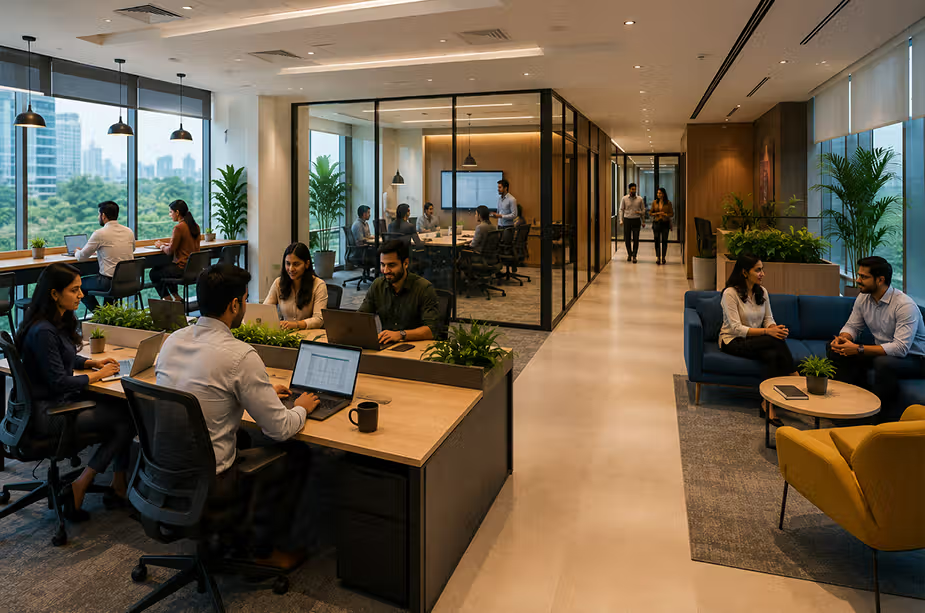
Engineering teams may need long focus periods and project rooms. Finance or support functions may need different access controls. Leadership needs privacy. Hybrid teams need meeting capacity based on peak attendance, not average attendance.
Ask which teams need to sit together, which functions need controlled zones and what spaces global visitors will use. These decisions shape the floor plan more than a generic seat count.
Define Technology and Security Before Interiors
Internet bandwidth, redundancy, power backup, access control, visitor management and secure meeting areas should be discussed before the final layout is approved.
For GCCs, technology and security requirements are often governed by global standards, making early alignment essential. Before the workspace design is finalised, companies should have clarity on the existing IT and security infrastructure, the level of customisation available, and which responsibilities will be managed by the workspace provider versus the occupier.
Decide How Much Brand Identity the Office Needs
A GCC remains part of the parent organisation even when a third party manages the workspace. Signage, leadership areas and collaboration spaces should reflect the company culture. Beginest supports custom layouts and branding within its managed office model.
GCC Workspace Readiness Scorecard
Use this framework during early provider discussions.
| Area | What to Validate | Why It Matters |
|---|---|---|
| Launch readiness | Requirement to move in timeline | Delays affect hiring and launch plans |
| Customisation | Cabins, team zones, meetings and branding | The office must support real workflows |
| IT and connectivity | Bandwidth, redundancy and power backup | Connectivity cannot be treated as a basic amenity |
| Security | Access control, visitors and controlled zones | Physical controls support enterprise risk reviews |
| Compliance readiness | Building documents, fit out coordination and ownership | Clear responsibilities reduce approval gaps |
| Operations | Facilities, maintenance and escalation paths | Daily issues should not become leadership work |
| Scalability | Expansion and reconfiguration options | Headcount may grow faster than the original plan |
| Cost visibility | Included, variable and additional costs | Finance needs predictability beyond base rent |
A premium interior cannot compensate for weak infrastructure, unclear ownership or limited room to grow.
Compliance Readiness Should Be Designed Into the Setup
For GCC teams, compliance is not a final check after interiors are complete. Legal, security, procurement, IT and workplace teams may each have approval requirements.
The workspace discussion should clarify property and fit out documentation, fire and life safety processes, access controls, vendor ownership and the responsibilities that remain with the occupier. Requirements vary by company and activity, so the GCC's own legal and compliance teams should validate the final setup.
A managed model can simplify coordination because the workspace partner becomes one operating interface for the scope it manages.
How many workplace vendors does your GCC really need to manage?
Fewer operational handoffs make ownership easier to track as the centre grows.
The GCC Office Market Is Moving Toward Scale and Flexibility
The demand picture supports this shift. Colliers reported in 2026 that GCCs could contribute up to 50% of office demand across India's top seven markets. The same firm's Q1 2026 data showed flexible workspaces accounting for 21% of leasing.
For a new GCC, the value of a managed model is not simply lower rent. It is the ability to move major setup work into a more predictable operating model. Furniture, infrastructure, facilities and maintenance can be planned as one workplace solution instead of through multiple procurements.
GCC leaders should still compare total occupancy costs, including deposits, fit out, IT, facilities, utilities, internal project time and expansion costs.
Plan the Office Around the GCC You Expect to Become
A common mistake is designing only for today's approved headcount. A centre may launch with 100 people and add new functions after the first phase succeeds.
Ask what happens at 150, 300 and 500 seats. Can the layout change? Is more capacity available? Can secure functions expand without disruption?
Beginest positions its managed office portfolio for enterprise and GCC requirements across Bangalore. Harbor 9 in JP Nagar, for example, identifies GCC requirements in the 200 to 1,000 seat range and includes leadership cabins, meeting rooms, leadership cabins, phone booths, collaboration areas, enterprise grade internet, security, custom branding and expansion options.
The expansion path should be clear before the current floor becomes full.
Frequently Asked Questions About Managed Office Space for GCCs in Bangalore
1. What is managed office space for GCCs in Bangalore?
Managed office space for GCCs in Bangalore is a dedicated workplace where the provider manages agreed parts of setup and daily operations. This can include interiors, furniture, meeting rooms, connectivity infrastructure, access control, maintenance and workplace support, while the GCC retains control of its business operations and enterprise policies.
2. How is a managed office different from coworking for a GCC?
Coworking usually focuses on shared, flexible workspace. A GCC managed office is typically more dedicated and can be planned around company specific layouts, private zones, branding, meeting requirements, security controls and longer term capacity. GCC leaders should confirm what space and infrastructure are exclusive before committing.
3. How long does it take to set up a GCC office in Bangalore?
There is no universal timeline. It depends on building readiness, team size, customisation, IT requirements, approvals and fit out. A managed office can shorten the process because core workspace infrastructure and operating teams are already coordinated, but the provider should give a requirement specific timeline before signing.
4. What compliance checks should a GCC make before choosing office space?
The GCC should involve legal, workplace, information security and procurement teams. Reviews may cover building and occupancy documentation, fire and life safety, physical access, vendor controls, IT responsibilities, data security requirements and business continuity. The exact checklist depends on company policy and the work performed at the centre.
5. Is a managed office suitable for a 500 seat GCC in Bangalore?
Yes, if the workspace has the capacity, infrastructure, privacy, meeting mix, expansion options and operating support required. Large teams should assess the building and provider as an enterprise workplace platform rather than comparing only per seat pricing. Future headcount scenarios should be discussed before the first layout is finalised.
Build the Workplace Around the Operating Model
For a GCC, the office is part of the launch plan. It affects how quickly people can start, how confidently global teams can visit, how employees experience the centre and how easily operations can expand.
Start with teams, growth, security, technology, compliance responsibilities and employee access. Then evaluate the real estate and commercial model against those needs.
A managed office can remove a significant amount of setup and facilities work from the GCC team when the provider can support enterprise requirements with clear ownership. The best outcome is an office that becomes quieter operationally as the GCC becomes more important strategically.