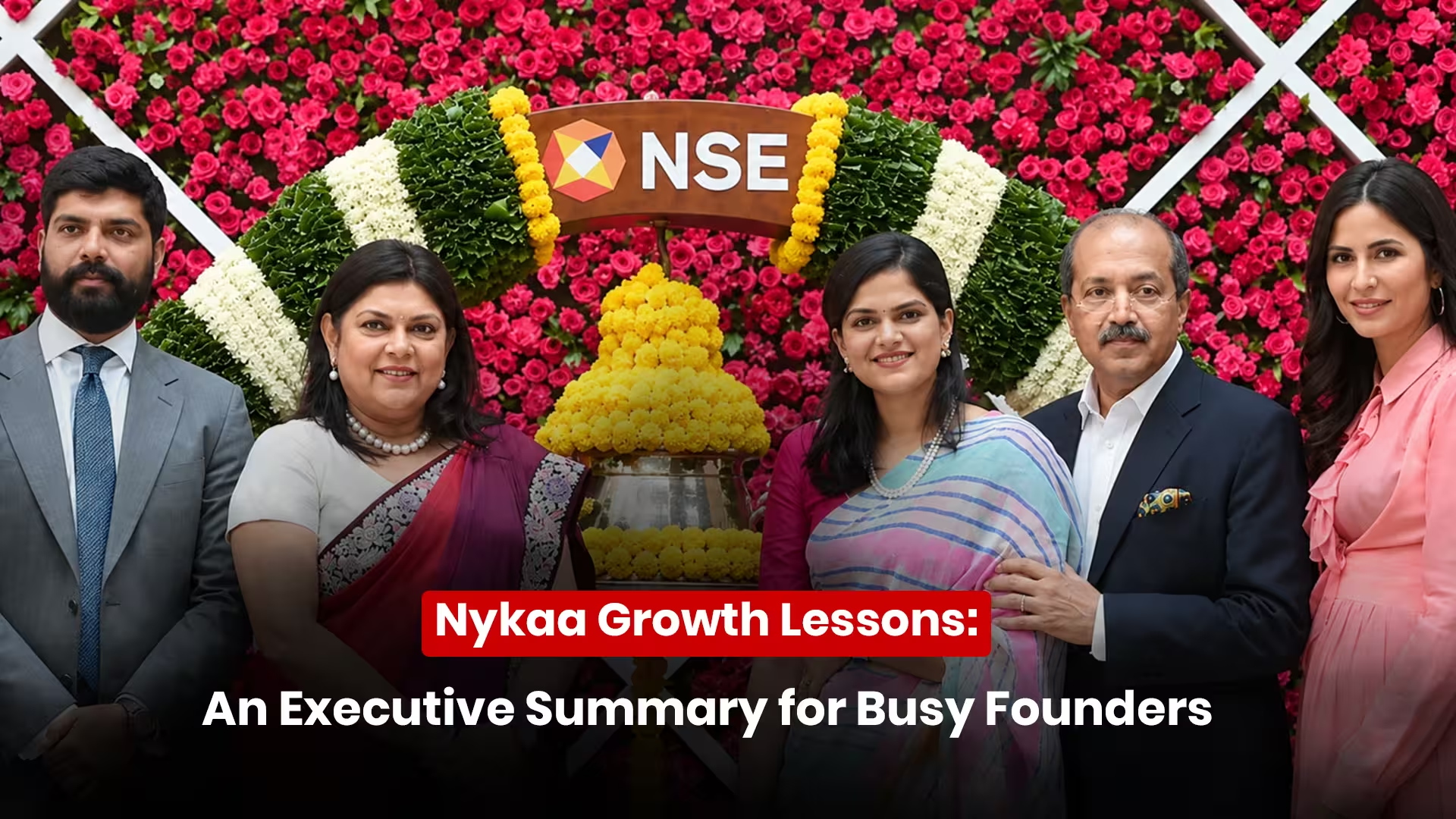
Nykaa is useful to study because its growth was not built on one clever campaign. It started with a focused category, built trust around product discovery, expanded channels as customer behaviour changed, and later used what it learned to create more value through owned brands and technology. The most useful Nykaa growth lessons are therefore not “copy this tactic” instructions. They are decisions about sequence.
Why Nykaa Is Worth Studying, Not Imitating
Nykaa’s current company profile says the company was founded in 2012 by Falguni Nayar as a digital first consumer technology platform. It now reports more than 52 million customers and 276 plus offline beauty destinations. That scale makes the story interesting, but the numbers are not the lesson by themselves.
1. Start Narrow Enough to Become Trusted
Early founders often worry that a narrow market makes the company look small. In practice, focus can make the company easier to understand. Customers know what problem you solve. Your team learns one market faster. Product feedback becomes less noisy.
Nykaa’s early category focus created a clear reason for customers to visit. The founder translation is simple: earn depth before chasing breadth. If your first twenty customers are asking for three different things, resist the urge to build all three. Work out which need is repeated, urgent and worth paying for.
2. Use Content to Reduce Customer Hesitation
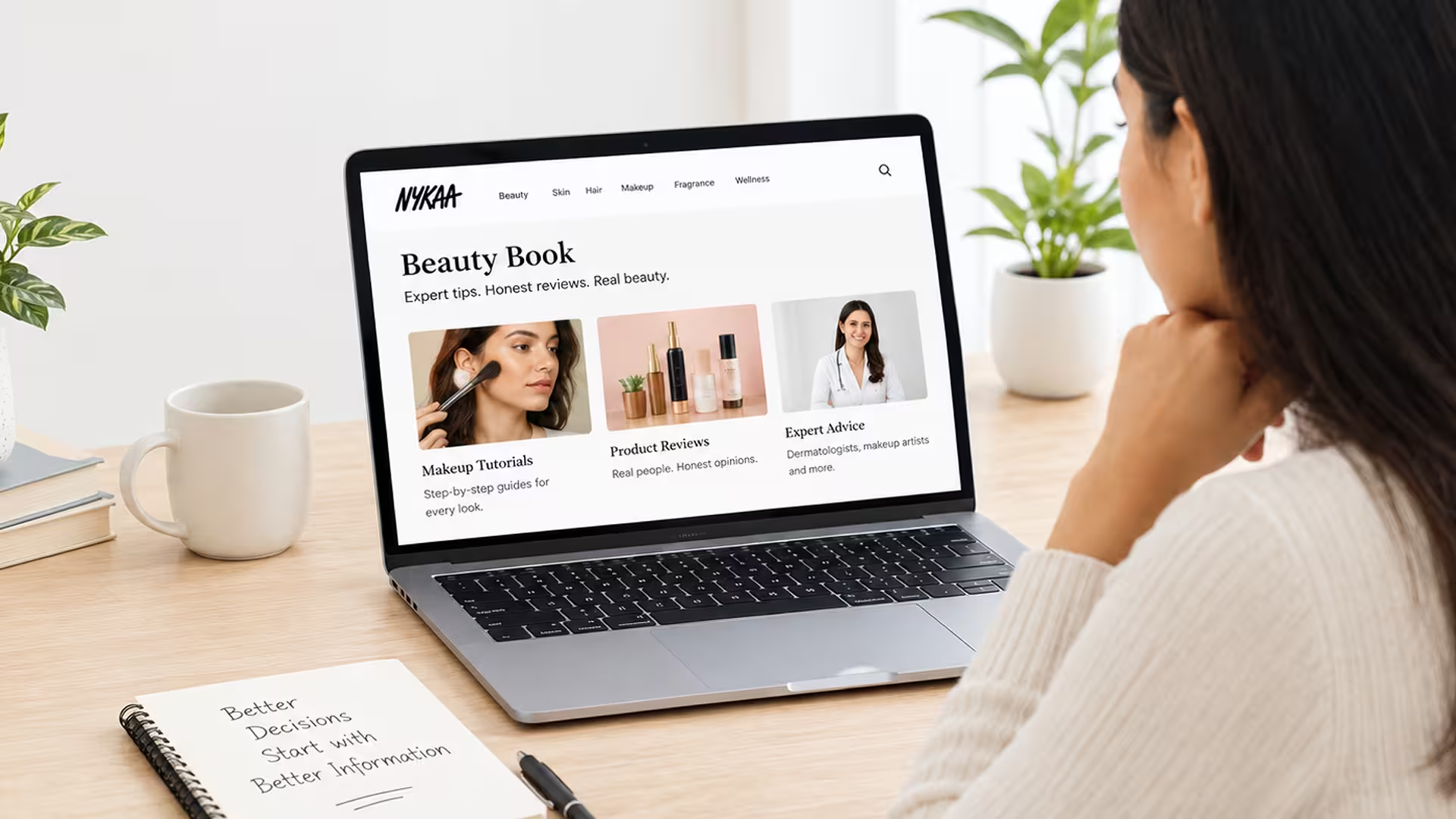
Content works best when it answers a question that stands between interest and purchase. Nykaa still operates Beauty Book, with tutorials, reviews and expert-led guidance around beauty decisions. The useful principle is not “every startup needs a blog.” It is that education can become part of the product experience when customers need help choosing.
For a SaaS founder, that might be a calculator that helps a buyer estimate savings. For a B2B service, it might be a diagnostic checklist that exposes a problem before the sales call. For a D2C brand, it could be comparison content that explains fit or usage. Good content removes uncertainty. It should make the next decision easier.
Is growth adding more operating work than customer value?
Before adding another tool, vendor or office task, separate the work that differentiates your business from the work that can be managed around it.
3. Add Channels When They Solve a Customer Problem
Nykaa’s move into physical retail is often summarised as an omnichannel success story. That label is accurate but incomplete. The better founder lesson is to ask what the new channel adds. In beauty, a store can support discovery, testing, consultation and trust in ways that a product page cannot fully reproduce.
A second channel should earn its complexity. Test whether it improves discovery, access, trust or service before you scale it. Channel expansion should follow customer behaviour, not founder FOMO.
4. Let Customer Insight Shape What You Own
Once a company sees enough transactions and customer questions, it begins to notice gaps that outside suppliers do not always solve. Nykaa used that learning to build and expand owned brands. Its FY2026 results reported a House of Nykaa annualised GMV run rate of Rs 3,176 crore, up 49% year on year, across beauty and fashion.
The founder lesson is not to launch a private label early. It is to wait until the business has a repeatable signal. If customers consistently ask for a feature, service level or product configuration that the market does not provide well, ownership may create more value. Insight should come before expansion.
5. Use Data and AI to Improve the Decision, Not the Pitch Deck
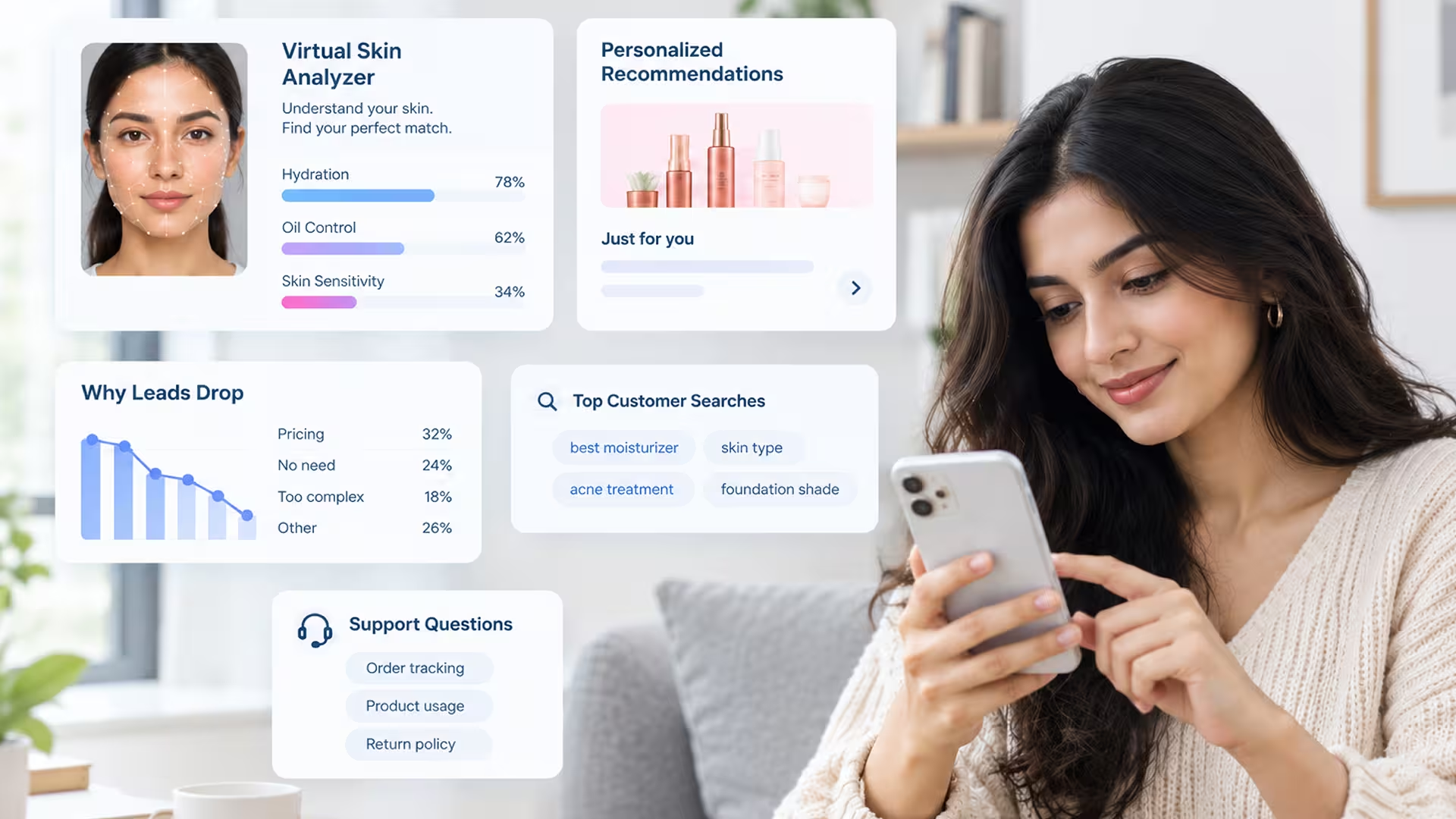
Nykaa’s FY2026 release also describes AI-powered tools such as a Virtual Skin Analyzer and recommendation systems built around customer beauty profiles. That is a useful example of technology being attached to a real decision: helping a customer find a more relevant product.
For a younger startup, the equivalent may be much simpler. Track why leads drop, which onboarding step causes delay, what customers search before buying, or which support questions repeat. Then use automation where it improves speed or relevance. Do not automate a process you do not yet understand.
A Founder’s Translation of the Nykaa Playbook
Would your operating setup survive the next stage of growth?
A workspace should absorb more complexity as the team grows, not send founders into a weekly cycle of facilities, vendors and meeting-room workarounds.
What the Nykaa Story Says About the Infrastructure Around Growth
Growth changes more than marketing. It changes how teams meet, hire, make decisions and handle day-to-day operations. Founders often notice this late, when office administration starts competing with product and customer work.
That is where the workspace decision becomes relevant. A small team may be well served by coworking in Indiranagar. A larger team that needs private rooms, controlled access and ongoing facility support may prefer managed office space in MG Road. Important client or leadership conversations can also use meeting rooms in Bangalore without building every room into a permanent lease.
Frequently Asked Questions About Nykaa Growth Lessons
1. Are Nykaa growth lessons relevant to SaaS or B2B founders?
Yes, if you translate the principle rather than the retail tactic. Category focus becomes a narrow ICP. Beauty education becomes buyer enablement. Omnichannel retail becomes adding a sales or service channel only when it solves a real customer problem. The details differ, but the sequencing logic is useful across business models.
2. Which Nykaa lesson should an early stage startup apply first?
Start with focus and customer trust. Before adding channels, AI or adjacent products, make the initial problem and customer clear. A young startup learns faster when feedback comes from a coherent market. Once that signal is strong, later expansion decisions become easier to justify and measure.
3. Did Nykaa grow mainly because of omnichannel retail?
No single factor explains the company’s growth. Category focus, content, product discovery, stores, owned brands and technology were layered over time. For founders, the useful question is which capability became valuable only after the customer relationship was established.
4. When should a startup launch an owned product or adjacent offering?
Consider it when customer behaviour shows a repeated gap you understand better than the market. Look for consistent requests, purchasing patterns, service workarounds or margin opportunities. An adjacent offering is stronger when it follows evidence from the existing customer base rather than a desire to make the company appear broader.
5. What should founders measure before adding AI personalisation?
Measure the decision you want to improve first, then identify what data is available and where human review is required. AI is most useful when the business understands the problem well enough to judge whether the output is better.
Borrow the Logic, Not the Surface Tactics
The most useful Nykaa growth lessons are not about copying a beauty retailer. They are about sequence. Choose a problem narrow enough to understand. Build trust around that problem. Add channels only when they improve the customer experience. Expand products after repeated customer evidence. Use technology where it makes a real decision better.
Founders do not need Nykaa’s scale to use that logic. They need the discipline to ask whether each new initiative solves a problem the business has actually earned the right to solve.