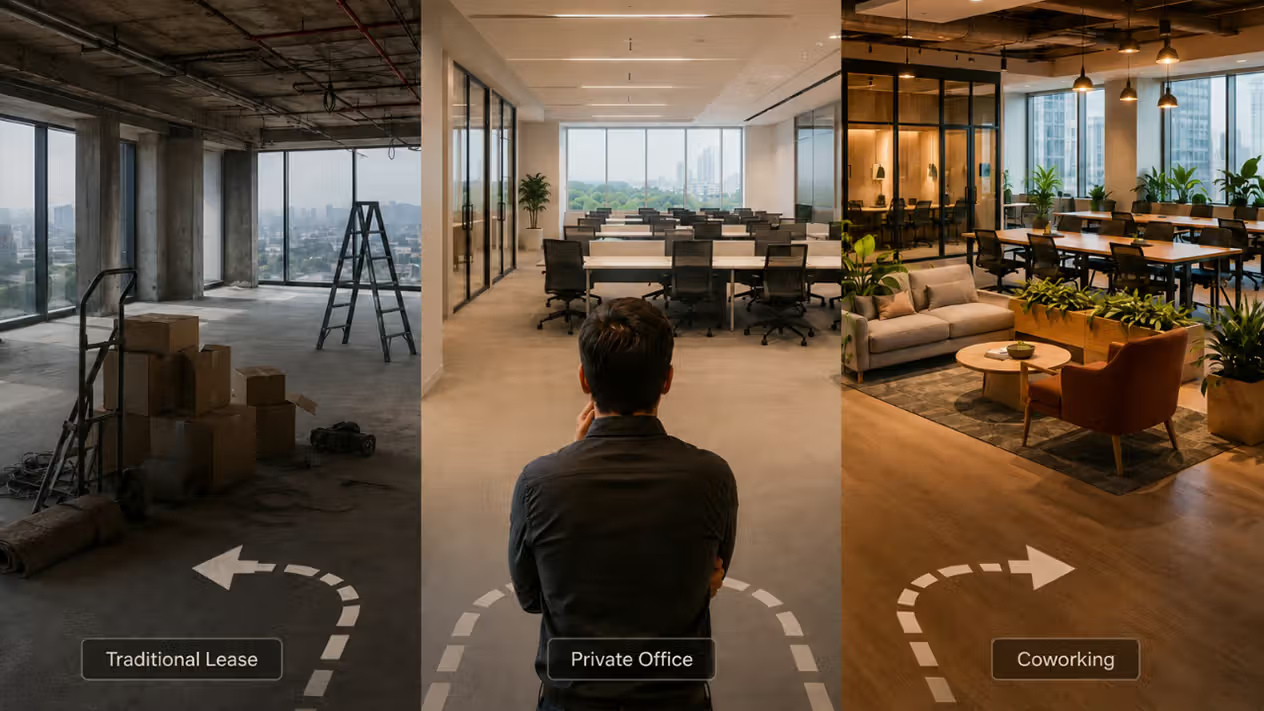
Choosing between different office space options for startups looks simple at first.
You compare rent. You check the location. You count the seats. You ask whether WiFi, meeting rooms, parking, and coffee are included. Then one option starts looking cheaper than the others.
That is usually where the mistake begins.
For a founder, an office is not just a monthly cost. It affects hiring, team energy, client meetings, daily productivity, employee retention, cash flow, and how quickly the company can move when growth suddenly arrives. A workspace decision that looks smart on a spreadsheet can feel painful three months later when the team has doubled, the meeting rooms are always full, or the internet fails during a customer demo.
This is why founders need a better way to compare offices. Not just by price. Not just by location. By what the workspace actually does for the business.
Beginest Workspaces helps growing teams in Bangalore choose flexible coworking and managed office solutions that reduce setup pressure, lower operational effort, and support scale without the heavy burden of long-term leases. The larger market is moving in the same direction. India’s flexible workspace stock stood at 79.7 million sq. ft. across the top 8 cities in Q2 2025 and is expected to cross 100 million sq. ft. by 2026, according to Cushman & Wakefield.
The First Mistake: Comparing Only Monthly Rent
Most founders start with one question.
“What is the monthly cost?”
Fair question. But incomplete.
A traditional office lease may look cheaper when you only compare rent per square foot. The real number appears later. Deposit. Interiors. Furniture. Internet. Power backup. Maintenance. Security. Housekeeping. Repairs. Compliance. Admin time. Vendor coordination. Delays.
The first rent cheque is rarely the first real cost.
For a startup, upfront workspace spending competes with other business priorities such as hiring, sales, product development and customer acquisition. That is why comparing rent alone can give an incomplete picture of the actual financial commitment involved in an office.
A coworking space in Bangalore or a managed office space in Bangalore may look higher on a monthly seat basis, but the model usually removes large upfront setup costs. A founder should compare total cost, not sticker price.
Ask:
What is the deposit?
What is included?
What is billed separately?
Who handles maintenance?
What happens when the team grows?
What is the cost of moving again?
The cheapest office is not always the most cost-efficient one. Beginest’s flexible coworking and managed office spaces are designed to help businesses scale without long-term lease risks, setup delays, and operational burden.
The Second Mistake: Treating All Office Models as the Same
Founders often compare coworking, managed offices, and traditional leases as if they are three versions of the same thing.
They are not.
Each model solves a different problem.
A coworking space works well for small teams, hybrid teams, founders who need flexibility, and companies that want fast access to a professional work environment. It gives you speed and convenience.
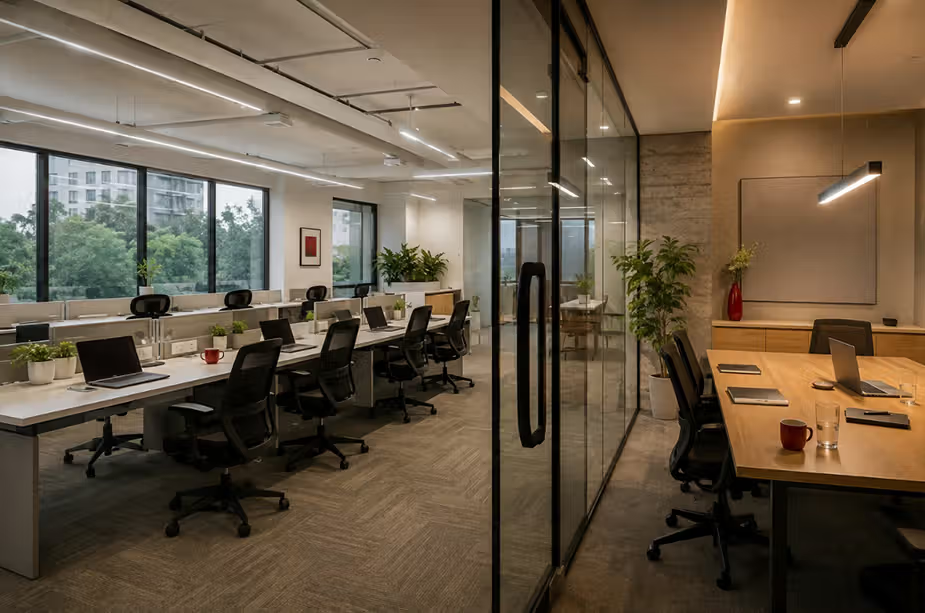
A managed office works better for growing teams that need privacy, structure, branding, reliable support, and fewer operational headaches. It gives you control without the burden of building and running the office yourself.
A traditional lease works when the company is stable, has a long-term headcount plan, and has the capital and internal team to manage the entire setup.
This is where many founders get trapped. They choose based on what the company is today, not what it may become in 6 to 12 months.
A 6-person team can work comfortably in a shared setup. A 30-person team may need private cabins, meeting rooms, secure access, and a more predictable environment. A 100-person team may need dedicated zones, admin support, and a workspace partner who can plan around growth.
For founders comparing options, the better question is not “Which office is best?”
It is “Which office model fits the stage we are entering next?”
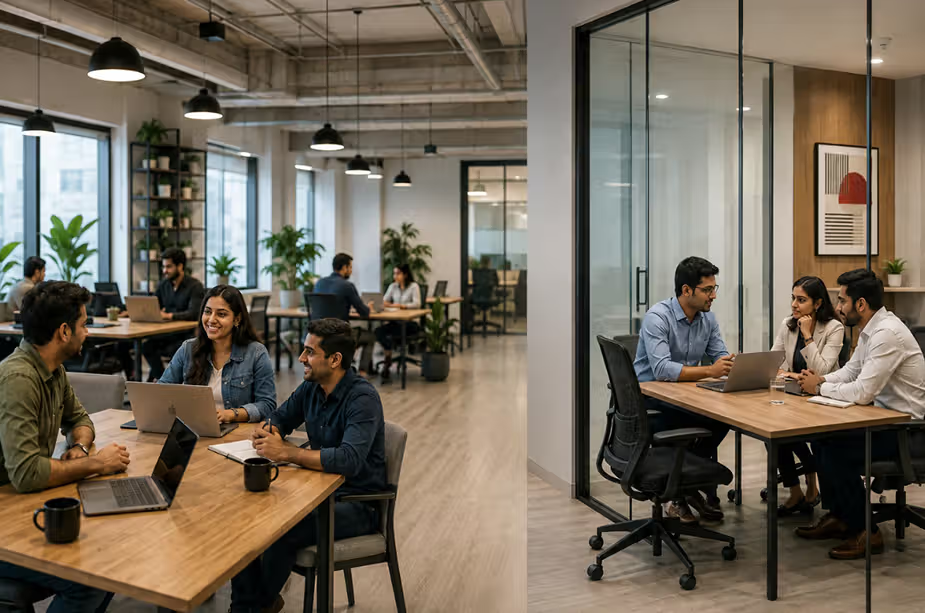
The Third Mistake: Ignoring Setup Time
Time is one of the most expensive things a founder loses quietly.
A traditional office can take weeks or months to become usable. You may need to coordinate interiors, internet, furniture, access control, fire safety, cleaning, pantry, reception, and several other small pieces that nobody thinks about during the first site visit.
Each delay affects the business. Hiring gets pushed. Teams work from scattered locations. Founders spend time approving chairs, lights, vendors, and repairs instead of closing customers.
This is why flexible workspace for startups has become more than a convenience. It is a speed advantage.
India’s coworking sector leased a record 8.6 million sq. ft. of office space in the first half of 2026, up 32% from the same period in 2025, according to a Colliers India report covered by The Times of India. Coworking operators also accounted for 24% of total gross office leasing during that period.
That shift is not happening only because startups like stylish offices. It is happening because companies want faster, more flexible, lower-friction ways to operate.
A founder’s time should not be spent chasing an electrician because the conference room lights stopped working.
Comparing offices for your next stage of growth?
Beginest helps founders choose coworking and managed office spaces in Bangalore that reduce setup time, control costs, and support team growth.
The Fourth Mistake: Forgetting Employee Experience
Founders often look at the office as a cost center. Employees experience it as a daily environment.
That difference matters.
Employees experience the office through everyday details: the commute, meeting room availability, noise levels, parking, cleanliness and whether the environment supports the work they need to do.
Together, these factors contribute to the overall employee experience. Recurring problems with access, privacy or facilities can create unnecessary friction during the workday.
That is why office space for growing teams should be evaluated from the employee’s perspective as well as the founder’s. The workspace should support focused work, collaboration, client calls, hiring conversations and quick team discussions without making routine tasks harder than they need to be.
As the team grows, small operational inconveniences can affect more people more frequently, making these details increasingly important.
The Fifth Mistake: Underestimating Growth Uncertainty
Startups rarely grow in neat lines.
Sometimes hiring slows down. Sometimes a new client requires a project team. Sometimes fundraising changes the plan. Sometimes the company needs to move closer to customers, talent, or leadership.
A rigid office model does not handle uncertainty well.
If you sign a large traditional lease too early, you may pay for unused space. If you choose a small coworking setup without expansion options, you may outgrow it before the team settles in. If you ignore flexibility, the next office move may arrive sooner than expected.
This is where workspace scalability becomes a serious founder priority.
A founder should ask:
Can we add seats quickly?
Can we reduce seats if needed?
Can we move from coworking to a managed office?
Can we book meeting rooms when required?
Can this location support hiring?
Can the workspace support client-facing conversations?
The right office does not just fit your current team. It gives your next stage enough room to breathe.
The Sixth Mistake: Not Calculating Operational Load
Every office needs someone to run it.
In a traditional setup, that someone is usually your team.
Even when founders think they are saving money, they may be shifting the work to HR, admin, finance, or themselves. Someone must handle maintenance tickets, security, cleaning, internet issues, vendor calls, electricity bills, furniture problems, and employee complaints.
That hidden work has a cost.
For early-stage founders, it becomes distraction. For growing companies, it becomes a full operational function. For HR and admin teams, it becomes a long list of daily interruptions.
This is the part many founders miss.
You are not only choosing space. You are choosing who carries the operational weight.
Decision Framework: How Founders Should Compare Office Options
Use this framework before choosing between coworking, managed office, and traditional lease.
| Decision Factor | Coworking Space | Managed Office | Traditional Lease |
|---|---|---|---|
| Setup Time | Typically limited setup required | Typically shorter than a self-managed fit-out | Depends on fit-out and infrastructure requirements |
| Upfront Cost | Varies by deposit, plan and inclusions | Varies by deposit, customisation and commercial terms | May include deposit, fit-out and infrastructure costs |
| Flexibility | Often flexible; terms vary by plan | Depends on contract and expansion terms | Generally more fixed during the lease term |
| Privacy | Varies from shared desks to private cabins | Usually offers dedicated or private team space | Typically offers dedicated private space |
| Scalability | Expansion depends on availability | Expansion may be available, subject to inventory and contract terms | May require additional leasing, reconfiguration or relocation |
| Cost Predictability | Depends on inclusions and usage-based charges | Depends on inclusions, escalation clauses and additional services | Depends on rent, escalation, utilities, maintenance and vendor costs |
| Amenities and Services | Usually included, depending on the plan | Often included or available through the provider | Usually managed separately by the tenant |
| Control and Customisation | Limited to available options | Moderate to high, depending on the agreement | Generally highest, subject to landlord approvals |
| Administrative Responsibility | Low | Low to moderate | High |
| Best Suited For | Startups, freelancers and teams seeking flexibility | Growing teams seeking privacy and managed operations | Established companies seeking long-term control |
For most founders, the smartest choice is not always the biggest office or the cheapest office. It is the one that protects cash, saves time, supports people, and keeps the business flexible.
The Seventh Mistake: Choosing Location Only by Prestige
A premium location looks good on paper. But for a founder, location must serve the team and the business.
A good office location should help employees commute better, make client visits easier, improve hiring appeal, and give the company access to important business areas.
Bangalore makes this decision even more important. Traffic, talent clusters, metro access, parking, and client proximity all affect the daily value of an office.
A startup office space in Bangalore should be judged by how it supports work, not only by how the address sounds.
Why This Decision Matters More in 2026
The office market is becoming more flexible because companies are becoming more careful.
The India coworking office space market is estimated at USD 4.53 billion in 2026 and projected to reach USD 8.7 billion by 2031, growing at a CAGR of 13.94%, according to Mordor Intelligence. The same report notes that enterprise adoption of hybrid work is a major demand driver. mordorintelligence.com
The growing range of workspace models gives founders more choice, but it also means there are more factors to compare.
A workspace decision can affect capital commitments, hiring plans, administrative workload and the team’s day-to-day experience. The aim is to find an option that provides enough stability for current operations while retaining flexibility for future changes.
That balance is exactly where coworking and managed office models become valuable.
A Better Way to Think About Office Space
The right workspace should match the way the business operates today while leaving enough room for future requirements.
For some founders, that may mean a flexible coworking setup. Others may need the privacy and dedicated space of a managed office, while a traditional lease can suit companies that want greater long-term control.
There is no universally correct model. The more useful comparison is based on the company’s operational needs, expected growth, financial commitments and desired level of workspace control.
Do not compare only rent.
Compare:
- Cash flow impact
- Setup time
- Operational effort
- Team experience
- Flexibility
- Scalability
- Privacy
- Support quality
- Location practicality
- Exit options
Once founders compare office options this way, the better choice becomes much clearer.
Beginest Workspaces fits into this decision as a practical workspace partner for startups and growing teams that want professional offices without the stress of building and managing everything themselves.
Frequently Asked Questions
1. What are the best office space options for startups in Bangalore?
The best office space options for startups in Bangalore usually include coworking spaces, managed offices, private cabins, and flexible office spaces. Early-stage teams may prefer coworking for flexibility, while growing teams often choose managed offices for privacy, support, and scalability.
2. Is coworking better than a traditional office lease for startups?
Coworking can be better for startups that want low setup cost, flexible terms, and quick move-in. A traditional office lease may suit stable companies with predictable headcount and enough capital to manage interiors, maintenance, and operations independently.
3. When should a startup move from coworking to a managed office?
A startup should consider moving from coworking to a managed office space in Bangalore when the team needs more privacy, dedicated meeting rooms, stronger brand presence, better access control, and a more structured work environment.
4. How should founders compare coworking vs managed office options?
When comparing coworking vs managed office options, founders should look beyond price. They should evaluate setup time, privacy, scalability, meeting room access, employee experience, operational support, and total monthly cost.
5. Why is flexible workspace important for growing teams?
A flexible workspace for startups helps growing teams add or adjust seats, avoid long lock-ins, reduce setup delays, and stay agile when business plans change. This is useful for founders who expect hiring, client needs, or team structure to shift over time.