
One of the most overlooked expenses in modern employment is distraction. It subtly influences how teams think, make decisions, and function on a daily basis, yet it hardly appears in reports or measurements.
Nowadays, a lot of offices view noise as a harmless byproduct of teamwork or "energy." However, over time, interruptions, continuous background noise, and visual movement not only make work more difficult, but they also completely alter how individuals operate.
Why Noise Is a Productivity Tax
Work is not stopped by noise. It slows it down.
"Every organization tracks the cost of downtime. Almost none track the cost of half-attention. But a team that's constantly half-listening is running at a permanent discount on its own output."
People spend more time context-switching, mentally recovering from disruptions, rereading information, or restarting work in noisy situations. The depth and quality of labor frequently decline, even when workers seem busy.
Noise functions as a silent tax, in contrast to overt inefficiencies. It requires a tiny portion of each task's attention each hour. Slower execution, more errors, and delayed decisions are all consequences of that loss over the course of weeks and months.
People become accustomed to noise, which makes it particularly harmful. Their complaints cease, but their performance subtly declines.
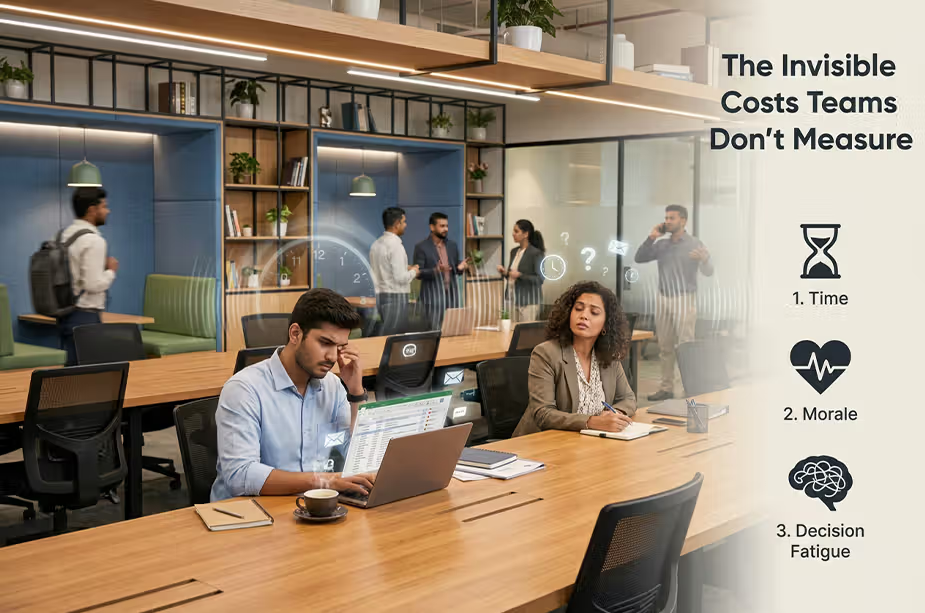
The Invisible Costs Teams Don’t Measure
1. Time
2. Morale
3. Decision Fatigue
The Invisible Costs Teams Don’t Measure
Distraction's effects extend much beyond lost concentration time. Some of its largest expenses are the most difficult to measure.
Time
Tasks take longer than they should in noisy offices. People are always rethinking their ideas, not because they are working less.
Every interruption, whether it be a phone call, a nearby chat, or movement in common areas, diverts attention. Teams lose hours without realizing it when you multiply that by dozens of minor disruptions every day.
Morale
Frustration increases as it becomes harder to concentrate.
People start to believe that a job takes more effort than it ought to. This eventually results in agitation, disengagement, and a feeling that their surroundings are against them. Morale declines because the labor feels needlessly taxing rather than because of the work itself.
Decision Fatigue
Making decisions demands mental clarity. Teams and executives are compelled to make judgments in noisy settings while already mentally exhausted.
This frequently leads to:
- Decisions made more slowly
- Excessive analysis
- Avoiding difficult decisions
What appears to be indecision is frequently fatigue brought on by continuous stimulation.
Why Startups Tolerate Noise (Until They Can’t)
Because they see noise as a sign of momentum, many companies embrace noisy workplaces from the outset.
Initially:
- Teams are not very large.
- Energy is inspiring.
- Work is quick and tenacious.
It feels like progress when there is noise.
Work changes when the company expands. Deeper concentration is needed for hiring, strategy, planning, and product decisions. What was once energizing becomes disorganized.
The majority of teams don't intentionally choose to leave noisy settings. They just arrive at a place where:
- Meetings seem to be ineffective.
- Deep work is consistently put off.
- Burnout arises for no apparent reason.
Performance is already impacted by noise before it is identified as an issue.
Focus as a Cultural Asset
Focus isn’t just an individual skill, it’s an organisational condition.
Teams that consistently produce high-quality work tend to share one thing in common: environments that respect attention. When focus is protected, people feel calmer, think more clearly, and collaborate more intentionally.
Over time, this becomes cultural. Teams begin to:
- Schedule meetings more thoughtfully
- Communicate more clearly
- Value preparation over urgency
Focus becomes part of how work is done, not something individuals struggle to protect on their own.
Creating space for deeper work?
Focus improves when the environment supports it, not when people push harder.
Beginest approaches workspaces with a simple belief: work should feel calm, not chaotic.
"Quiet-first came out of a simple observation: nobody does their best thinking while bracing for the next interruption. So we stopped treating focus as a personal discipline problem and started treating it as a design problem."
Quiet-first design doesn’t mean silence or isolation. It means creating environments where:
- Noise is controlled, not constant
- Movement doesn’t interrupt concentration
- Teams can switch between collaboration and focus naturally
By reducing unnecessary stimulation, teams spend less energy coping with the environment and more energy doing meaningful work.
The goal isn’t to make offices feel rigid. It’s to make them supportive, spaces where focus is the default, not something people have to fight for.
In Summary
Distraction is one of the most expensive problems modern teams face precisely because it’s so easy to ignore. Noise affects time, morale, and decision-making long before it shows up as burnout or attrition.
Offices that protect focus don’t just improve productivity. They create calmer teams, clearer thinking, and more sustainable ways of working. Over time, that difference compounds.
Exploring quieter office options?
Understanding how workspace design affects focus can make the choice clearer.
Frequently Asked Questions
How does noise affect productivity?
Noise increases interruptions and context-switching, which slows task completion and reduces the quality of work, even if people appear busy.
Are quiet offices better?
Quiet offices support deeper focus, clearer thinking, and better decision-making. They don’t eliminate collaboration, they make it more intentional.
Why do teams burn out faster in noisy spaces?
Constant stimulation drains mental energy. Over time, this leads to fatigue, frustration, and disengagement, even when workloads remain the same.