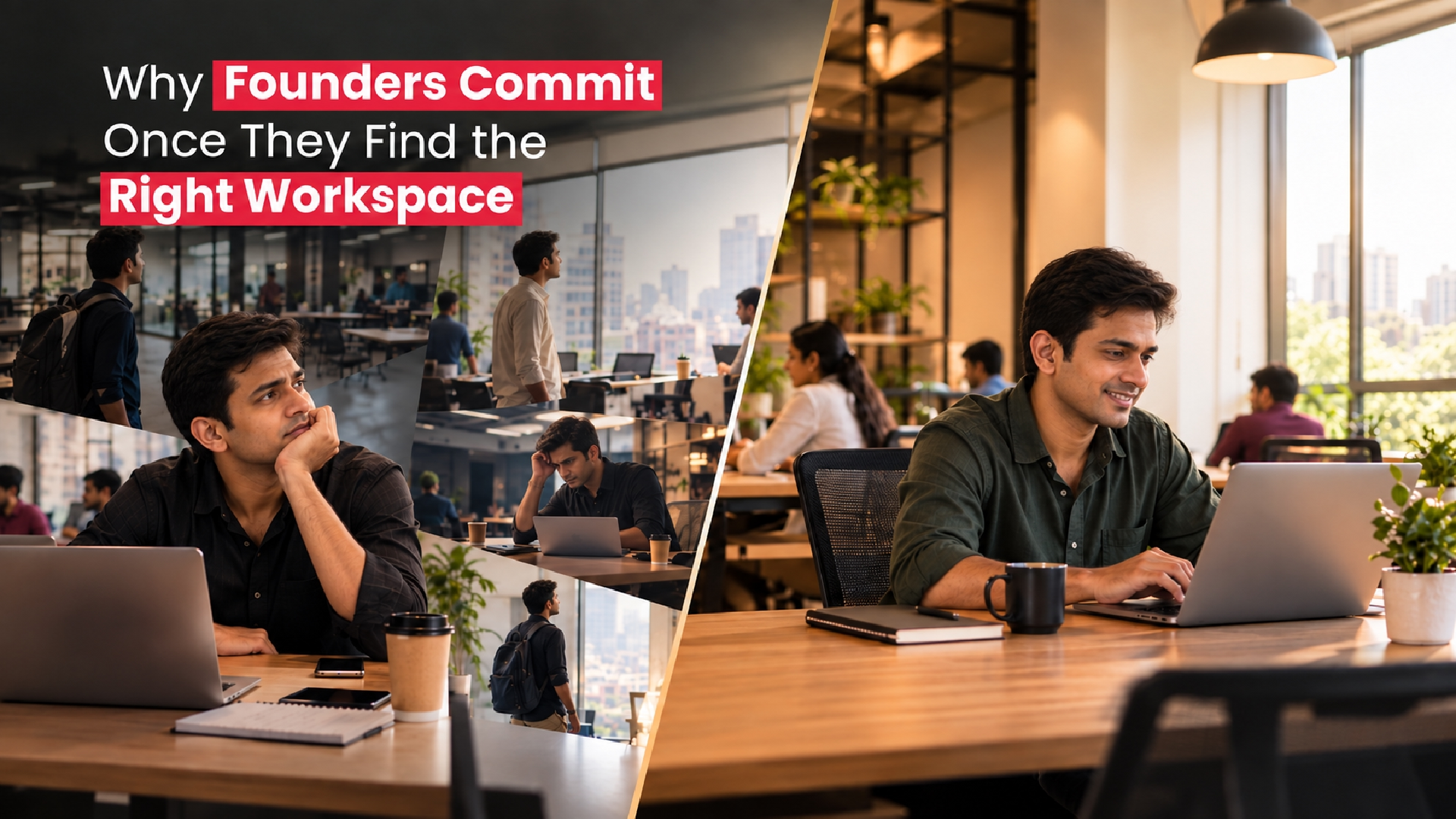
Founders switch offices more often than they admit.
Not because they enjoy moving, but because something never quite settles.
The right workspace doesn’t announce itself loudly. It doesn’t rely on contracts, discounts, or pressure. Instead, it creates a quiet sense of “this works”, and once founders feel that, they stop looking.
The Cost of Constantly Re-evaluating Offices
Office changes rarely feel disruptive at first. They’re framed as upgrades, optimisations, or temporary adjustments. But over time, the cost shows up in less obvious ways.
Every move changes routines. It takes weeks to readjust. It costs the founder time to assess layouts, leases, and logistics, when what matters, such as the product, is not in focus. A “better” office can’t improve momentum.
More importantly, there is always re-evaluation, and that introduces uncertainty. Teams never quite lock in. Founders never quite disengage their thoughts about space. The office is just another variable in an already messy system.
What the founders ultimately understand is that the value of stability even precedes the value of scale.
Still rethinking your office setup?
Constant evaluation often signals that something isn’t quite working yet.
Retention Is About Trust, Not Contracts
“Long-term commitment doesn’t come from lock-in periods. It comes from trust.”
Founders remain with their organizations if they trust that:
- The space will still support how they work
- The environment will not become a distraction as the team is developed
- They will not have to reconsider the choice every six months
When this TRUST is in place, contracts become secondary. The contractual relationship becomes more operating-focused; the workplace just gets on with it.
That is why some founders quit even the long leasing offices early, while others remain in the flex environments for many years. It is not about the length of time, but the confidence in the experience.

Psychological Signals of “This Works”
Founders rarely say out loud that a workspace feels right. But their behaviour changes in clear ways.
Reduced Search Behaviour
The first signal is subtle: founders stop browsing office listings.
They are no longer comparing the rents, scrolling through photos, or taking exploratory calls "just in case." The mental loop of maybe there's something better closes. Attention comes back to the business.
This is one of the strongest indicators of workspace fit - The absence of searching.
Stable Routines
When the workspace supports the team, routines fall into place.
People show up at about the same time. Meetings start on time without anyone reminding anyone else to do so. Workdays feel predictable without becoming rigid. Founders stop expending extra effort to compensate for issues in the environment.
Stability at this level reduces decision fatigue. Fewer things need to be fixed, adjusted, or explained.
Team Comfort
Teams feel comfortable in the space.
They understand where to work, when to meet, and when to work together and when not to. New employees are easily absorbed. There are minimal complaints regarding office chairs, background noise, or availability.
This is often referred to as comfort vs. complacency. A comfortable classroom doesn’t mean a complacent classroom… a comfortable classroom means students aren’t spending cognitive energy on environmental survival and preparation issues.
Why the Right Workspace Becomes Invisible
The best working environments will fade from view.
Founders never mention them. Teams never complain about them either. They are not continually “improving” them or redesigning them. The office becomes just a context that facilitates work without requiring people’s engagement with it.
Its invisibility is an advantage, not a disadvantage.
When the context in which the workspace resides fades away:
- Concentration improves
- Decisions speed up
- Teams no longer blame friction on their environment.
In contrast, the wrong workspace stays visible. It keeps showing up as noise, discomfort, coordination issues, or low-grade frustration.
Founders stay longer when the office gives them one less thing to think about.

Beginest and Long-Term Founder Relationships
Beginest approaches the workspace with a long-term perspective not with contracts, but with the perspective of the founder.
The focus is on:
- Peaceful, distraction-free surroundings
- Operational stability without rigidity
- Areas that expand based on routine usage rather than employee numbers
- Support driven by people, evolving to meet the changing needs of teams
This approach is based on the idea that retention occurs on a daily basis. Founders who are supported rather than managed will naturally make a commitment.
In long-term relationships, it’s not because the founders are “locked in” a situation, but because leaving would entail replicating a set of characteristics that have, in a sense, become irrelevant, meaning the founders no longer feel
In Summary
Founders don’t stay because they have no choice. Founders stay because a workplace is no longer a problem.
A good workspace is one that relieves the brain, helps establish consistent routines, and facilitates concentration, even for growing teams. Over time, workspace disappears, and this disappearance is what establishes commitment.
If the founders discover an area where the space really works, they won’t trumpet it.
They just stop searching anywhere else.
Considering your next workspace decision?
Sometimes the right choice is the one you stop thinking about.
Frequently Asked Questions
1. Why do founders switch offices often?
Because early workspace decisions are often made quickly and optimised for cost or convenience, not long-term fit. As teams grow, hidden friction becomes harder to ignore.
2. What makes founders stay in one workspace?
Trust in the environment. When routines stabilise, teams feel comfortable, and the workspace supports focus without constant adjustment, founders stop re-evaluating.
3. Is long-term workspace stability important?
Yes. Stability reduces mental overhead, improves productivity, and allows founders to focus on building the business instead of managing space decisions.