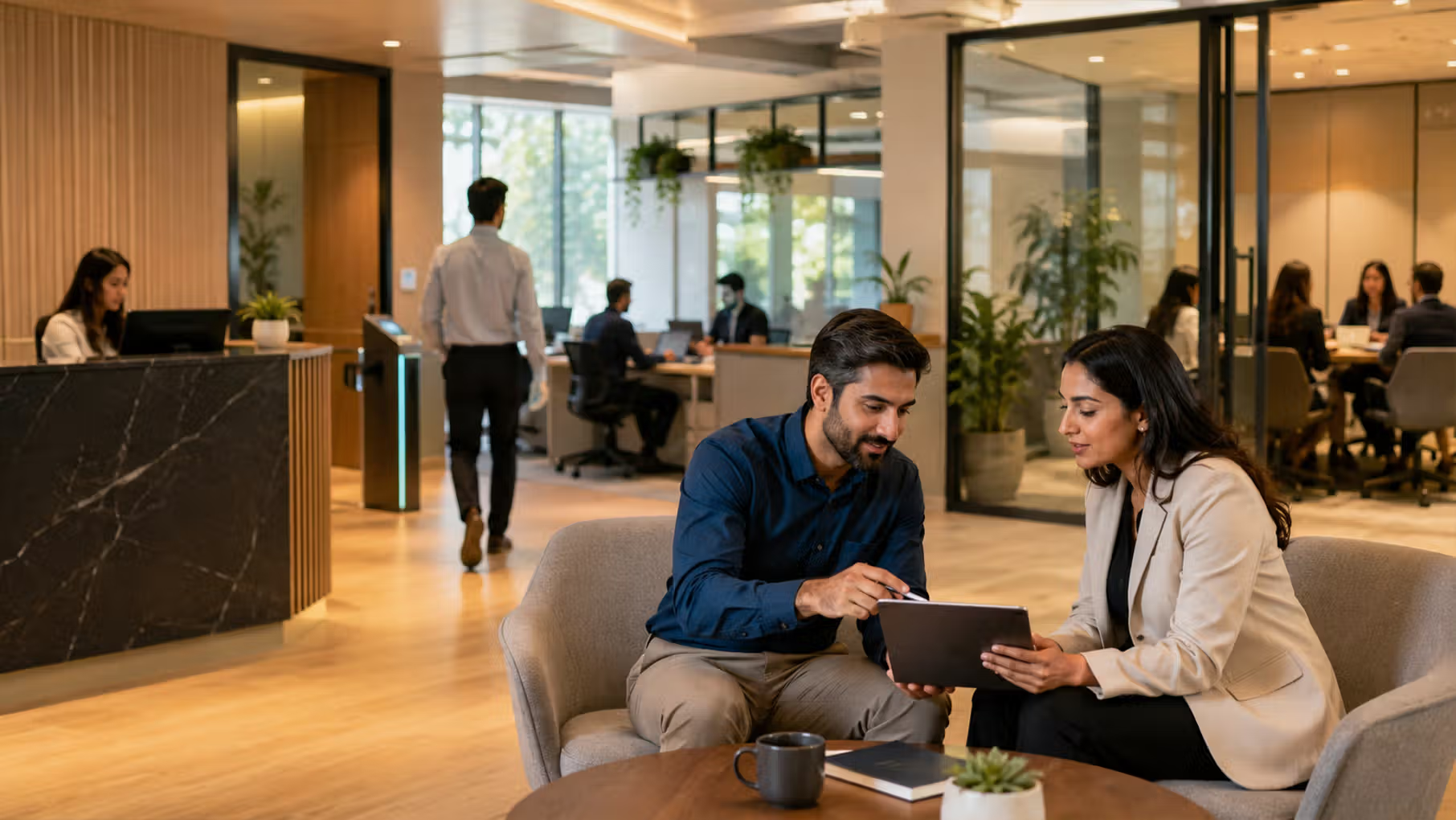
Why Are Founders Spending Less Time Managing Offices in 2026
I’ve spent most of my career building things. Be it products, teams or even entire business ecosystems. But, somewhere along the way, I noticed a strange pattern.
Founders would happily spend hours debating about office layouts, negotiating lease clauses, or troubleshooting Wi-Fi issues. Smart people. Sharp operators. But completely pulled into decisions that had nothing to do with WHY their company existed in the first place.
And the irony? Even with the best admin teams in place, the final call almost always landed on the founder’s desk.
Over time, the question turned from “How do we manage offices better?” to “Why are we managing them at all?”
The Founder’s Real Job Hasn’t Changed
No matter which era it is, a founder’s job has always been the same:
- Build products people want
- Close the right deals
- Hire and grow strong teams
- Decide where the business is going next
That’s it. Anything other than that is fluff. Bitter, momentum-killing fluff.
Fixing broken internet or arguing with a landlord about a lease extension was never part of the job description. We just normalized it for a while.
In 2026, we have some good news. The normalization is quietly disappearing.

Offices Aren’t Less Important. Office Management Is.
Let’s make something very clear. Offices haven’t become irrelevant. Your team still needs a productive space to think, collaborate, debate, spill coffee and grow together.
What has changed though, is the belief that founders must be involved in running those spaces.
Long leases. Self-managed infrastructure. Rigid setups. Heavy capital lock-ins.Sound familiar? All were signs of stability a few years ago, but now, they’re simply unnecessary weight tied to the foot.
There is no need for the founder of a business to be better at managing offices. Rather, most of them are actively trying to remove it from their mental bandwidth.
Spend less time managing your office.
Spend more time building your business.
Fully managed workspaces for founders with a vision.
When a Problem Is Truly Solved, You Stop Thinking About It
Whenever a new founder walks into Beginest, the first question almost always is “How much attention will this need from me?”. Straight to the point, just how a business founder must think.
And if I don’t reply with, “Almost none”, then we’d simply be discarded from his list of best coworking spaces in Bangalore.
Reliability beats ownership. Predictability beats customisation. A simple rule I have learnt throughout my career.
And once managed and coworking workspaces became standardised throughout the country, office management turned into what it should have always been. A background service.
A solved problem. We stop thinking about it.
Why Founders Are Stepping Away from Office Management in 2026

1. Workspaces That Run from Day One
For many founders today, managed or coworking spaces have changed from an alternative to the default choice. Let me tell you why.
In 2026, founders demand for ready to work offices. They want to walk in and start working immediately.
Internet. IT support. Security. Maintenance. None of these services come pre-installed in traditional offices. The set up takes time, effort and exhausts you mentally.
That’s where managed or coworking office spaces come to the rescue. There’s nothing to configure, nothing to supervise, and nothing to “babysit.” That alone frees up an enormous amount of mental energy that’s far better spent on growth, hiring, and strategy for your business.
2. Scaling Without Disruption
Every growing company hits this moment.
Six seats become sixty.
And suddenly, the office that once felt breezy becomes claustrophobic. Even air conditioning stops working at this point.
Traditional leases turn growth into a problem, when it really shouldn’t. Long-term commitments and heavy investments slow founders down when they should be moving at maximum speed.
Flexible, renegotiable workspace models change that dynamic entirely. Teams can scale up or down without disruption. It’s like a business Lego house. Rebuildable whenever necessary.
3. Leadership Isn’t About Managing Everything
There was a time when being deeply involved in office management was seen as “hands-on leadership” and people respected you for it.
Today, experienced leaders see it in a different light.
Office management can consume weeks, or months of attention. And none of this long-term attention compounds. Outsourcing non-core operations isn't a weakness. It’s strength.
Strong founders deliberately step away from areas that don’t need their thinking. That’s how they protect their focus and keep them mentally available to take on real challenges.
4. Automation That Actually Disappears
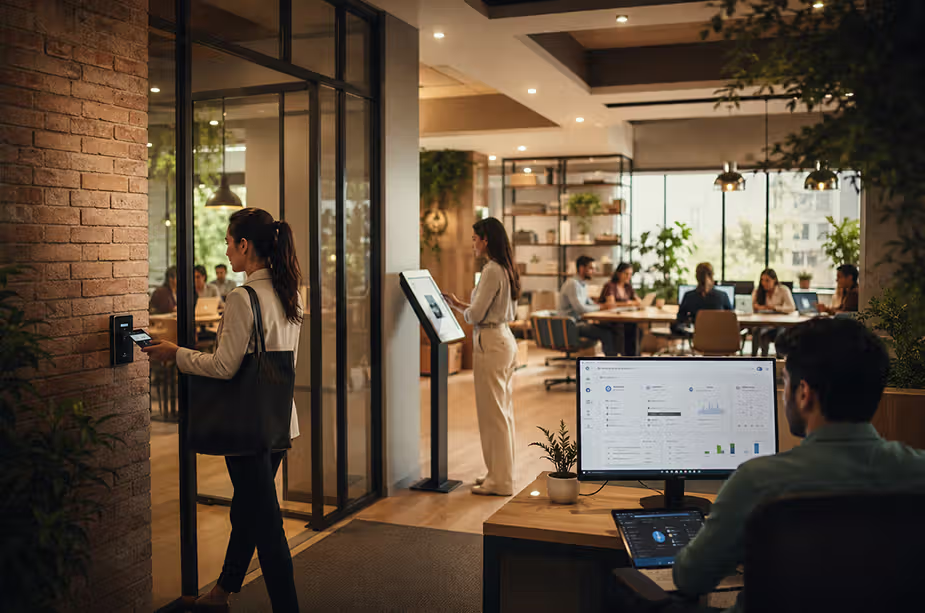
Smart systems now handle access control, attendance, and operational workflows without the involvement of the founder.
The real win isn’t the technology itself.
It’s the absence of interruptions in the form of work.
No follow-ups. No approvals. No operational nudges pulling founders out of deep work. The workspace just works quietly, consistently, almost invisibly.
5. Focus Is the New ROI
Choosing managed or coworking spaces is much more than just the cost involved.
What you’re actually paying for is the momentum it lets you build and the time management opportunities it brings.
Even the best-run office still pulls attention away from the business when an operational issue shows up on the radar. And founder attention is a finite, extremely valuable resource which is best spent towards product, customers, and people. This creates far more leverage for your business than owning an office ever will.
Your office should scale with your ambition…
Not slow it down.
Don’t compromise on your office space, leave it to us!
What Founders Should Look for in 2026
In 2026, founders aren’t looking for offices that impress. They want offices they rarely have to think about.
Any managed workspace would look good on day one, but ask yourself this: “How quietly would it support my business months later?”. The first real test would be to define how this space demands decisions from me? If it does, it’s already dragging you down.
Infrastructure should run silently in the background. Internet, meeting rooms, security, maintenance. These should never turn into a problem that would require the founder’s attention. When a workspace is well managed, founders only notice it when it is invisible.
Flexibility matters just as much. Businesses don’t grow in straight lines, and workspaces shouldn’t force founders into long-term commitments that slow them down. The best environments adapt as teams expand, contract, or reorganize.
Most importantly, founders shouldn’t feel like they’re running an office alongside a company. When logistics are handled by specialists, the office fades into the background and becomes what it should be a stable backbone that supports growth without demanding attention.
That’s the kind of workspace modern founders are choosing, and that's the kind of workspace we have built at Beginest. Not because it’s trendy, but because it respects their time, focus, and responsibility.
In Summary
By 2026, successful founders treat office management as a solved problem.
By stepping away from logistics and operations, they gain speed, clarity, and the ability to think deeply about what actually matters.
This isn’t a trend.
It’s a correction.
And founders who embrace it early spend less time managing offices and more time building companies that speak for themselves.
Frequently Asked Questions
1. What is office space management for founders?
Office space management for founders refers to how workspaces are planned, maintained, and operated without involving founders in daily operational decisions.
2. Why are founders choosing coworking spaces in 2026?
Coworking spaces offer flexibility, ready-to-use infrastructure, and minimal involvement, making them ideal for fast-moving startups for better scalability in the future.
3. Is outsourcing office management cost-effective?
Yes. Outsourcing reduces hidden operational costs and frees founder time, which is often more valuable than direct cost savings.
4. How does Beginest support founders?
Beginest provides fully managed, flexible workspaces that remove operational friction and support modern startup workflows.