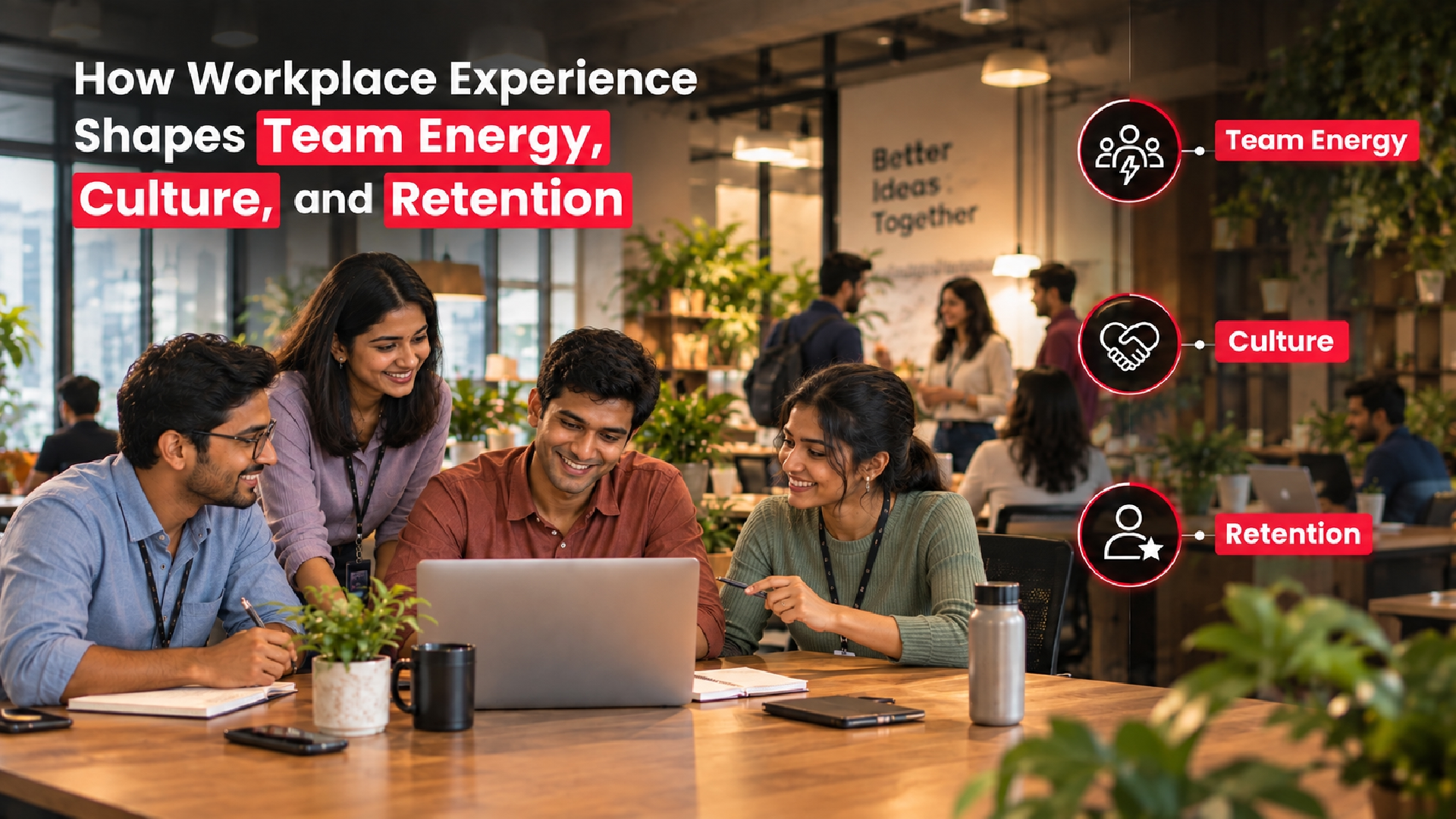
Ask any HR leader what makes people stay, and the first answers are usually familiar. Good managers. Growth opportunities. Fair pay. Meaningful work. All true. But there is another factor sitting quietly in the background every day: workplace experience. The space where people meet, focus, solve problems, take calls, welcome new hires, and feel part of something larger can shape how a team behaves.
A workspace is not just furniture, internet, and walls. It is the stage where culture becomes visible. When the space works well, teams feel lighter. Meetings start on time. New employees settle faster. Leaders can sense the mood of the team. Small conversations happen before they become scheduled calls. When the space fails, everything feels heavier. Noise builds. Energy drops. Collaboration becomes effortful. People may not say the office is the problem, but they feel it every week.
For HR leaders managing hybrid teams, this matters deeply. Gallup’s State of the Global Workplace 2026 report says only 20% of employees globally are engaged at work, while 40% experienced stress a lot of the previous day. In that climate, every part of the employee experience has to work harder, including the office.
For HR leaders, this makes the workplace another part of the employee experience to evaluate. Location, privacy, meeting access, infrastructure, flexibility and day-to-day facilities support can all influence how easily employees are able to work, collaborate and connect.
Why Workspace Choice Is Now an HR Decision
For years, office decisions were mostly handled by finance, real estate, or operations. HR was often brought in later, once the lease was signed and the move-in date was fixed. That approach no longer works.
Hybrid work has changed the meaning of the office. Employees do not come in just because a desk exists. They come in when the office gives them something home cannot always provide: team connection, focus, mentoring, energy, structure, and a stronger sense of belonging.
That makes workspace choice part of the employee value proposition. A dull, inconvenient, badly managed office quietly tells people that their time and comfort were not considered. A thoughtful workspace tells them the opposite. It says the company has created a place where work can happen without unnecessary friction.
For HR leaders, this connects directly to culture. Culture is not only what appears in the onboarding deck. It is what people experience between 10 am and 6 pm. It is whether they can find a quiet corner for a sensitive call. Whether a meeting room is available when a client joins. Whether a new employee feels welcomed or lost. Whether people leave office days feeling more connected or more drained.
Team Energy Begins With Daily Friction
Energy at work is easy to feel and hard to measure. You notice it when people walk into a room with ideas instead of fatigue. You notice it when teams solve something quickly because they are seated close enough to talk. You notice it when employees stay after a meeting for five extra minutes because the conversation is useful.
You also notice the opposite. A delayed meeting because the room is occupied. A call interrupted by background noise. A team member struggling with patchy internet. A parking issue that starts the day badly. These problems look small one by one, but they behave like tiny leaks in a water tank. Over time, they drain momentum.
This is why employee experience and workspace planning now belong in the same conversation. The physical environment affects how people begin the day, how they interact, and how much effort it takes to do normal work.
India’s workspace market reflects this shift. Cushman & Wakefield reports that India had 79.7 million sq. ft. of flexible workspace stock across the top 8 cities as of Q2 2025, and the market is expected to surpass 100 million sq. ft. by 2026. Companies are not choosing flexibility only for cost reasons. They are choosing it because work patterns have changed.
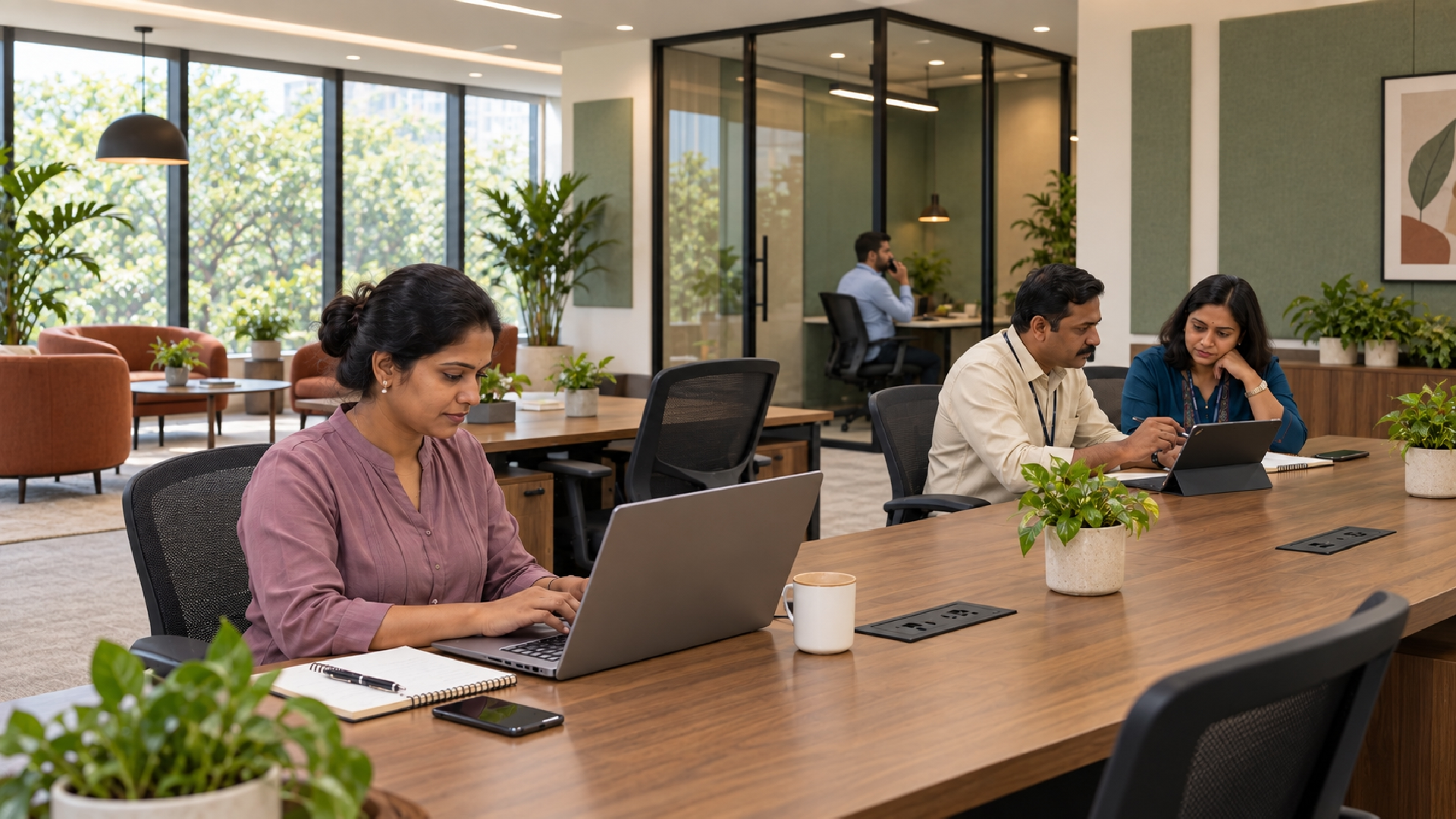
Culture Needs a Place to Show Up
Remote work can support deep focus. Home setups can help employees avoid commute fatigue. But culture needs repeated human signals. A nod across the table. A quick check-in after a tense call. A founder overhearing a customer problem and stepping in. A manager noticing that someone has gone quiet.
These moments are difficult to schedule. They happen because people share space.
For HR teams, this is especially important during onboarding. New employees do not learn culture only from documents. They learn it by watching how decisions are made, how leaders speak, how teams support each other, and how people handle pressure. A well-planned workspace makes that learning easier.
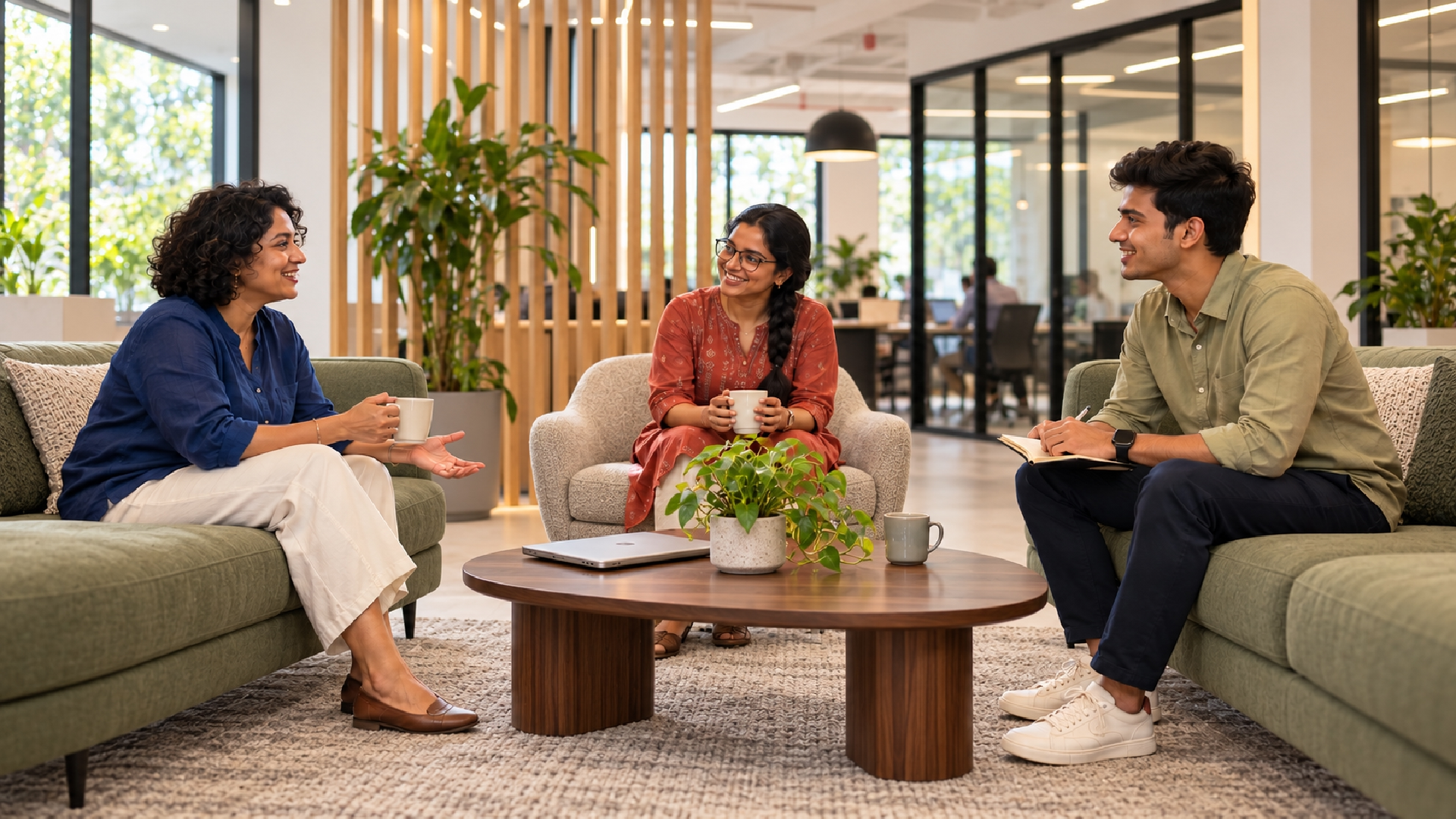
The right office space for growing teams creates natural contact points. It gives teams shared zones for collaboration, quiet areas for focus, meeting rooms for structured work, and informal corners where trust slowly builds.
Build a workspace your team actually wants to use
Beginest helps HR leaders and growing teams create professional work environments that support focus, collaboration, culture, and employee experience.
Retention Is Not Only About Pay
Employees leave for many reasons. Compensation matters. Career growth matters. Managers matter. But day-to-day experience also shapes whether people feel attached to a company.
A workspace can either strengthen that attachment or weaken it.
When employees associate office days with long commutes, noisy calls, poor infrastructure, and uncomfortable seating, office attendance begins to feel like a burden. When they associate office days with useful collaboration, good conversations, focus time, and professional support, the office becomes part of why they stay connected to the company.
This is why employee retention is not only an HR policy topic. It is also a workplace design and workspace choice topic.
Gensler’s Global Workplace Survey 2025 notes that flexible, human-centered workplace design is linked to stronger employee performance, satisfaction, and retention. The report frames workplace design around people, not just floor plans, which is exactly the shift HR leaders are now facing.
Gensler’s research describes this as a move toward workplaces that help people get work done individually and collectively, with design starting from people’s needs rather than only space efficiency. Read the Gensler Global Workplace Survey 2025.
Why This Matters More in Bangalore
Bangalore teams face a unique mix of opportunity and pressure. The city has talent, startup density, enterprise demand, investors, clients, and a strong business ecosystem. It also has traffic, commute stress, rising expectations from employees, and intense competition for skilled people.
For HR leaders, office location and workspace quality are not small details. They affect attendance patterns, hiring conversations, punctuality, employee satisfaction, and how easy it is to bring people together.
Coworking demand also shows how companies are responding. In the first half of 2026, coworking operators leased a record 8.6 million sq. ft. across India’s seven largest office markets, with Bengaluru, Delhi NCR, and Hyderabad accounting for nearly two-thirds of demand. The same report says coworking leasing rose 32% year over year and captured 24% of total office leasing activity.
That growth points to a larger truth. Companies want spaces that can keep up with changing teams. HR leaders want offices that can support hybrid policies without becoming another administrative headache.
A Practical Framework for HR Leaders
Before choosing a workspace, HR teams should evaluate it through the lens of people, not only cost. A good office should answer four questions clearly.
| Evaluation Area | What HR Should Check | Why It Matters | Beginest Fit |
|---|---|---|---|
| Team Energy | Noise levels, natural light, seating comfort, break zones | Small daily conditions affect mood and momentum | Professional workspaces with focus and collaboration areas |
| Culture | Shared areas, meeting rooms, onboarding comfort | Culture becomes easier to observe and absorb in person | Coworking, private cabins, meeting rooms, and community-led spaces |
| Retention | Commute, flexibility, infrastructure, workday comfort | Employees stay connected when office days feel useful | Flexible locations and workspace formats for growing teams |
| Operations | Maintenance, internet, security, support, admin load | HR should not spend the day solving office problems | Managed office support and ready-to-use workspace solutions |
The Office Should Reduce Emotional Load
A good workspace does more than improve logistics. It reduces emotional load. People do not have to wonder where to take a call. They do not have to fight for a meeting room. They do not have to carry the frustration of a poor environment into every discussion.
This matters because work already asks a lot from people. Deadlines, targets, customer issues, hiring pressure, internal changes, and personal responsibilities all compete for attention. The office should not add another layer of stress.
For HR leaders, this is where workspace choice becomes part of care. A reliable, well-managed workspace quietly tells employees that the company has thought about their day. That message may be subtle, but it matters.
Beginest as a Workspace Partner for People-Centered Teams
Beginest Workspaces is built for businesses that want the benefits of a professional office without the pressure of setting up and managing everything independently. The brand offers coworking spaces, managed offices, private offices, meeting rooms, and flexible workspace solutions for startups, SMEs, enterprises, satellite teams, consultants, and growing companies.
The larger promise is simple. HR teams should be able to focus on people, not plumbing, WiFi, furniture, cleaning, access, and maintenance. A well-managed workspace gives employees the environment they need while giving leaders the flexibility they need.
You can explore more about the brand through the Beginest homepage and About Beginest page.
How to Know If Your Workspace Is Hurting Culture
A workspace problem rarely announces itself loudly. It usually appears in small signs.
- Employees avoid coming in unless they are forced.
- People complain about commute, parking, noise, or meeting room access.
- New hires take longer to feel part of the team.
- Managers struggle to create useful in-office days.
- Collaboration feels better on rare offsites than in the actual office.
- HR spends too much time solving facility issues.
If these signs keep appearing, the issue may not be the people. It may be the environment. A workspace should make the right behaviours easier. Focus should feel natural. Collaboration should not require logistical struggle. Culture should have room to breathe.
Frequently Asked Questions
1. How does workplace experience affect employee retention?
Workplace experience affects employee retention by shaping how employees feel during everyday work. A comfortable, reliable, and well-located workspace can improve connection, reduce daily friction, and make office days feel valuable.
2. Why should HR leaders care about workspace choice?
HR leaders should care because workspace choice affects engagement, onboarding, collaboration, culture, and employee satisfaction. The office is part of the employee experience, not just a facility decision.
3. Can coworking spaces improve team culture?
Yes, a good coworking space can improve team culture by giving employees a professional place to meet, collaborate, focus, and build relationships. This is especially useful for hybrid teams that need meaningful in-person time.
4. What kind of workspace is best for hybrid teams in Bangalore?
Hybrid teams in Bangalore usually need flexible workspaces with good connectivity, meeting rooms, focus areas, reliable internet, and easy access. Coworking and managed office spaces can support these needs better than rigid office leases.
5. How does Beginest support employee experience?
Beginest supports employee experience through coworking spaces, managed offices, private cabins, meeting rooms, professional amenities, and flexible workspace options that reduce operational stress for companies and improve daily comfort for teams.
A Better Workspace Creates Better Workdays
Team energy, culture, and retention are not created by office walls alone. They are created by leadership, trust, communication, growth, and fairness. But the workspace can either support those things or get in their way.
For HR leaders, that makes workspace choice a strategic decision. The right environment helps teams connect without forcing it. It gives managers better ways to support people. It helps new employees feel included faster. It makes office days feel purposeful instead of performative.
When a workspace works well, people may not talk about it every day. They simply work better inside it.