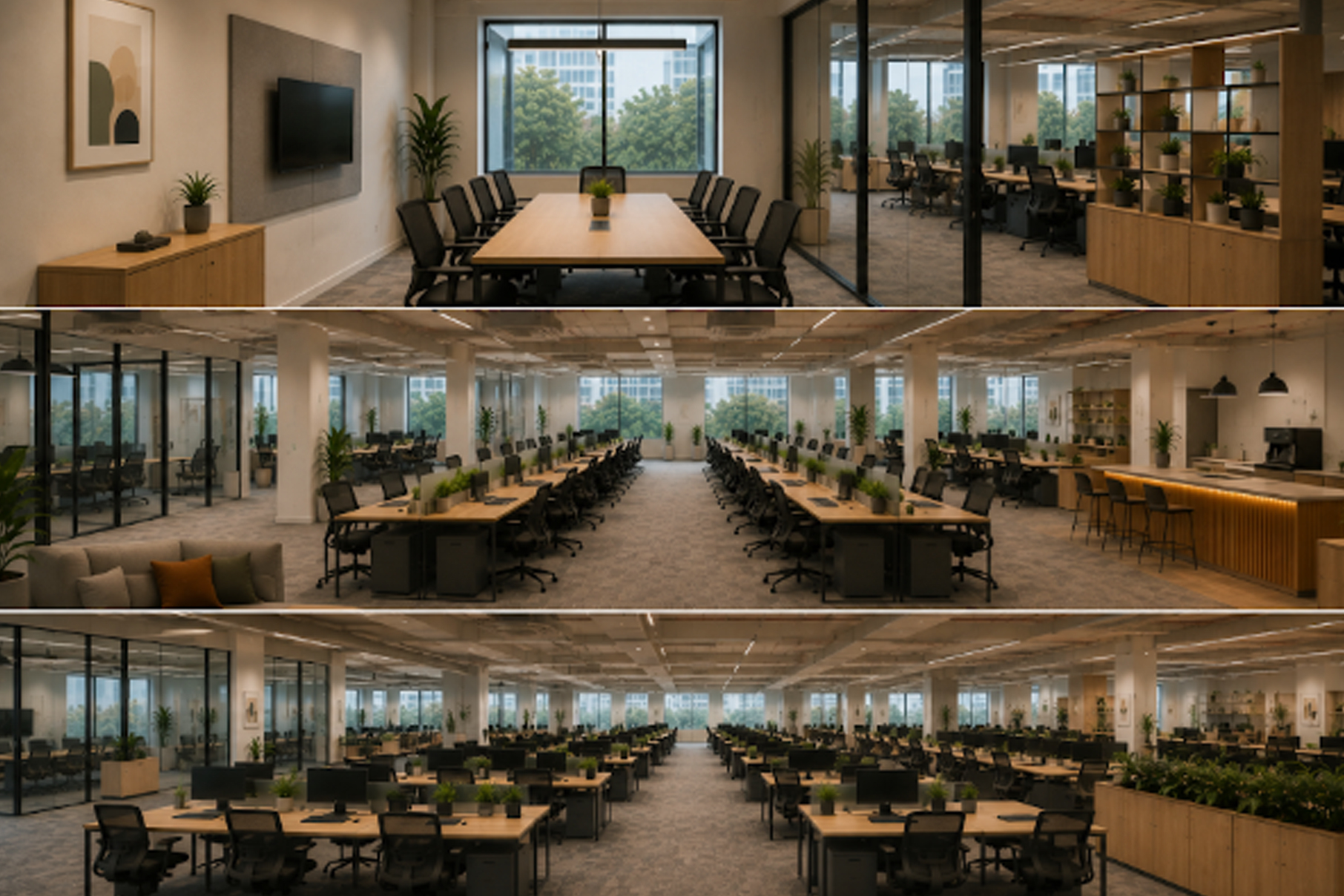
The founding team of six is celebrating their first ever Series A on a Friday afternoon. But by Monday morning, the ops manager is staring at a spreadsheet confused about where the next twenty hires are going to work from. The office is already at maximum capacity. You call the landlord and he wants a notice twelve months prior to any expansion or relocation. You’ve signed the contract yourself. And the team, energised from the fundraise, has already begun working on a product sprint that needs everyone in the same room.
This is a common challenge for growing startups. As headcount increases, an office that once worked well can become an operational constraint. Relocating may seem like the obvious next step, but a move also brings lease decisions, setup requirements, vendor coordination and potential downtime.
For a growing team, the better question is not simply where can we move next? but how can our workspace continue to support growth without repeatedly disrupting operations?
A coworking or managed office space can provide another option by reducing the amount of office setup and facilities management handled internally. For startups and SMEs planning further hiring, the key is to choose a workspace model with enough flexibility to respond as requirements change.
Why Office Disruptions Hit Growing Teams the Hardest
When it comes to disruptions, the wrong time is the right time. When there is a major shipping or an important client meeting, it’s not really nice to be running behind relocation logistics. It slows you down. It disrupts cashflow. It causes loss. Not something we are particularly happy about especially when your office is running on pure chaos.
Office relocation can affect more than logistics. In a 2019 Clutch survey of 503 employees in the US, 67% said they experienced challenges when their office relocated, including distractions, longer commutes and loss of productivity. While the survey was not specific to Bangalore startups or founders, it highlights the employee-side considerations that can come with changing workplaces.
Traditional leases also bring operational considerations such as deposits, fit-outs, IT setup, movers and contractual commitments. If a team outgrows its space during an existing lease, it may need to work within that constraint, negotiate additional space or plan another move.
Planning for future headcount earlier can give teams more options before workspace limitations become urgent.
Planning space for your next hiring phase?
Explore workspace options that can adapt as your team and operational requirements change.
The Real Cost of Moving When You Shouldn't Have To
A founder or ops manager usually sees more than the direct cost of moving an office. Along with deposits, movers and IT requirements, relocation can take time from operations, leadership and employees while the new space is being prepared.
The impact will vary from one business to another, but the practical considerations are similar: How much setup is required? Will the commute change? Can the infrastructure support the team from the start? And is there enough room to accommodate planned hiring?
Choosing a workspace with clear expansion options can reduce the need to repeat the entire setup process as the team grows. The important part is understanding those options in advance and confirming what is available before committing.

What Scalable Workspace Actually Means
Scalability in a workspace context means being able to change your footprint without rebuilding your entire operating setup.
That can be difficult in a traditional office set up or a home set up. A scalable office space in Bangalore can give growing teams more options to move into a larger workspace as requirements change, subject to availability.
Same location, where available
If additional space is available within the same building or location, teams may be able to expand without changing familiar commutes, neighbourhood routines or their day-to-day working environment. This can also reduce the amount of relocation coordination required from the operations team.
Flexibility with terms you understand
A flexible managed office space can offer more adaptable workspace options than setting up a conventional office independently. Contract duration, notice periods, deposits and expansion terms should still be reviewed carefully before signing.
Infrastructure with less setup to manage
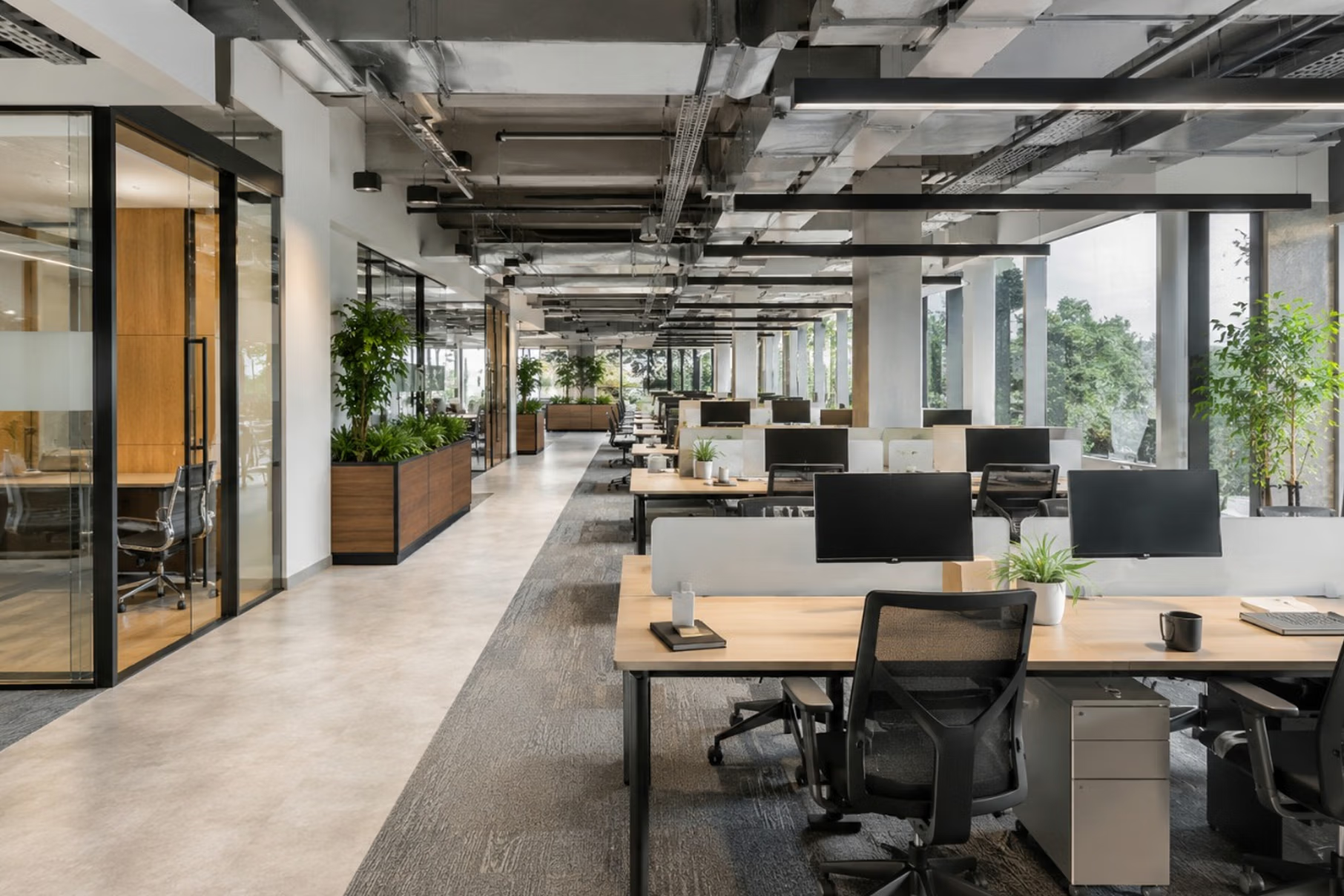
A plug and play office space can reduce the setup work handled by the business. Depending on the workspace and plan, essentials such as internet, furniture, housekeeping, security and maintenance may already be in place or managed by the operator.
Make your next workspace decision around where your team is headed.
Compare Beginest workspace options based on headcount, location, privacy,
commute and future expansion requirements.
Why Bangalore Teams Compare Managed Offices with Traditional Leases
The decision between a traditional lease and a managed office is less about which model is universally better and more about what the business wants to manage internally.
With a traditional lease, the business typically takes responsibility for the lease commitment, deposit, fit-out, furniture, internet, vendors and day-to-day facilities. Expansion may involve negotiating additional space, modifying the existing office or relocating.
With a managed office, much of the workspace infrastructure and facilities management is handled by the operator. This can reduce the setup work required from an internal operations team and may provide more options to change the workspace as headcount changes, subject to availability and contract terms.
A traditional lease may suit businesses that want greater long-term control and customisation. A managed office may be better suited to teams prioritising flexibility, cost predictability and reduced facilities responsibility.
A fully managed office space in Indiranagar or workspace on MG Road can therefore be evaluated on practical factors such as commute, privacy, infrastructure, contract terms and future space requirements.
When to Make the Call
There is no universal trigger, but there are recurring signs worth watching. Your team may regularly struggle to find enough desks, client meetings may be difficult to host, maintenance may be taking too much of the operations team's time, or your hiring plans may be approaching the limits of the current office.
When these issues become recurring rather than occasional, it is worth reviewing your workspace options before they force a rushed move.
A shared office space for SMEs in Bangalore can provide greater flexibility as requirements change. Before deciding, compare space availability, commute, privacy, facilities support and contract terms against your next phase of hiring.
Frequently Asked Questions
1. What is a managed office space? How does it promise a distraction-free environment?
A managed office space is best explained as a ready-made office space. All the operational amenities like internet, maintenance, housekeeping, security and furniture are already provided by the space.
For growing teams, this means you never have to deal with an infrastructure problem at the same time you're trying to scale your headcount. At Beginest, managed office spaces across 8 locations in Bangalore are designed to absorb your growth without requiring your operations team to manage a facilities project every quarter.
2. How does a plug and play office space support operational continuity during rapid scaling?
A plug and play office space is ready on day one — internet, seating, and all shared infrastructure are already set up and working when your team walks in. This matters enormously for fast-growing startups because it removes the setup phase that typically burns two to three weeks during a transition. When you add seats at Beginest, the new workspace is operationally live almost immediately, which means your team's momentum stays unbroken.
3. Can a coworking space in Bangalore grow with a startup from 5 to 50 employees without relocation?
Yes. And this is one of the primary reasons growing startups in Bangalore are choosing managed coworking over traditional leases. As your headcount increases, Beginest will assist you in moving your team to a larger managed office space in the same building or the same location as per your convenience. This helps in retaining work culture and your team will be happy when they don’t need to get adapted to new commutes or sway from their day-to-day routines.
4. Why are startups in Indiranagar and MG Road Bangalore choosing coworking over traditional office leases?
Cost. Speed. Flexibility. Scalability. Even the best traditional office spaces cannot offer all of these benefits of a coworking or managed office space. Security deposits can exceed INR 5 Lakhs with long leases that are not startup friendly.
Now, if you are serious about shifting your operations to a coworking space in Indiranagar or a
managed office on MG Road Bangalore, you can do it almost immediately with no need to renegotiate your agreements.
5. What should an ops manager look for in a scalable office space?
Location for accessibility. Infrastructure for reliability. Flexibility to determine how scalable the space is. These are the most important things to look for while looking for scalable office space near metro stations in Bangalore. The internet speed and the contract flexibility are also things that need to be verified before properly moving in to retain employees.